
Loading, please wait...
LOT 0611
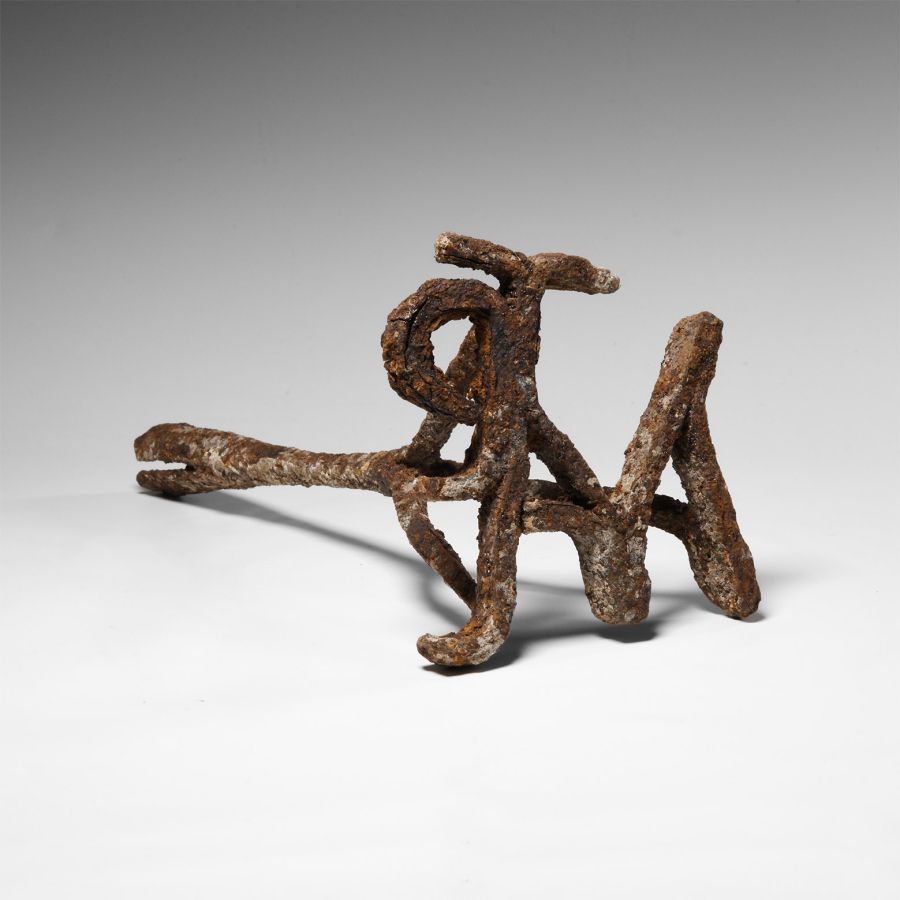
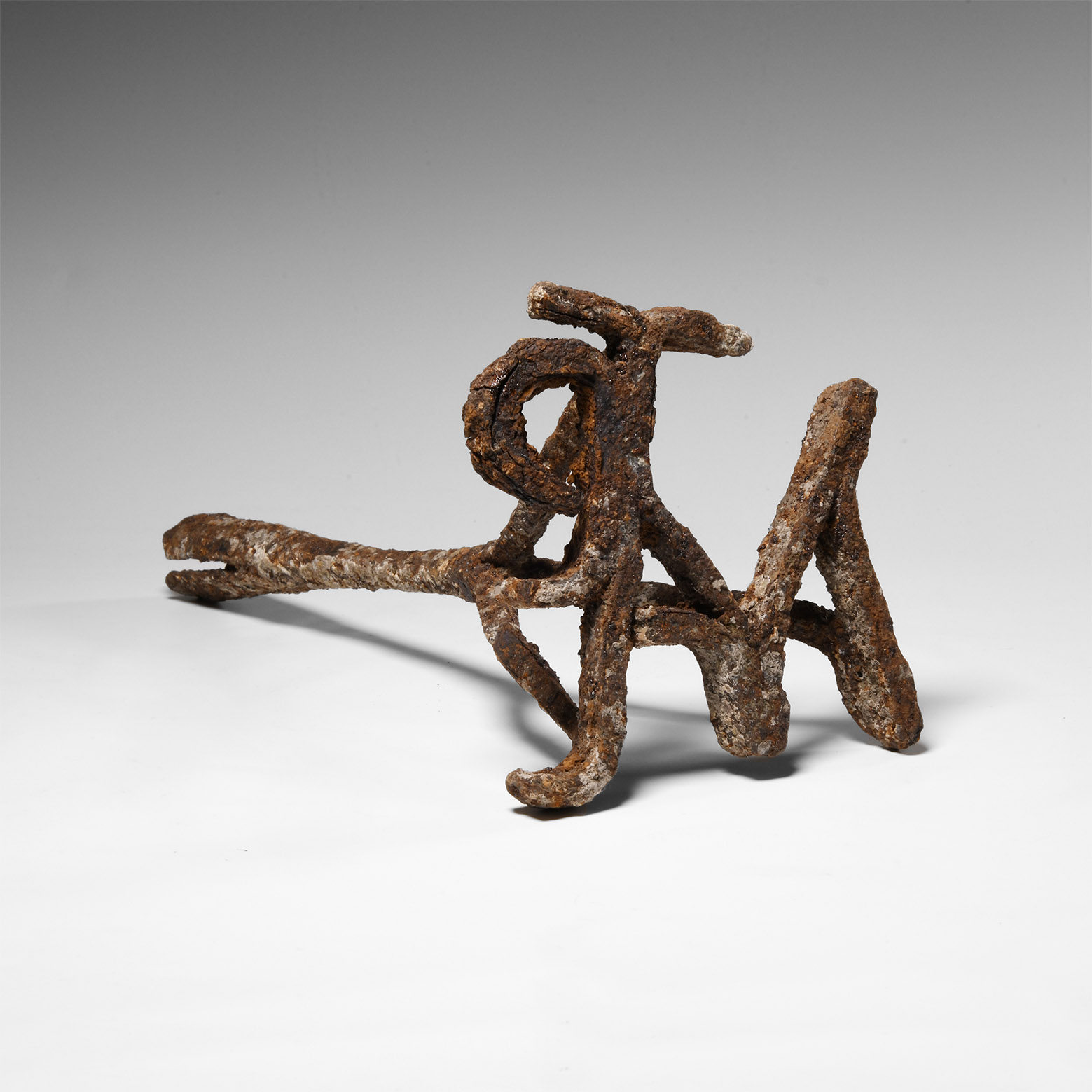
Late Roman Iron Branding Signaculum
5TH-6TH CENTURY A.D.
11 5/8 in. (343 grams, 29.5 cm high).
Featuring an elaborate monogram composed of Greek letters M, A, T and P on three supporting prongs; tapering cylindrical socket.
ProvenanceAcquired 1990s-early 2000s.
East Anglian private collection.
See Baratta, G., 'Roman Signacula / Una particolare categoria di signacula: marchi per legno, pellame ed animali', in Mayer, M., Olive, G., Baratta, G., Guzman Almagro, A. (ed.), XII Congressus Internationalis Epigraphiae Grecae et Latinae, Barcelona, 2007, pp.99-108, figs.3, 7, for similar stamps.
FootnotesBranding stamps or signacula, in particular those with large single letters, were used for marking livestock to identify the owner, the breed, the quality and other features of the animal. These signacula were usually made in bronze, but iron examples are also preserved.
CONDITIONTimeLine Auctions follows a vetting process to ensure the authenticity and legality of all items, reinforcing our commitment to integrity and responsible trading. Each antiquity, antique, and coin lot undergoes thorough examination by a vetting committee of at least ten external specialists, professional trade association members, scientists, and archaeologists: Our Vetting Process
AUCTIONS:
TimeLine is a leading auction house specialising in antiquities, ancient art, collectables, natural history, coins, medals, and books. Our auctions offer museums, collectors, historians, and enthusiasts the opportunity to acquire unique and historically significant pieces.
LOT 0611
Late Roman Iron Branding Signaculum
Estimate £100 - 140€120 - 160 (for guidance only)$140 - 190 (for guidance only)
-
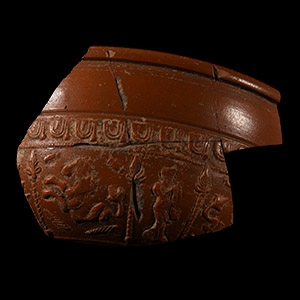
Roman Redware Bowl Fragment with Hippocampus and Standing Nereid
1st-2nd century A.D.Sold for (Inc. bp): £104
From the upper part of a vessel with two hippocampi (one partial) and a standing figure of a Nereid, floral and foliage decoration to the field, ornamental upper border; repaired. 77 grams, 12 cm
Acquired 1960s-1990s. From the late Alison Barker collection, a retired London barrister
The complete vessel probably represented scenes linked with the cult of Poseidon and Amphitrite. The riches of the sea and the dangers of navigation were merged by the ancients into a myth of great fame known as the wedding procession between Poseidon - brother of Zeus and Hades, god of the sea and the Nereid Amphitrite. The Nereids were the divinities of the sea, grandchildren of the ocean. Like the nymphs, all the Nereids were beautiful young women who spent their time singing or weaving. Also involved in the procession were the tritons and hippocampi, who provocatively played shells or were ridden by Nereids. -

Roman Ceramic Face from a Lamp
Circa 1st century A.D.Sold for (Inc. bp): £59
Portraying an elderly male figure with pointed chin and pierced ear; repaired fragment. 49 grams, 71 mm
Acquired 1990s-early 2000s. East Anglian private collection. -
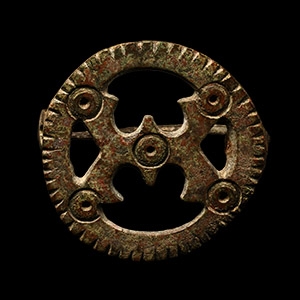
Roman Bronze Plate Brooch
2nd century A.D.Sold for (Inc. bp): £91
With openwork design enclosed in a notched roundel, addorsed c-shaped central spokes and punched ring-and-dot motifs; hinged pin and catchplate to the reverse; complete. 14.8 grams, 37 mm
Acquired 1970s-1980s. From a London brooch collector, UK.
