
Loading, please wait...
LOT 0687
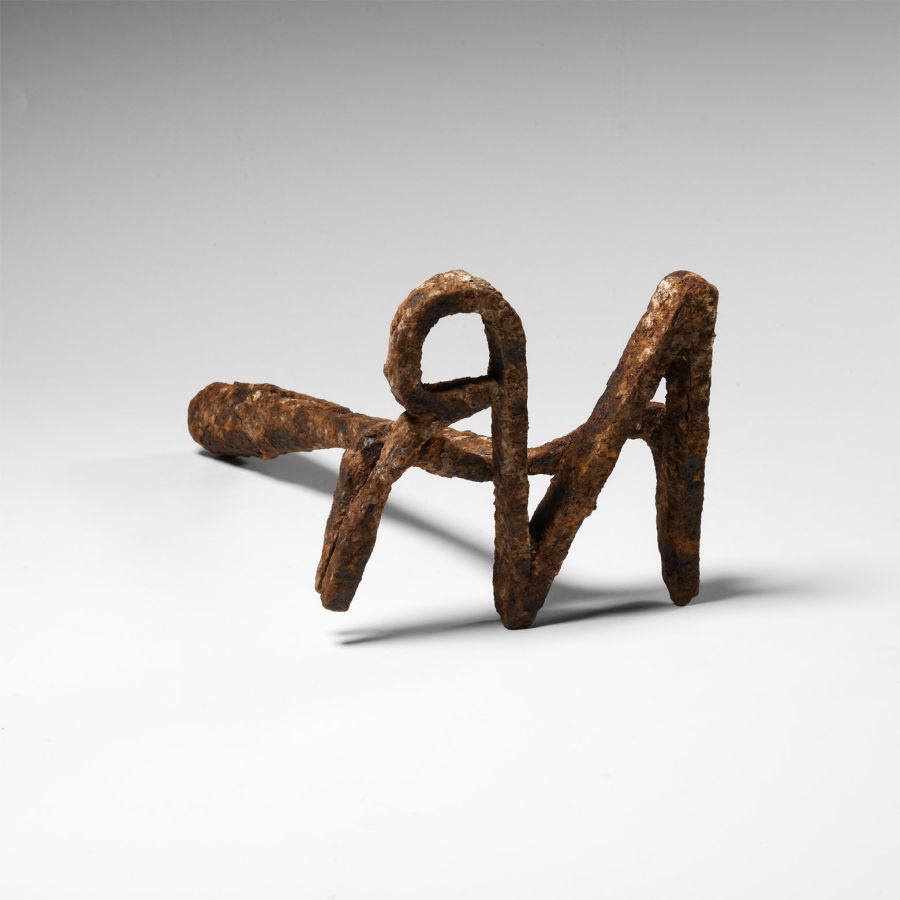
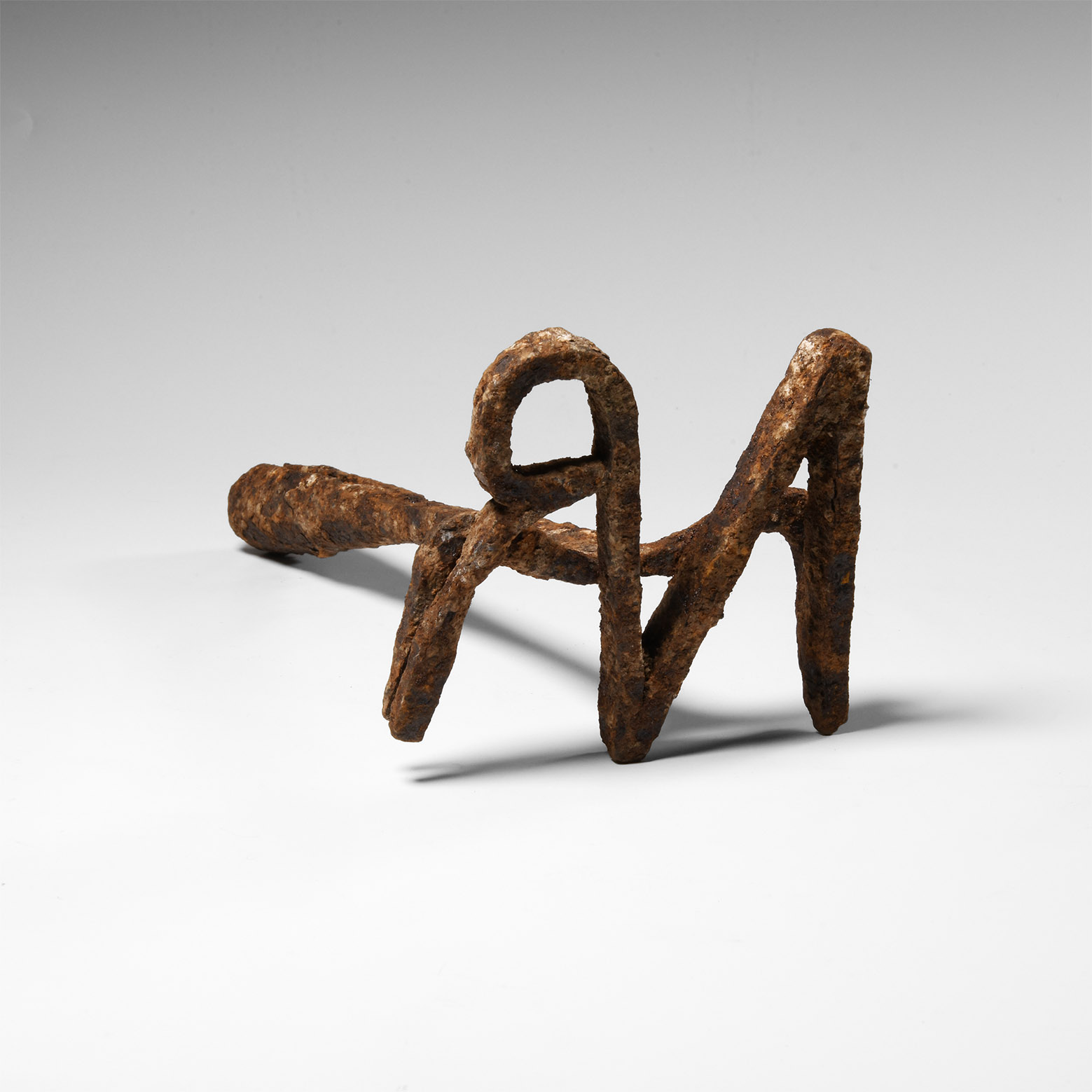
Late Roman Iron Branding Signaculum
5TH-6TH CENTURY A.D.
8 1/4 in. (432 grams, 21 cm).
Featuring an elaborate monogram composed of Greek letters M, A, and P; rectangular section bar with tapering cylindrical socket.
ProvenanceAcquired 1990s-early 2000s.
East Anglian private collection.
See Baratta, G., 'Roman Signacula / Una particolare categoria di signacula: marchi per legno, pellame ed animali', in Mayer, M., Olive, G., Baratta, G., Guzman Almagro, A. (ed.), XII Congressus Internationalis Epigraphiae Grecae et Latinae, Barcelona, 2007, pp.99-108, figs.3, 7, for similar stamps.
FootnotesBranding stamps or signacula, in particular those with large single letters, were used for marking livestock to identify the ownership, the breed, the quality and other features of the animal. These signacula were usually made in bronze, but iron examples are also preserved.
CONDITIONTimeLine Auctions follows a vetting process to ensure the authenticity and legality of all items, reinforcing our commitment to integrity and responsible trading. Each antiquity, antique, and coin lot undergoes thorough examination by a vetting committee of at least ten external specialists, professional trade association members, scientists, and archaeologists: Our Vetting Process
AUCTIONS:
TimeLine is a leading auction house specialising in antiquities, ancient art, collectables, natural history, coins, medals, and books. Our auctions offer museums, collectors, historians, and enthusiasts the opportunity to acquire unique and historically significant pieces.
LOT 0687
Late Roman Iron Branding Signaculum
Estimate £100 - 140€120 - 160 (for guidance only)$140 - 190 (for guidance only)
-
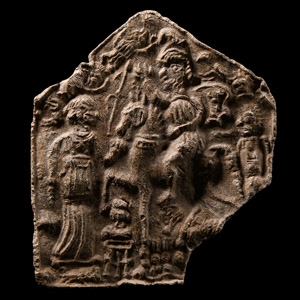
Roman Danubian Temple-Shaped Lead Plaque with Helen of Troy
3rd century A.D.Sold for (Inc. bp): £221
Displaying a figural scene in relief composed of a mounted rider (Dioscuros) advancing left towards the figure of Helen of Troy, in the upper register, the sun and the moon, behind the cavalryman a woman or image of Nike holding a crown upon his head. 74 grams, 90 mm
From the collection of a North American gentleman, formed in the 1990s.
The image of Sol Invictus assumed a great importance in the Danubian cult: the frequent representation of the celestial gods on the plaques is paralleled by their representation on monuments of other mystery cults, particularly the cult of Mithras. The image of a Dioscuros on horseback is linked to that of the Danubian rider. -
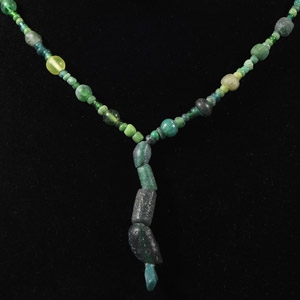
Roman Glass Bead Necklace
2nd-5th century A.D. or laterSold for (Inc. bp): £39
Composed mainly of graduated glass beads of various shades of green, including annular, oblate, spherical, tubular and other types; restrung. 13.3 grams, 70 cm long
Ex W.J. collection, 1990s. -
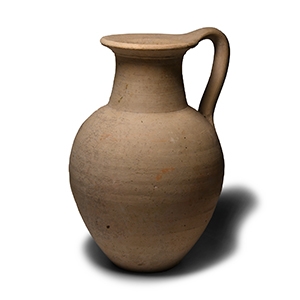
Roman Terracotta Vessel
1st-4th century A.D.Sold for (Inc. bp): £91
Of piriform shape with integral handle; '68.005' handwritten to base. 755 grams, 22.6 cm high
Acquired 1960s-1990s. Late Alison Barker collection, a retired London barrister.
