
Loading, please wait...
LOT 0703
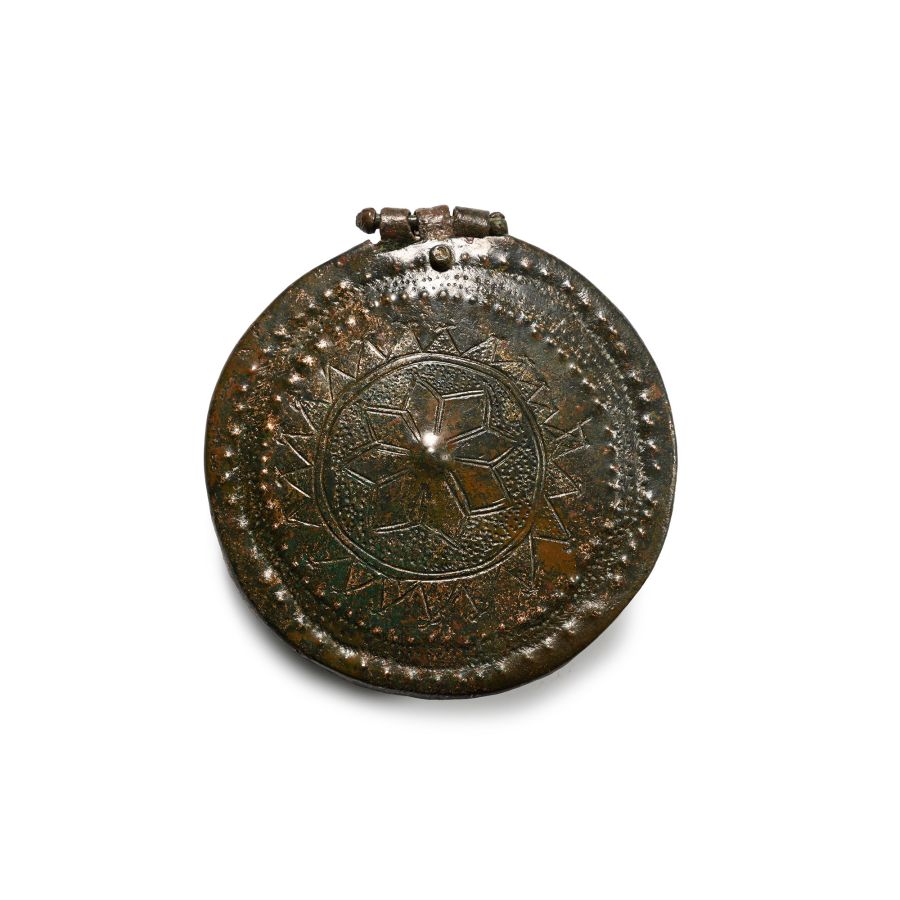
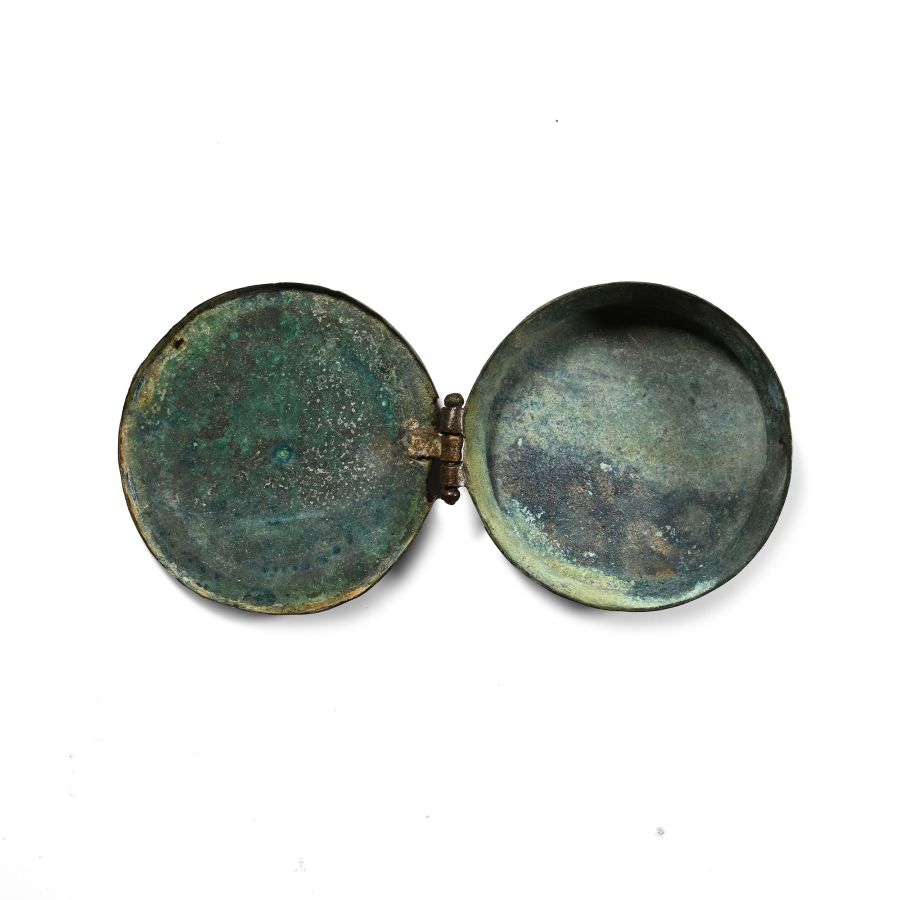
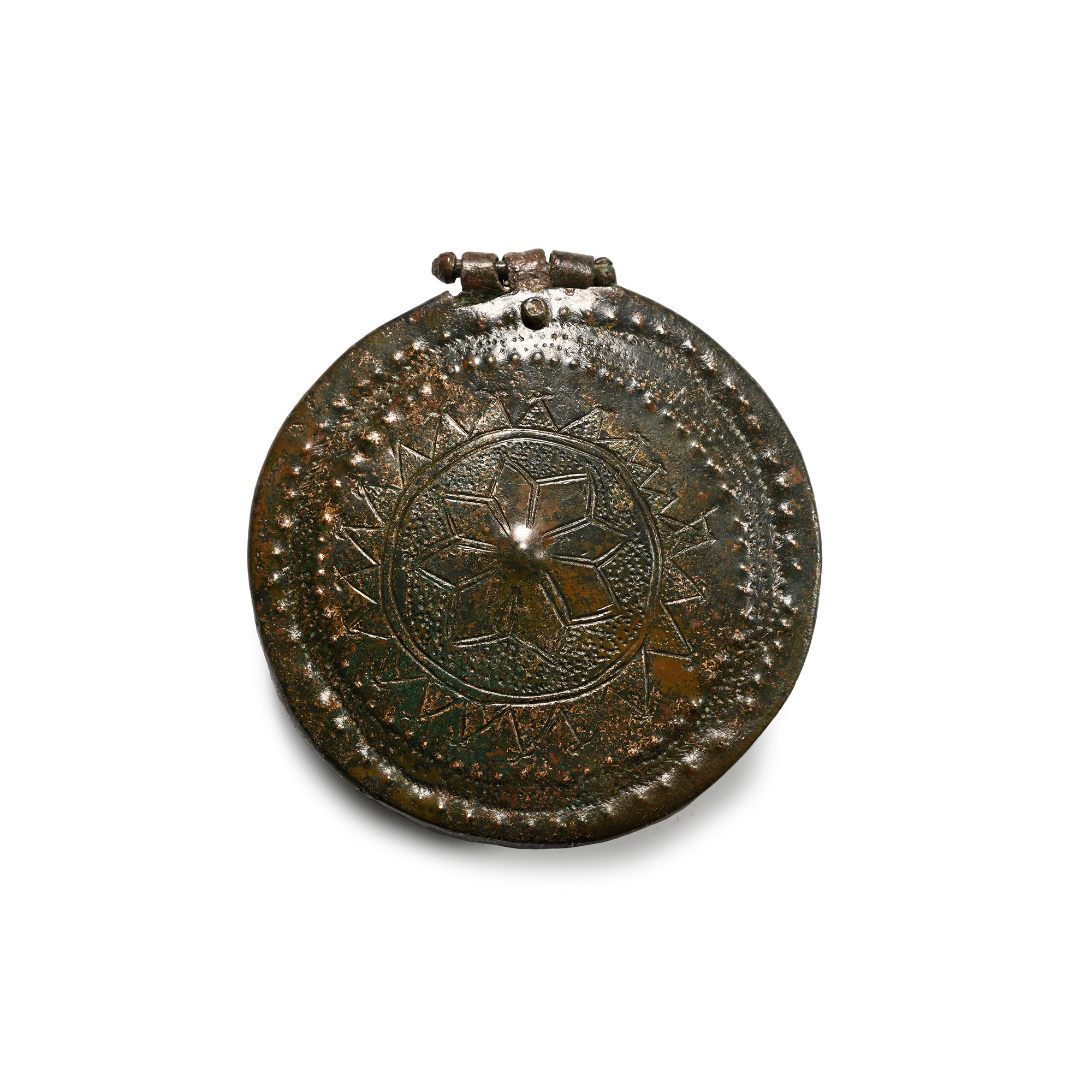
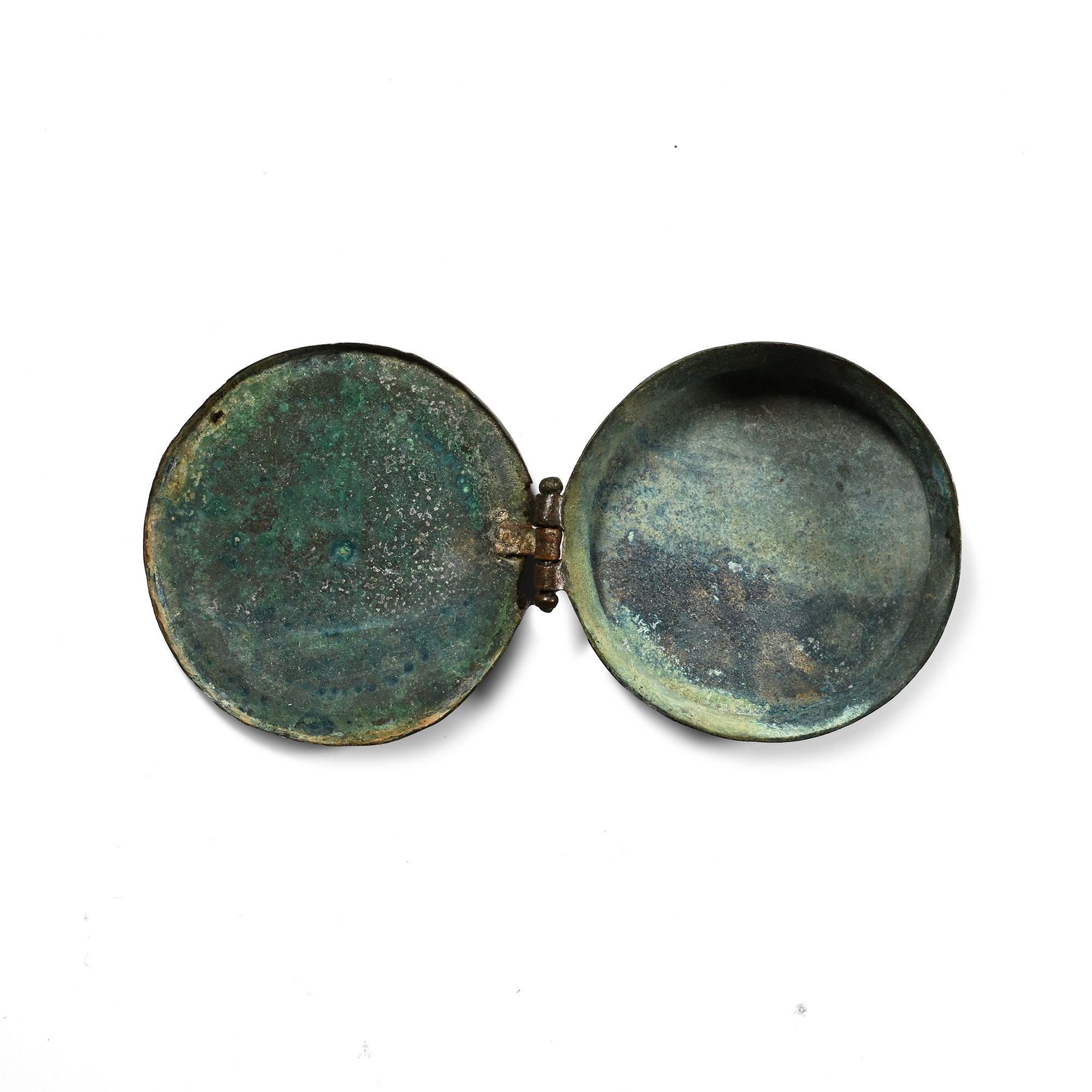
Late Roman Hinged Lidded Pyxis
4TH-5TH CENTURY A.D.
3 3/8 in. (64 grams, 86 mm).
Sheet-bronze two-part pyxis with carinated sidewall to the base, lid with reserved octofoil on a pounced field, concentric pointillé rings; working hinge mechanism.
ProvenanceAcquired in the 1990s.
Ex Abelita family collection.
This lot is accompanied by an illustrated lot declaration signed by the Head of the Antiquities Department, Dr Raffaele D'Amato.
TimeLine Auctions follows a vetting process to ensure the authenticity and legality of all items, reinforcing our commitment to integrity and responsible trading. Each antiquity, antique, and coin lot undergoes thorough examination by a vetting committee of at least ten external specialists, professional trade association members, scientists, and archaeologists: Our Vetting Process
AUCTIONS:
TimeLine is a leading auction house specialising in antiquities, ancient art, collectables, natural history, coins, medals, and books. Our auctions offer museums, collectors, historians, and enthusiasts the opportunity to acquire unique and historically significant pieces.
LOT 0703
Late Roman Hinged Lidded Pyxis
Estimate £500 - 700€580 - 810 (for guidance only)$680 - 950 (for guidance only)
-
Late Roman Hinged Lidded Pyxis
4th-5th century A.D.Estimate: £500 - 700 (+bp*)
Opening Bid: £250
Sheet-bronze two-part pyxis with carinated sidewall to the base, lid with reserved octofoil on a pounced field, concentric pointillé rings; working hinge mechanism. 64 grams, 86 mm
Acquired in the 1990s. Ex Abelita family collection. This lot is accompanied by an illustrated lot declaration signed by the Head of the Antiquities Department, Dr Raffaele D'Amato. -
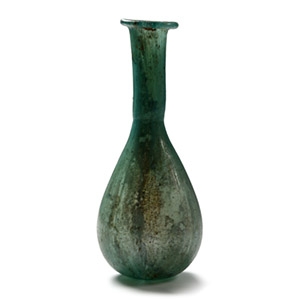
Roman Marbled Turquoise Glass Bottle
1st century A.D.Estimate: £1,000 - 1,400 (‡+bp*)
Opening Bid: £450
Comprising an iridescent piriform body, tapering tubular neck with pinched and everted rolled rim. 9.44 grams, 84 mm
Acquired on the European art market in 2001. This lot is accompanied by an illustrated lot declaration signed by the Head of the Antiquities Department, Dr Raffaele D'Amato. -
.jpg)
Roman Constantius I Terracotta Forger's Coin Mould
Circa early 4th century A.D.Sold for (Inc. bp): £124
Terracotta disc with Constantius I, as Caesar (303-305 A.D.) coin impression to each face from which to cast counterfeit coins. 4.07 grams, 27 mm
From the collection of a gentleman, acquired on the London art market in the 1990s. This lot is accompanied by an illustrated lot declaration signed by the Head of the Antiquities Department, Dr Raffaele D'Amato.
