
Loading, please wait...
LOT 0112
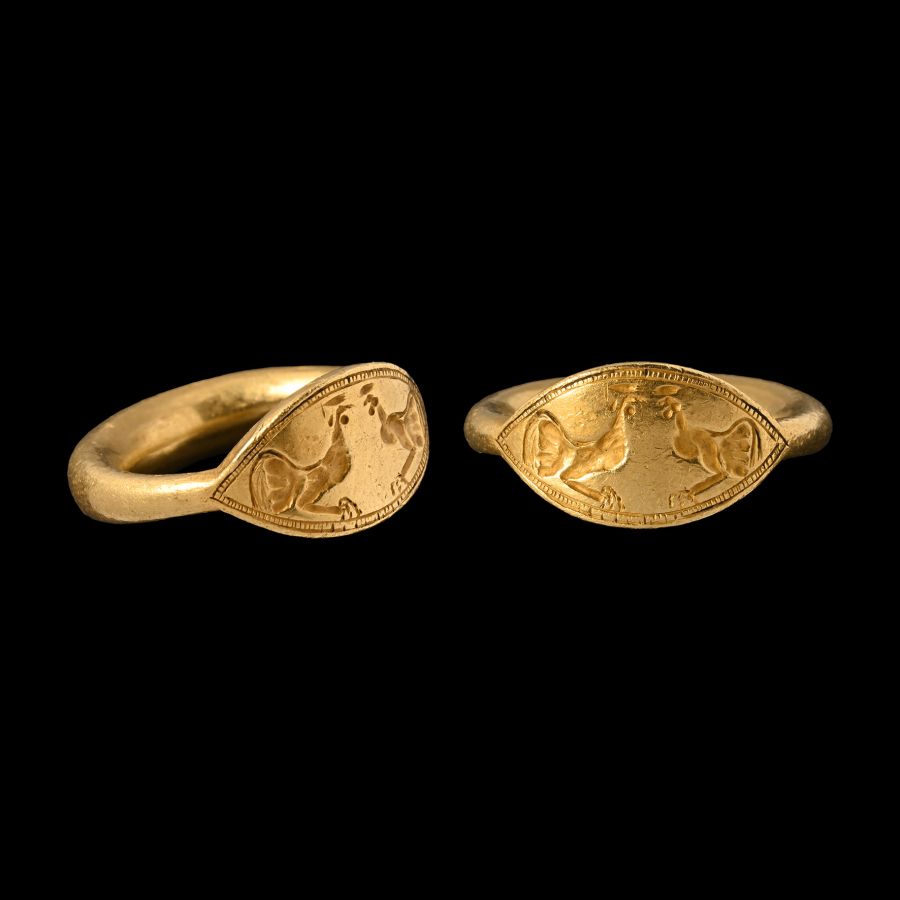
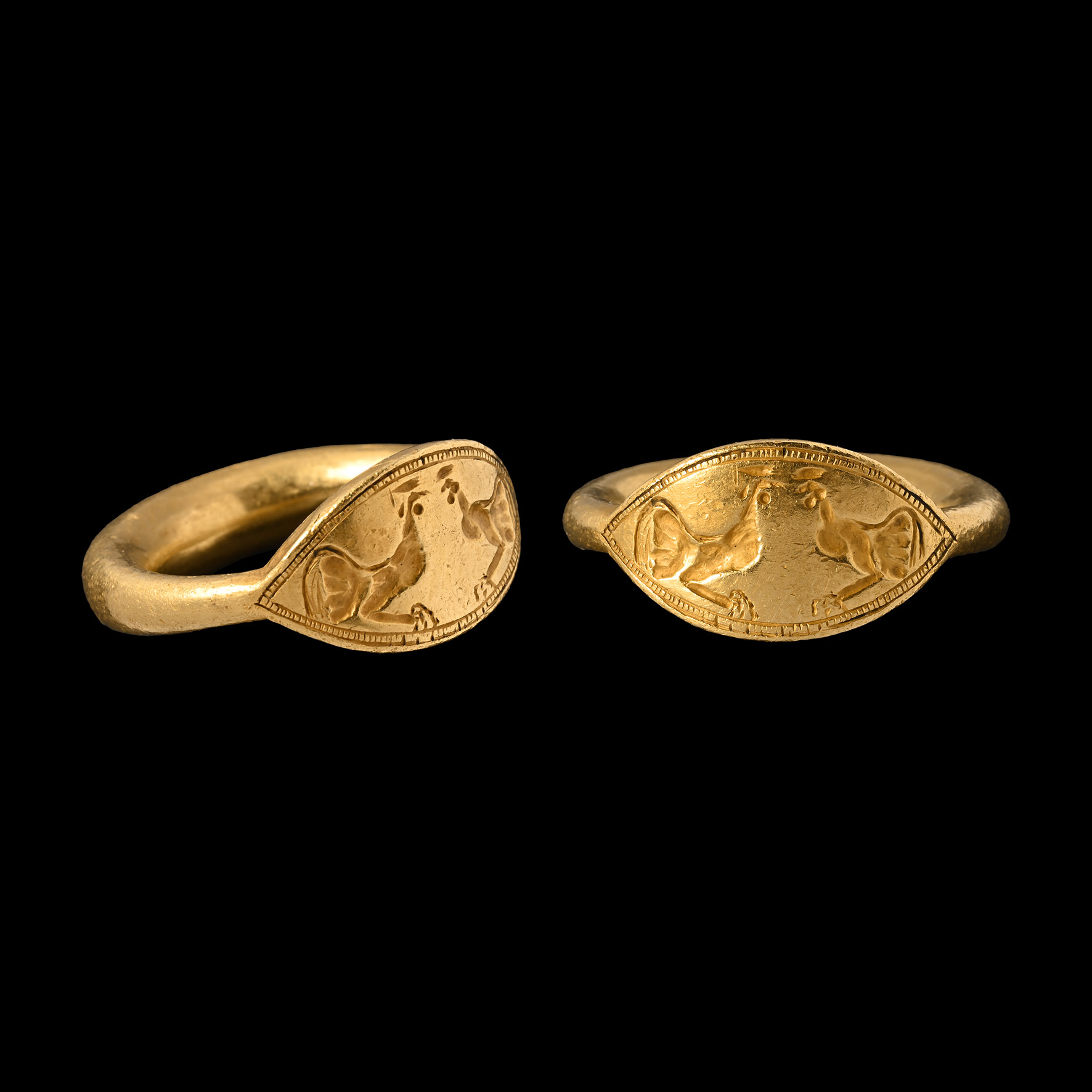
Late Roman Gold Ring with Facing Birds
CIRCA 5TH-7TH CENTURY A.D.
1 in. (14.42 grams, 24.86 mm overall, 17.53 mm internal diameter (approximate size British P 1/2, USA 7 3/4, Europe 16.86, Japan 16)).
With a heavy round-section hoop thickened at the base, lentoid bezel with ropework border and two opposing cockerels. [No Reserve]
ProvenanceBelieved to have been acquired at Christie's.
Property of a North American gallery.
This lot has been checked against the Interpol Database of stolen works of art and is accompanied by search certificate no.12109-214332.
See Roman Animals, Classical Art Research Centre, University of Oxford, green jasper gem, no.94, for similar motif; and a mosaic in the Naples National Archaeological Museum; see also Feider, M.P., Chickens in the Archaeological Material Culture of Roman Britain, France and Belgium, Bournemouth, 2017, fig.4.43,7.9, for images of cockerels on Roman rings and intaglios.
CONDITIONTimeLine Auctions follows a vetting process to ensure the authenticity and legality of all items, reinforcing our commitment to integrity and responsible trading. Each antiquity, antique, and coin lot undergoes thorough examination by a vetting committee of at least ten external specialists, professional trade association members, scientists, and archaeologists: Our Vetting Process
AUCTIONS:
TimeLine is a leading auction house specialising in antiquities, ancient art, collectables, natural history, coins, medals, and books. Our auctions offer museums, collectors, historians, and enthusiasts the opportunity to acquire unique and historically significant pieces.
-
Roman and Later Lead Weight Collection
1st-18th century A.D.Sold for (Inc. bp): £20
Including tabular, plano-convex and conical types. 889 grams total, 20-45 mm
Found whilst fieldwalking in Somerset and Devon, UK. -
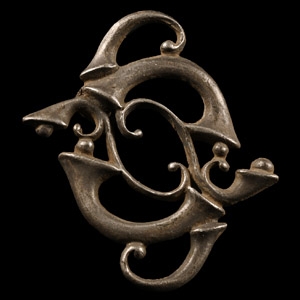
Roman Silver Trumpet Whorl Brooch
2nd century A.D.Sold for (Inc. bp): £520
Fine openwork casting of La Tène trumpets and scrolls with catch to the reverse. 10.5 grams, 38 mm
Ex London collection, 1990s. Acquired on the UK art market. Property of an East London gentleman. -
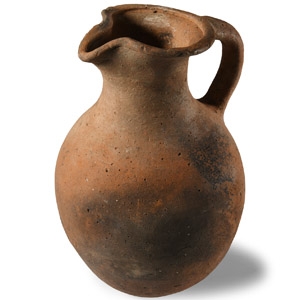
Roman Redware Jug with Trefoil Mouth
1st-4th century A.D.Sold for (Inc. bp): £156
With conical lower body and rounded shoulder, broad mouth with pinched pouring lip and thick handle to the rear. 943 grams, 24.5 cm
From a collection acquired on the UK art market from various auction houses and collections mostly before 2000. From an important Cambridgeshire estate; thence by descent.
