
Loading, please wait...
LOT 0655
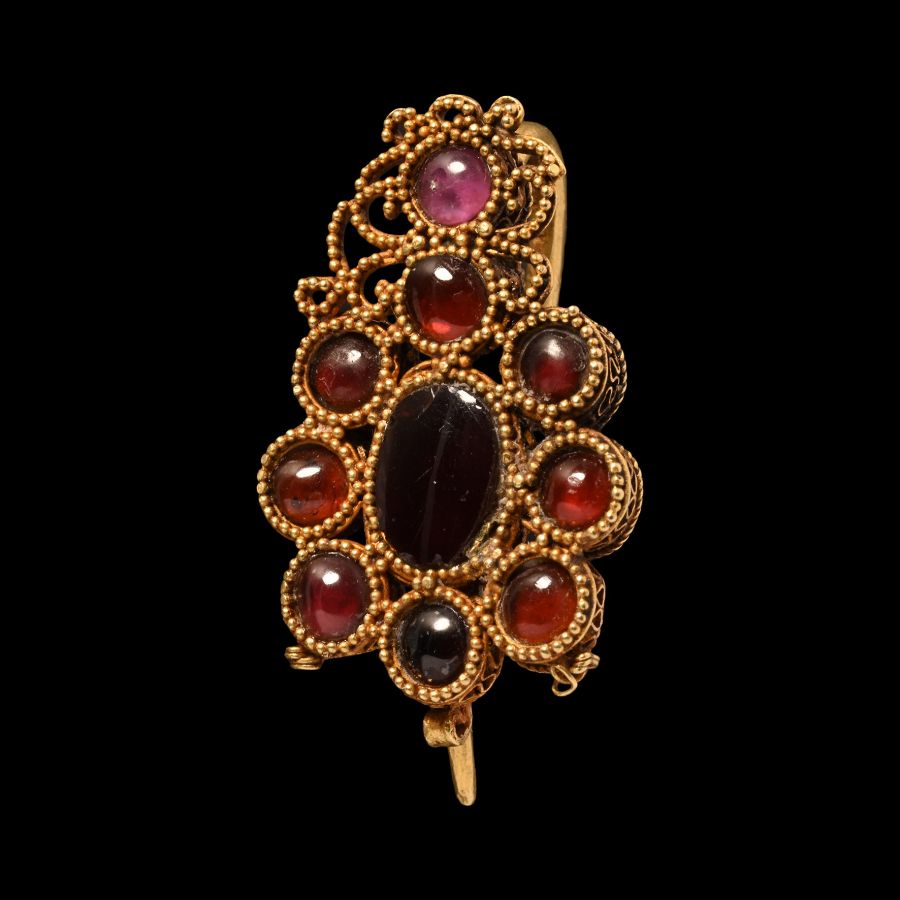
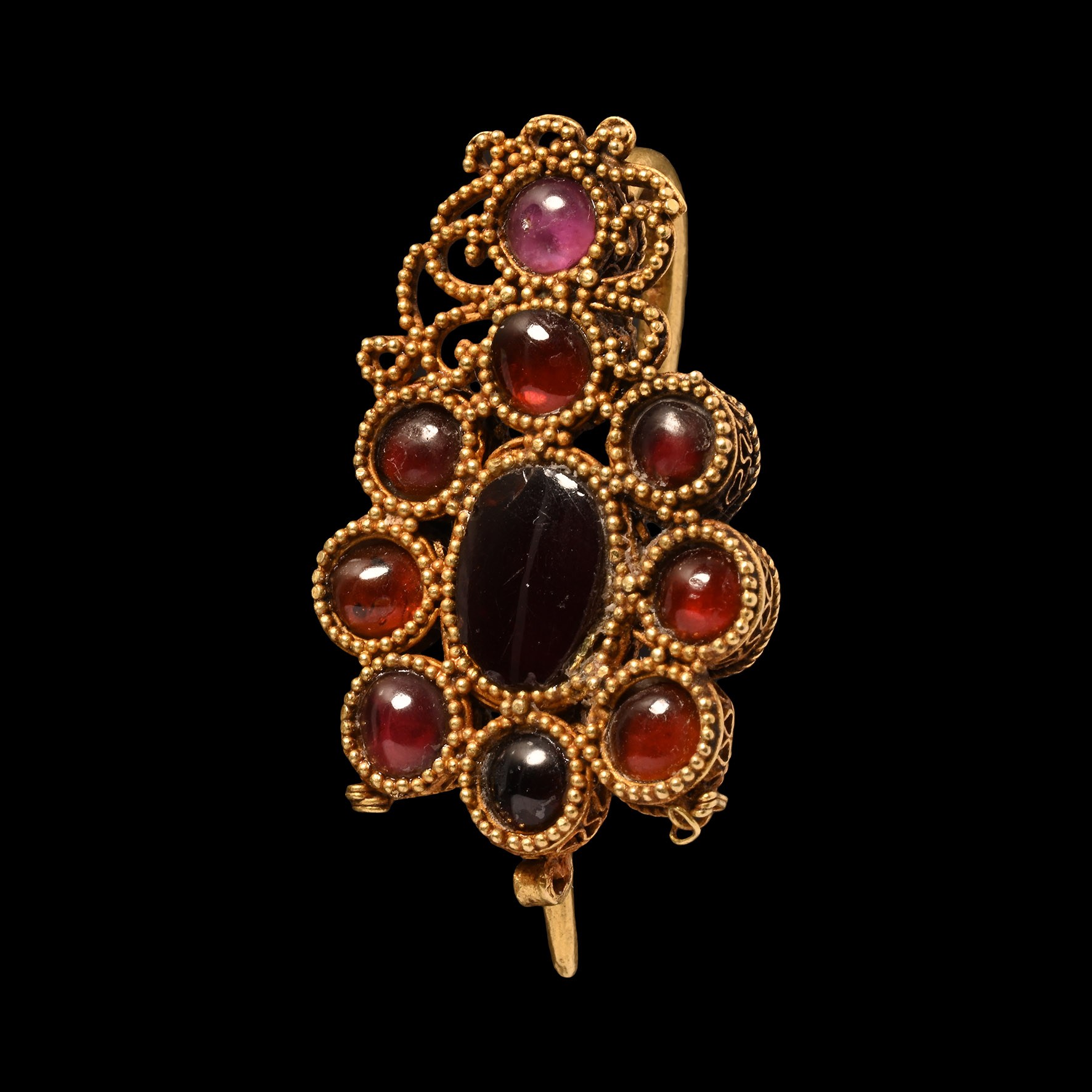
Late Roman Gold and Garnet Earring
4TH-6TH CENTURY A.D. OR LATER
1 1/4 in. (7.4 grams, 33 mm).
Comprising a single earring with thick hook closure, folding towards the bottom and ending in a small hoop; teardrop-shaped plaque with ten bezels having cabochon insert garnets; a central garnet cabochon surrounded by smaller garnet cabochons in different hues of red, framed by gold granules, each stone set in a gold cell with filigree collar; the back decorated by fine filigree.
ProvenanceFrom a late Japanese specialist collector, 1970-2000s.
LiteratureCf. Marshall, F.H., Catalogue of the Jewellery, Greek, Etruscan and Roman, in the Department of Antiquities, British Museum, London, 1911, pl.LXVI, no.2866, for similar style of manufacture.
FootnotesThe use of Roman style jewellery continued in the east also after the fall of the west, especially in the old jewellery production centres like Alexandria and Antioch, giving way to an increased production in Constantinople. In the Eastern Empire, jewellery played an important role, expressing rank status and being also used as a diplomatic tool.
CONDITIONTimeLine Auctions follows a vetting process to ensure the authenticity and legality of all items, reinforcing our commitment to integrity and responsible trading. Each antiquity, antique, and coin lot undergoes thorough examination by a vetting committee of at least ten external specialists, professional trade association members, scientists, and archaeologists: Our Vetting Process
AUCTIONS:
TimeLine is a leading auction house specialising in antiquities, ancient art, collectables, natural history, coins, medals, and books. Our auctions offer museums, collectors, historians, and enthusiasts the opportunity to acquire unique and historically significant pieces.
-
Roman Limestone Capital
Circa 2nd-3rd century A.D.Sold for (Inc. bp): £1,170
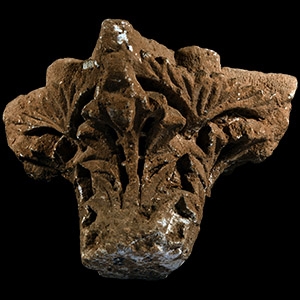
Square in plan with four tiered acanthus-leaves with deep undercuts; cylindrical column. 16.8 kg, 28 cm wide
Ex Paris collection. French gallery, Paris, 1990-2000s.
The capital seems near the types used in the Roman East, in particular the Alexandrian capital of type I or II, or maybe belonging to a transitional style driving to the semplificate type of the so called blocked-out capitals (a particular type of architectural decoration characterised by a simplified form). -

Roman Carnelian Gemstone with Bee
Circa 2nd-3rd century A.D.Sold for (Inc. bp): £338
Ellipsoid intaglio with bee in plan; supplied with a museum-quality impression. 0.33 grams, 10 mm
Acquired on the London art market in the late 1980s-1990s. From the family collection of an East London, UK, gentleman. -
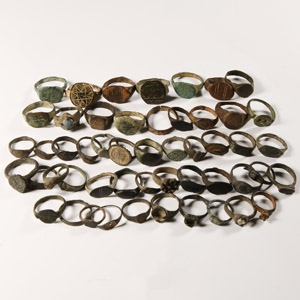
Roman and Later Bronze Ring Collection
1st century A.D. and laterSold for (Inc. bp): £338
Comprising fifty-one rings including discoid, scaphoid, square, ellipsoid and other bezels, with hatching, profile animals, tiered panels and other designs. 139 grams total, 15-25 mm
Part formerly in a European collection, acquired before 1980. From a Dutch private collection. Part from the collection of a Surrey gentleman; acquired 1970-1980.
