
Loading, please wait...
LOT 0857
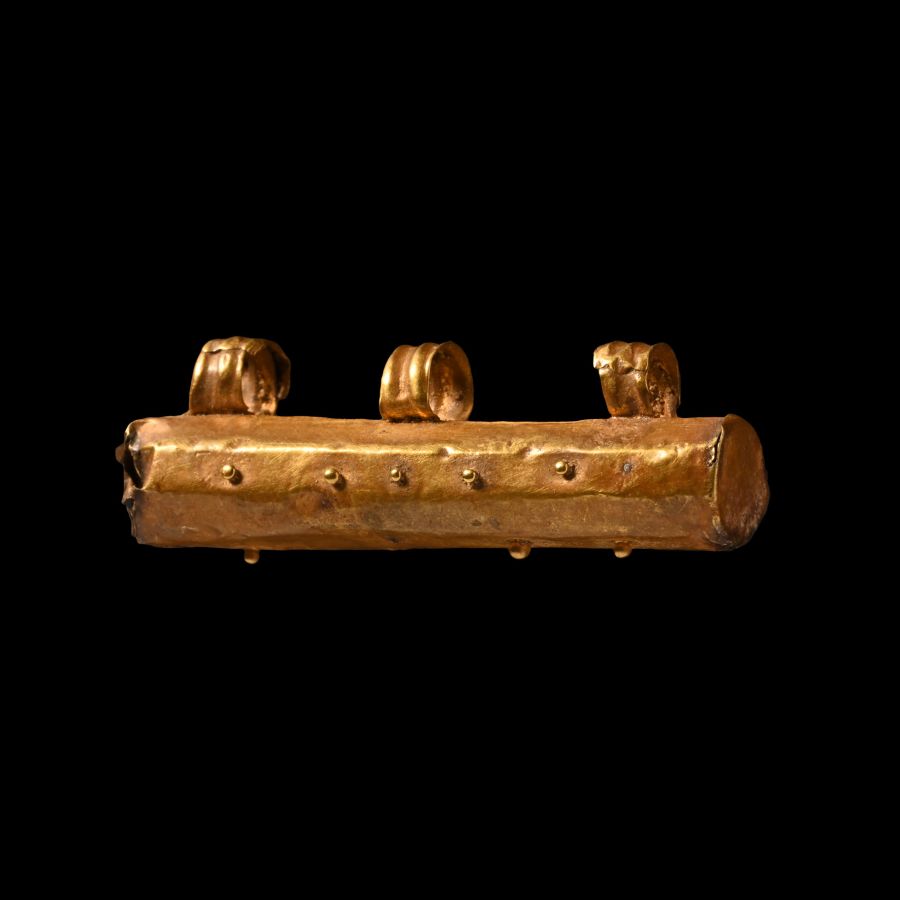
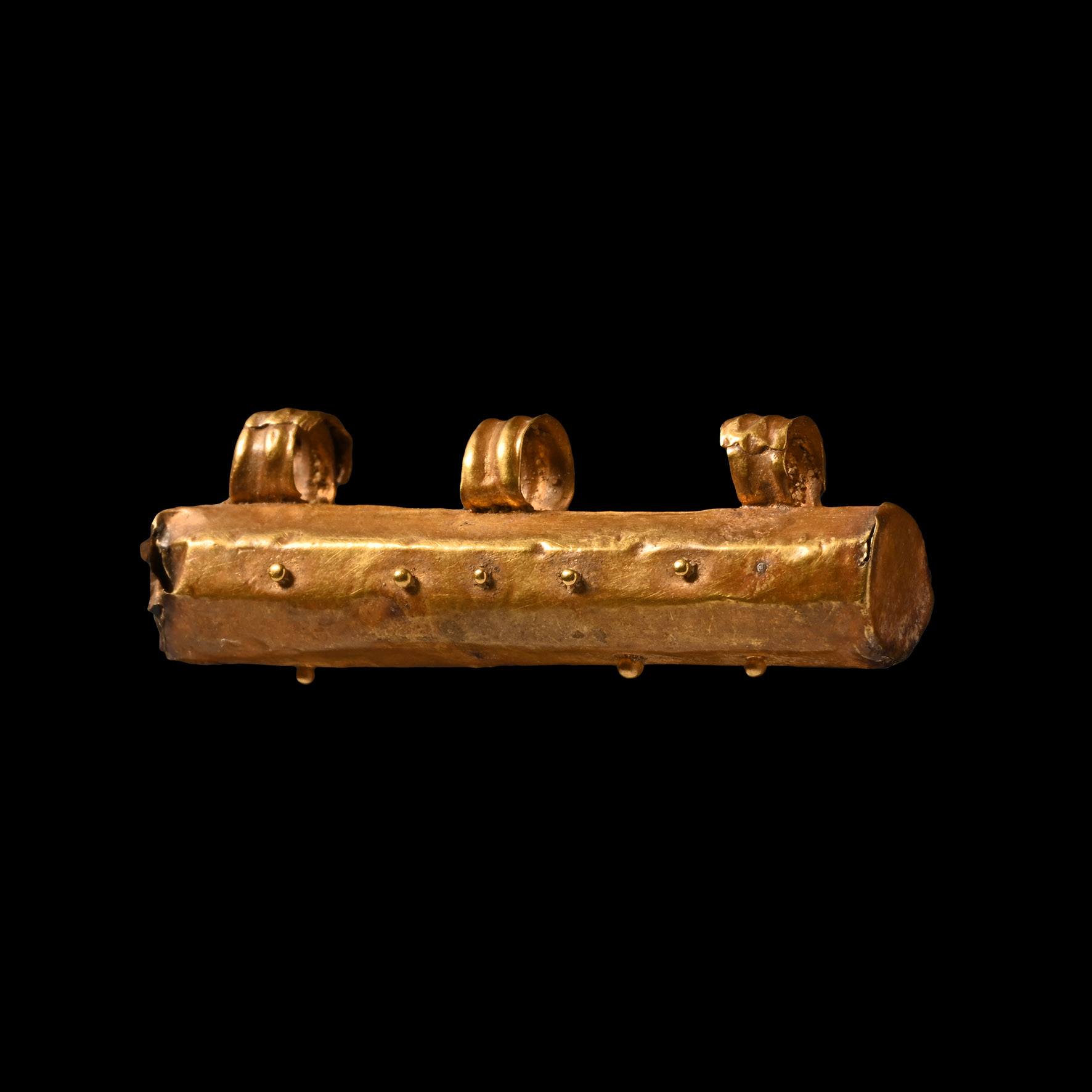
Late Roman Gold Amulet Case Pendant
CIRCA 4TH-5TH CENTURY A.D.
1 3/8 in. (2.95 grams, 34 mm).
Octagonal-section tubular pendant with ribbed suspension loops.
ProvenanceFrom the property of the late Mr SM, London, UK, 1969-1999.
CONDITIONTimeLine Auctions follows a vetting process to ensure the authenticity and legality of all items, reinforcing our commitment to integrity and responsible trading. Each antiquity, antique, and coin lot undergoes thorough examination by a vetting committee of at least ten external specialists, professional trade association members, scientists, and archaeologists: Our Vetting Process
AUCTIONS:
TimeLine is a leading auction house specialising in antiquities, ancient art, collectables, natural history, coins, medals, and books. Our auctions offer museums, collectors, historians, and enthusiasts the opportunity to acquire unique and historically significant pieces.
-
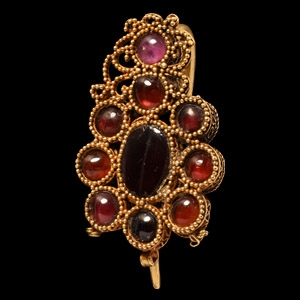
Late Roman Gold and Garnet Earring
4th-6th century A.D. or laterSold for (Inc. bp): £455
Comprising a single earring with thick hook closure, folding towards the bottom and ending in a small hoop; teardrop-shaped plaque with ten bezels having cabochon insert garnets; a central garnet cabochon surrounded by smaller garnet cabochons in different hues of red, framed by gold granules, each stone set in a gold cell with filigree collar; the back decorated by fine filigree. 7.4 grams, 33 mm
From a late Japanese specialist collector, 1970-2000s.
The use of Roman style jewellery continued in the east also after the fall of the west, especially in the old jewellery production centres like Alexandria and Antioch, giving way to an increased production in Constantinople. In the Eastern Empire, jewellery played an important role, expressing rank status and being also used as a diplomatic tool. -
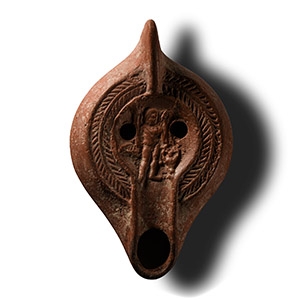
Roman Terracotta Oil Lamp with Cupid
4th-5th century A.D.Sold for (Inc. bp): £338
Burnished surface, broad discus with wreath to the shoulders, stub nozzle, low-relief image of Cupid between the vents. 110 grams, 11.2 cm
Property of a Gloucestershire, UK, collector. Property of an East Sussex, UK, gentleman. -
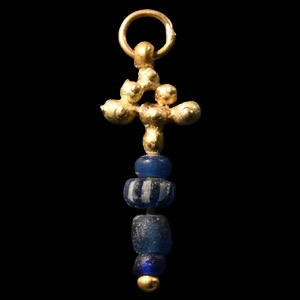
Roman Gold Pendant with Beads
1st-4th century A.D.Sold for (Inc. bp): £156
Comprising a vertical shank with arc of granules above, ring and suspension loop; four glass beads to the shank, lobe finial. 0.83 grams, 22 mm
From a late Japanese specialist collector, 1970-2000s.
