
Loading, please wait...
LOT 0875
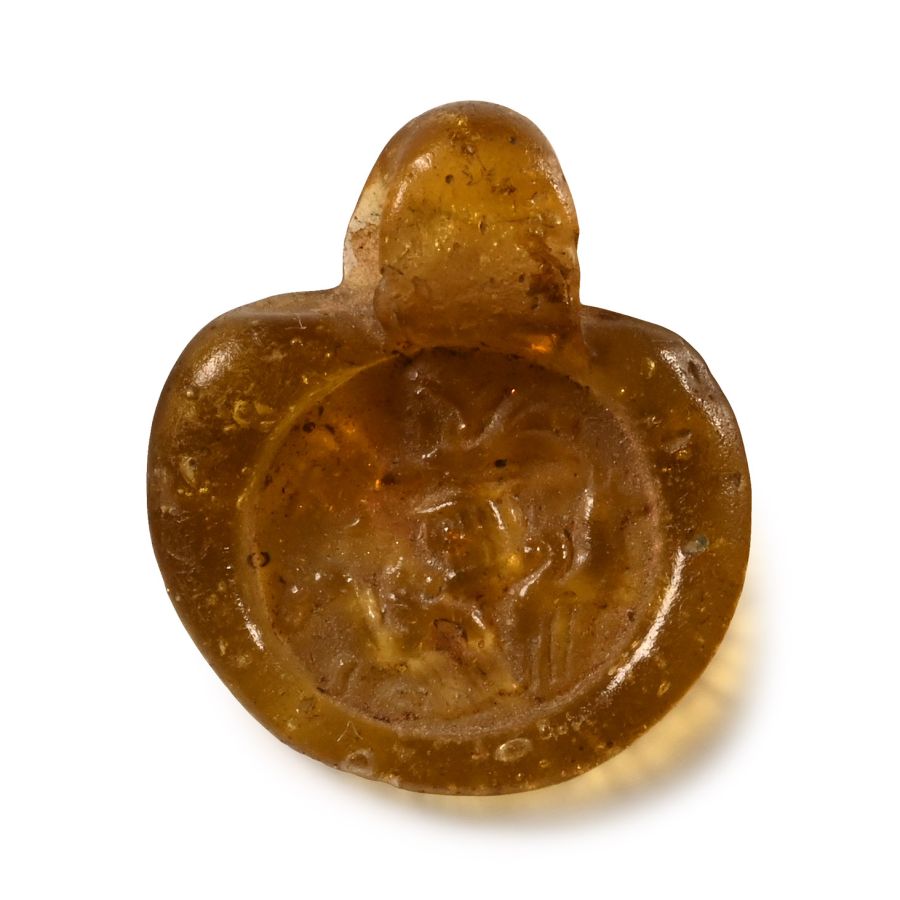
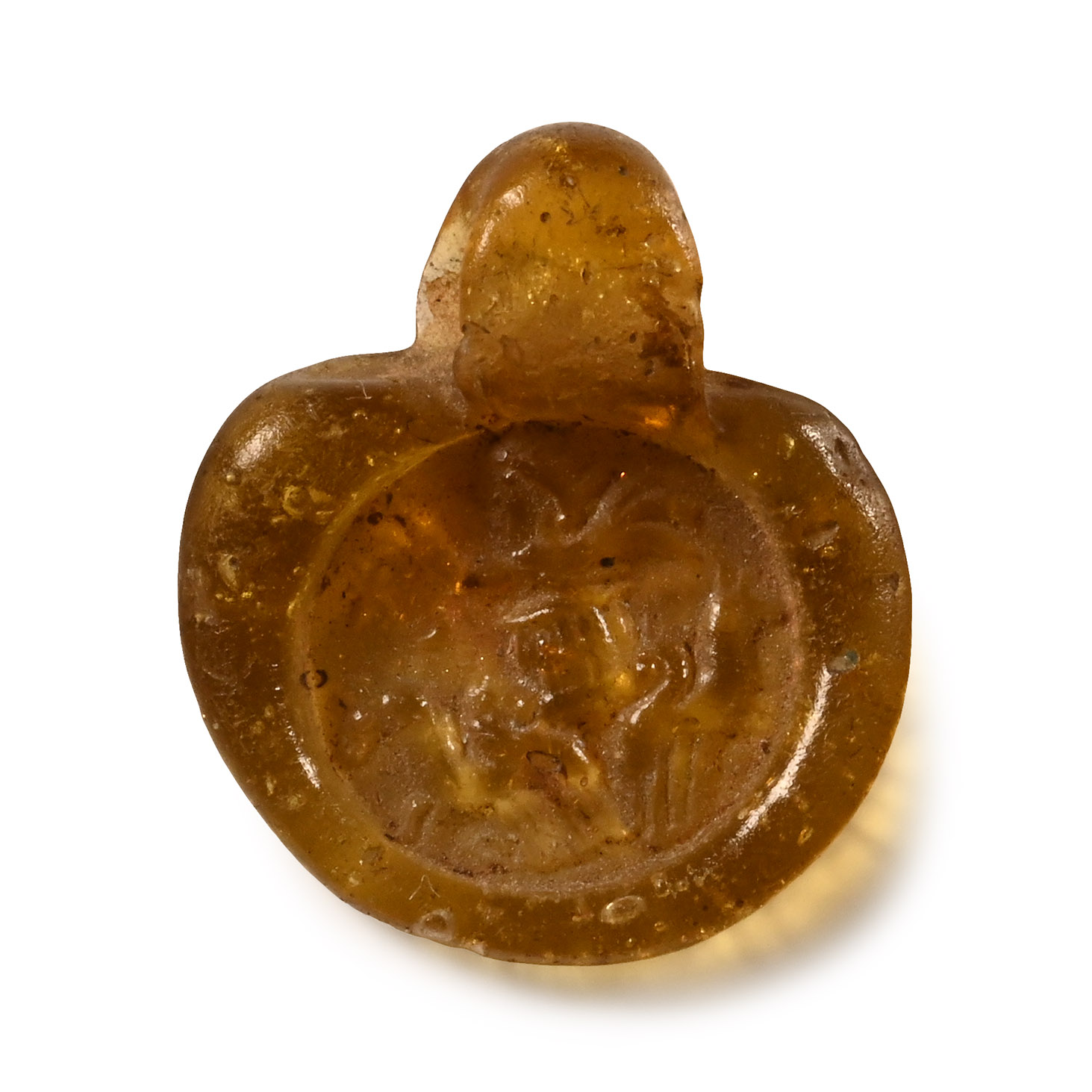
Late Roman Glass Pendant with Helios Apollo on Quadriga
4TH CENTURY A.D.
7/8 in. (1.4 grams, 21 mm).
Discoid in plan with integral loop, impressed design of Helios-Apollo in his quadriga chariot.
ProvenanceCollected from 1970-1999.
From the collection of the late Mr S.M., London, UK.
TimeLine Auctions follows a vetting process to ensure the authenticity and legality of all items, reinforcing our commitment to integrity and responsible trading. Each antiquity, antique, and coin lot undergoes thorough examination by a vetting committee of at least ten external specialists, professional trade association members, scientists, and archaeologists: Our Vetting Process
AUCTIONS:
TimeLine is a leading auction house specialising in antiquities, ancient art, collectables, natural history, coins, medals, and books. Our auctions offer museums, collectors, historians, and enthusiasts the opportunity to acquire unique and historically significant pieces.
LOT 0875
Late Roman Glass Pendant with Helios Apollo on Quadriga
Sold for (Inc. bp): £117
-
.jpg)
Roman Bulbous Glass Vase
2nd-3rd century A.D.Sold for (Inc. bp): £169
With long slender neck and everted rim. 37 grams, 12.5 cm
Acquired 1970s-1996. Property of a North American collector. London collection, 2016. -
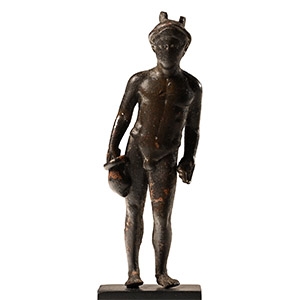
Roman Bronze Mercury Statuette
2nd century A.D.Sold for (Inc. bp): £845
Standing nude in contrapposto stance with winged petasos over his neat hair; left hand modelled open to accept a patera, right hand holding the marsupium coin-purse; free-running bronze arm-ring; mounted on a custom-made stand. 123 grams total, 10.8 cm including stand
Identified as Roman by the British Museum on 8th January 1996. From a collection acquired on the UK art market from various auction houses and collections mostly before 2000. From an important Cambridgeshire estate; thence by descent. -
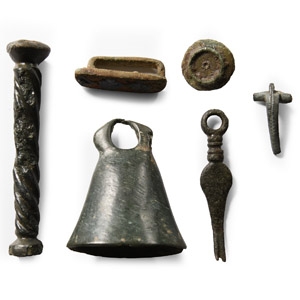
Roman Bronze Artefact Collection
1st-4th century A.D.Sold for (Inc. bp): £33
Including a miniature T-shaped brooch, nail-cleaner, enamelled military belt mount and other items; many of these objects are published in the Detector Finds book series. 95 grams total, 20-77 mm
From the collection of the famous author, writer and speaker, Gordon Bailey, Essex, UK; formed since 1968.
