
Loading, please wait...


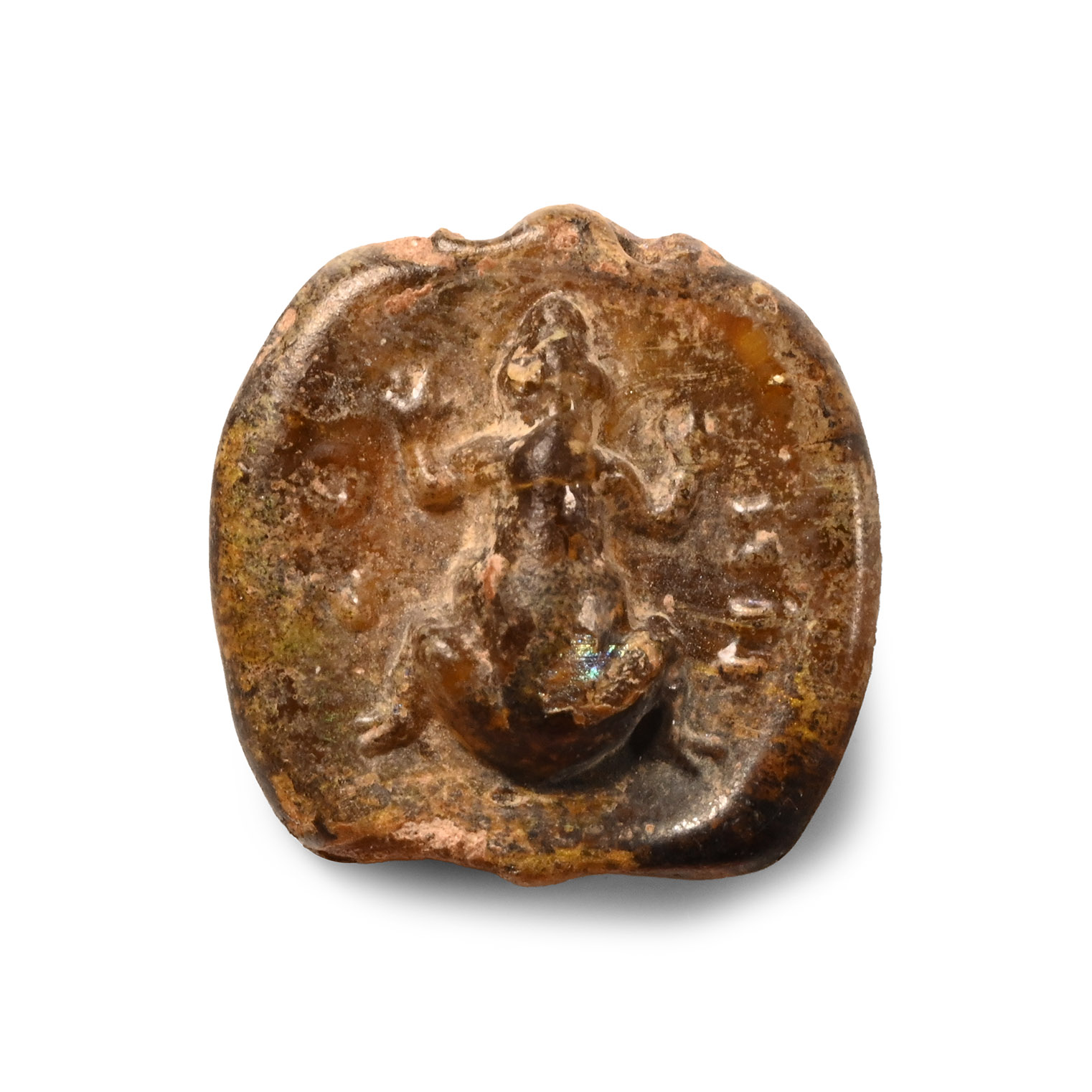
LOT 0859
Late Roman Glass Pendant with Frog and 'Life' Inscription
MID 5TH-EARLY 6TH CENTURY A.D.
5/8 in. (1.76 grams, 17 mm).
Fragment with high-relief frog modelled in the half-round and surrounding legend 'ZOH' (life).
ProvenanceCollected from 1970-1999.
From the collection of the late Mr S.M., London, UK.
TimeLine Auctions follows a vetting process to ensure the authenticity and legality of all items, reinforcing our commitment to integrity and responsible trading. Each antiquity, antique, and coin lot undergoes thorough examination by a vetting committee of at least ten external specialists, professional trade association members, scientists, and archaeologists: Our Vetting Process
AUCTIONS:
TimeLine is a leading auction house specialising in antiquities, ancient art, collectables, natural history, coins, medals, and books. Our auctions offer museums, collectors, historians, and enthusiasts the opportunity to acquire unique and historically significant pieces.
LOT 0859
Late Roman Glass Pendant with Frog and 'Life' Inscription
Sold for (Inc. bp): £117
-
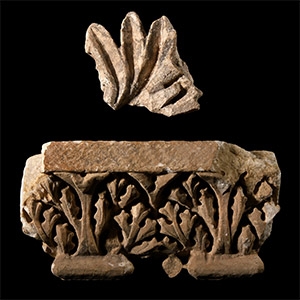
Roman Marble Cornice Fragment Group
3rd-6th century A.D.Estimate: £700 - 900 (+bp*)
Opening Bid: £350
Comprising: triangular-section cornice panel with ledge above a detailed acanthus-leaf frieze in high-relief; section of radiating foliage modelled in the round; both mounted on a custom-made display stand. 3.35 kg total, 26 cm including stand
Private collection, England. -
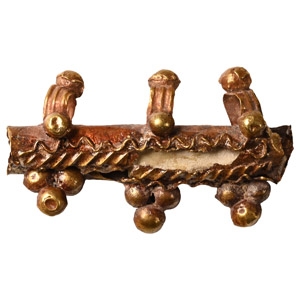
Roman Gold Amuletic Case
3rd-5th century A.D.Estimate: £180 - 240 (+bp*)
Opening Bid: £90
Hollow-formed sheet gold sleeve with three ribbed suspension loop with applied granules, granule clusters to the lower edge, corrugated surface and applied filigree trails. 2.34 grams, 33 mm
Collected from 1970-1999. From the collection of the late Mr S.M., London, UK. -
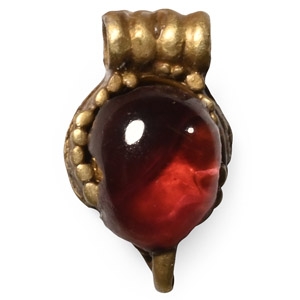
Roman Gold Pendant with Garnet
1st-4th century A.D.Sold for (Inc. bp): £195
Sheet gold disc pendant with garnet cabochon, knop and ribbed suspension loop. 0.22 grams, 8 mm
Ex property of a late Japanese collector, 1970-2000s.
