
Loading, please wait...
LOT 0899
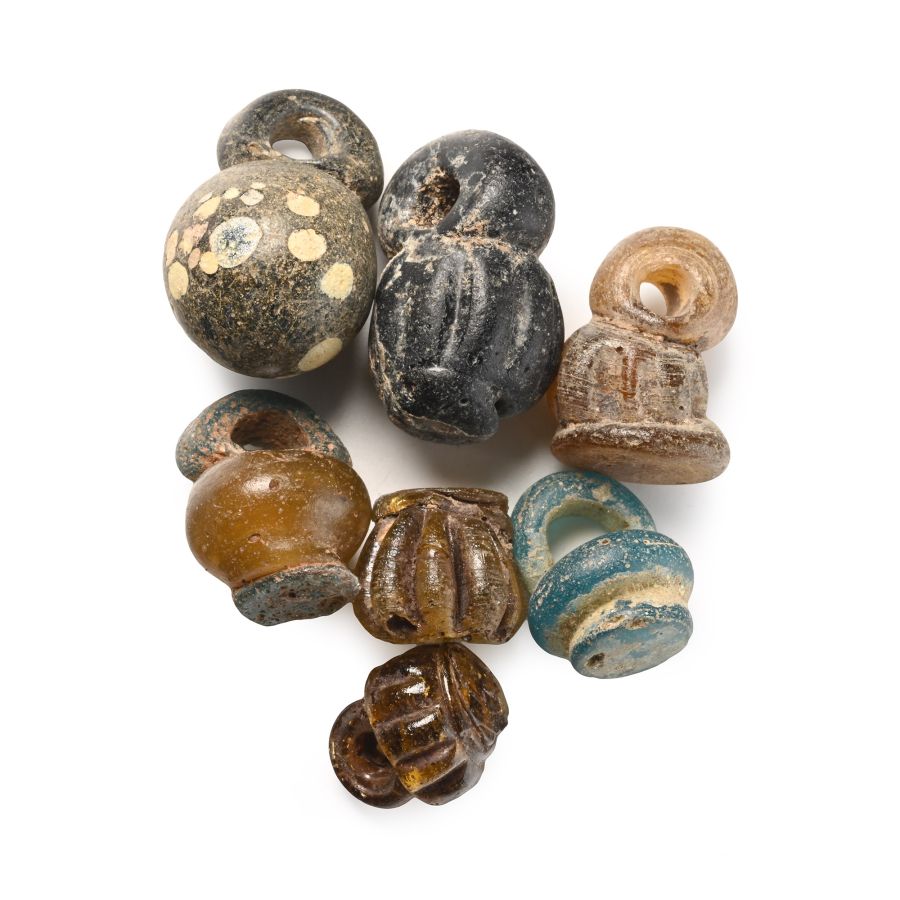
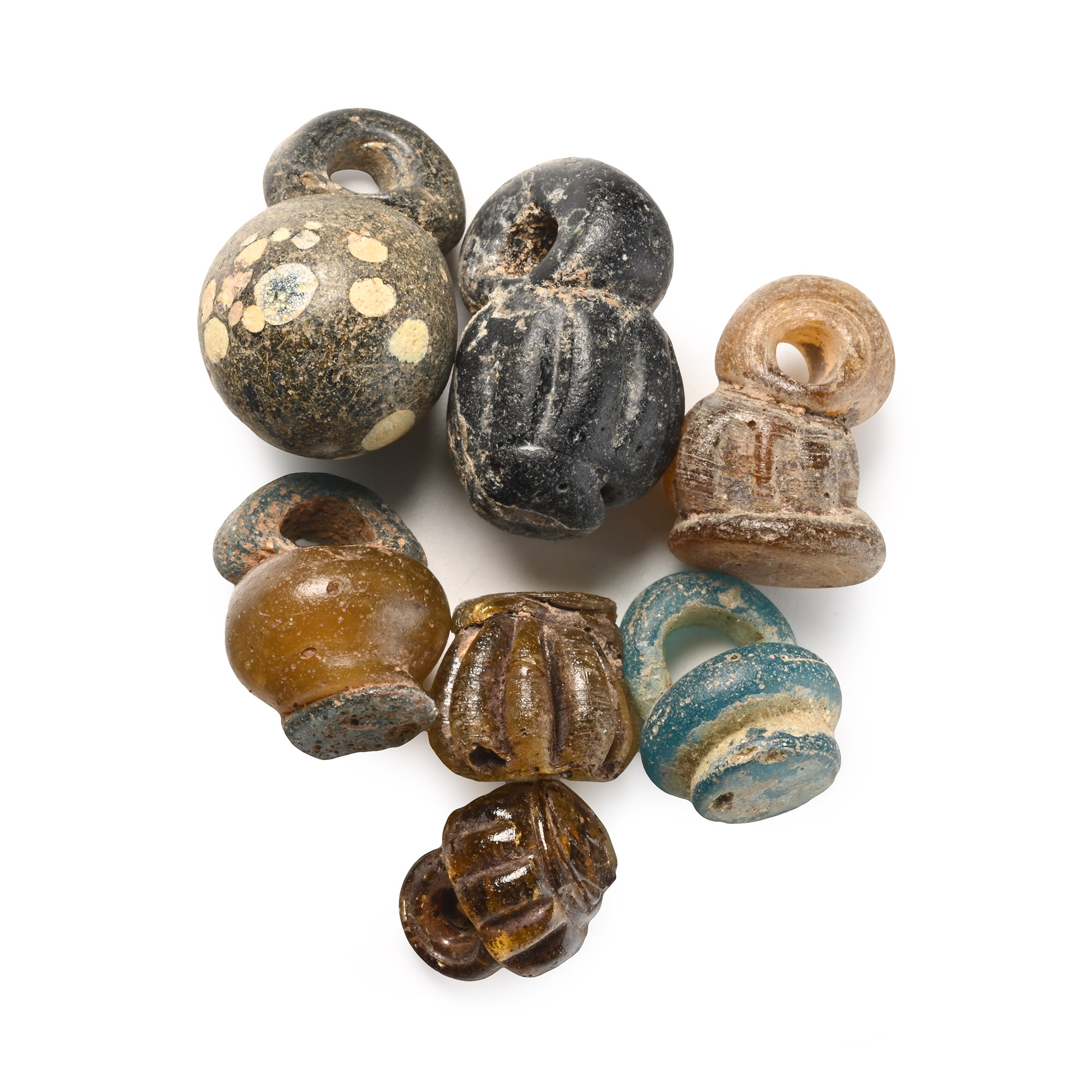
Late Roman Glass Pendant Collection
5TH-7TH CENTURY A.D.
1/4 - 5/8 in. (9.36 grams total, 8-18 mm).
Including ribbed melon and other types. [7]
ProvenanceFrom the private collection of the late Mr S.M., 1969-1999.
CONDITIONTimeLine Auctions follows a vetting process to ensure the authenticity and legality of all items, reinforcing our commitment to integrity and responsible trading. Each antiquity, antique, and coin lot undergoes thorough examination by a vetting committee of at least ten external specialists, professional trade association members, scientists, and archaeologists: Our Vetting Process
AUCTIONS:
TimeLine is a leading auction house specialising in antiquities, ancient art, collectables, natural history, coins, medals, and books. Our auctions offer museums, collectors, historians, and enthusiasts the opportunity to acquire unique and historically significant pieces.
-
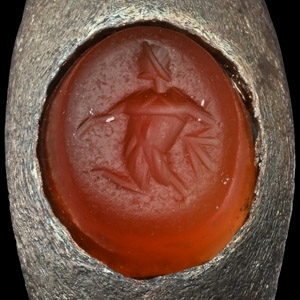
Roman Silver Ring with Harpy Gemstone
2nd-3rd century A.D.Sold for (Inc. bp): £98
D-section hoop with flared shoulders, inset carnelian with intaglio of a Harpy. 5.81 grams, 22.21 mm overall, 17.71 mm internal diameter (approximate size British F 1/2, USA 3, Europe 4.3, Japan 4)
Ex Shiraz Antiques, London, W1, in 1998. -
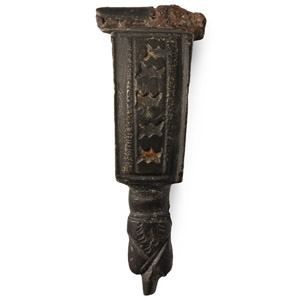
Romano-British Bronze Bow Brooch with Bird Terminal
2nd century A.D.Sold for (Inc. bp): £52
Wide bow with a raised decorative panel with polygonal cells for enamel, zoomorphic finial. 4.66 grams, 37 mm
Found Norfolk, UK. From a Kent collection formed in the 1990s. -
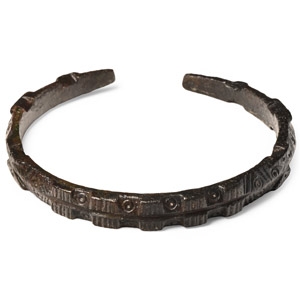
Roman Decorated Bronze Bracelet
2nd-4th century A.D.Sold for (Inc. bp): £124
Penannular body divided into segments with raised areas, ring-and-dot and linear decoration with stylised beast-head terminals. 21.26 grams, 58 mm
From a private Tyneside collection, formed since the early 2000s.
