
Loading, please wait...
LOT 0719
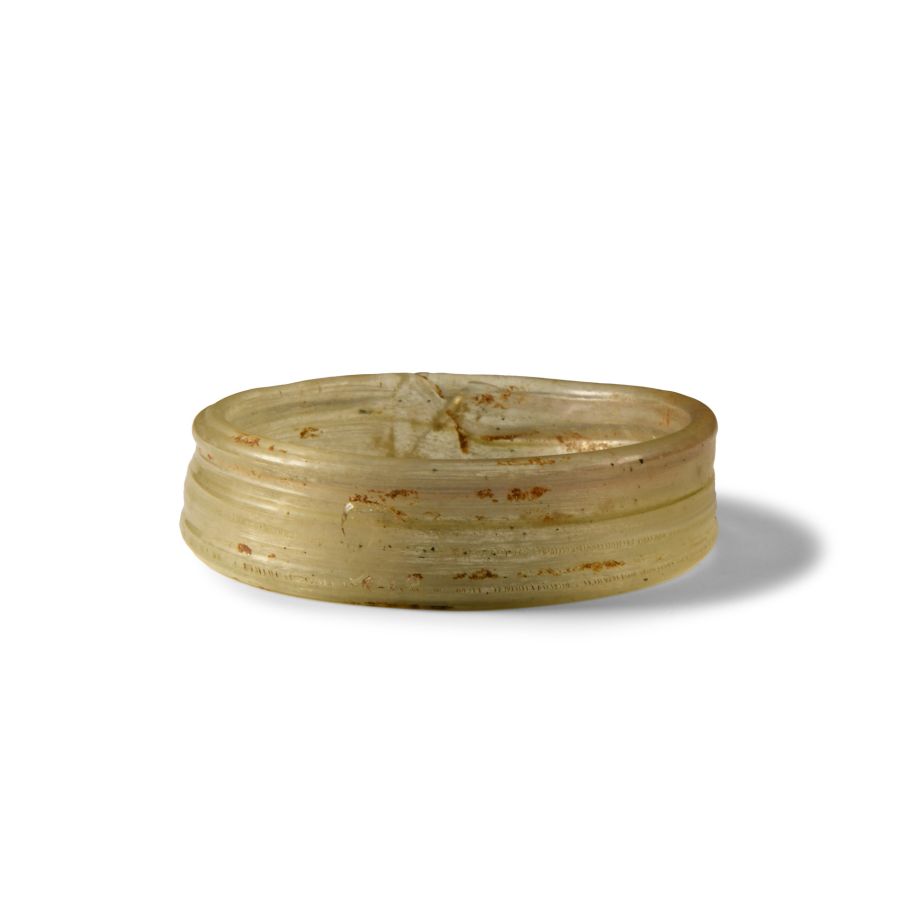
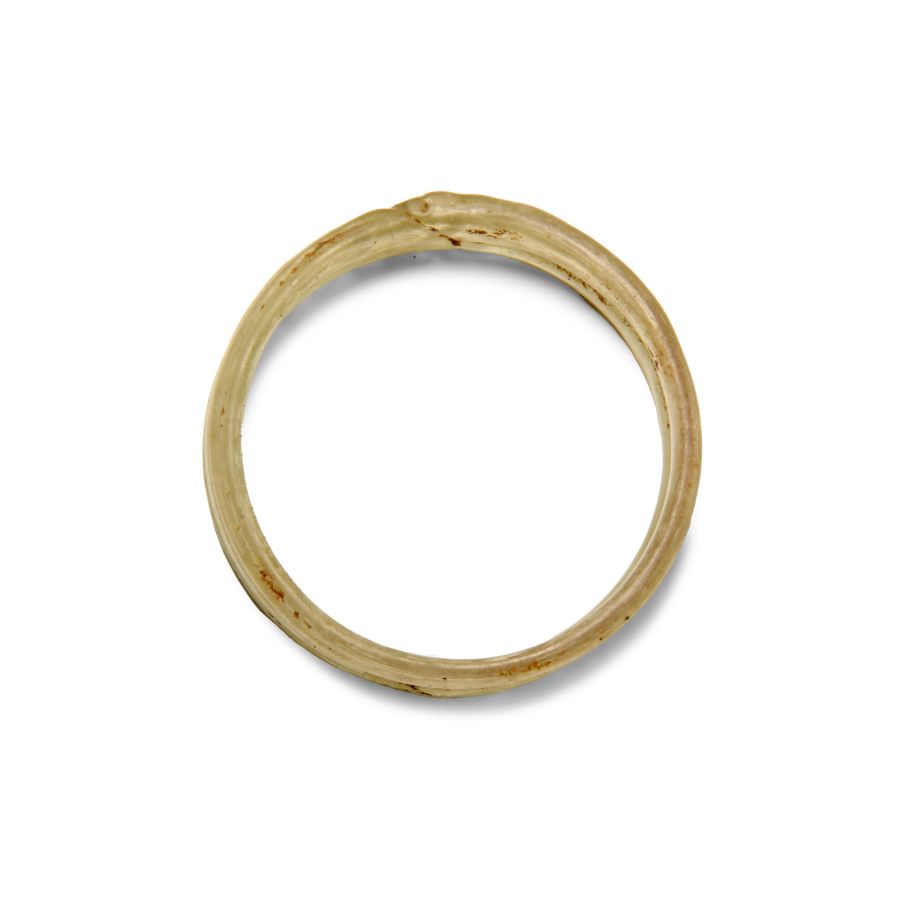
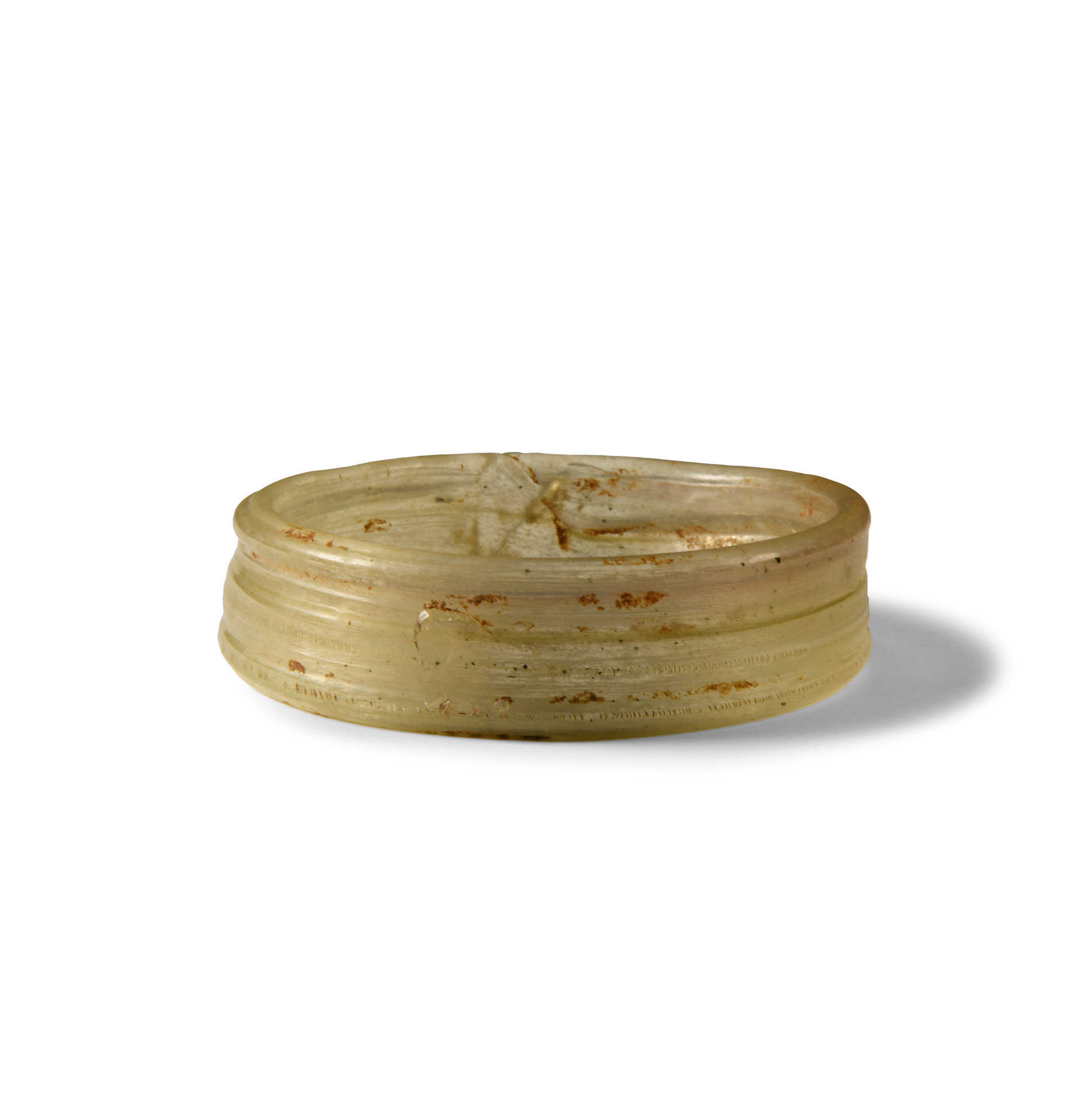
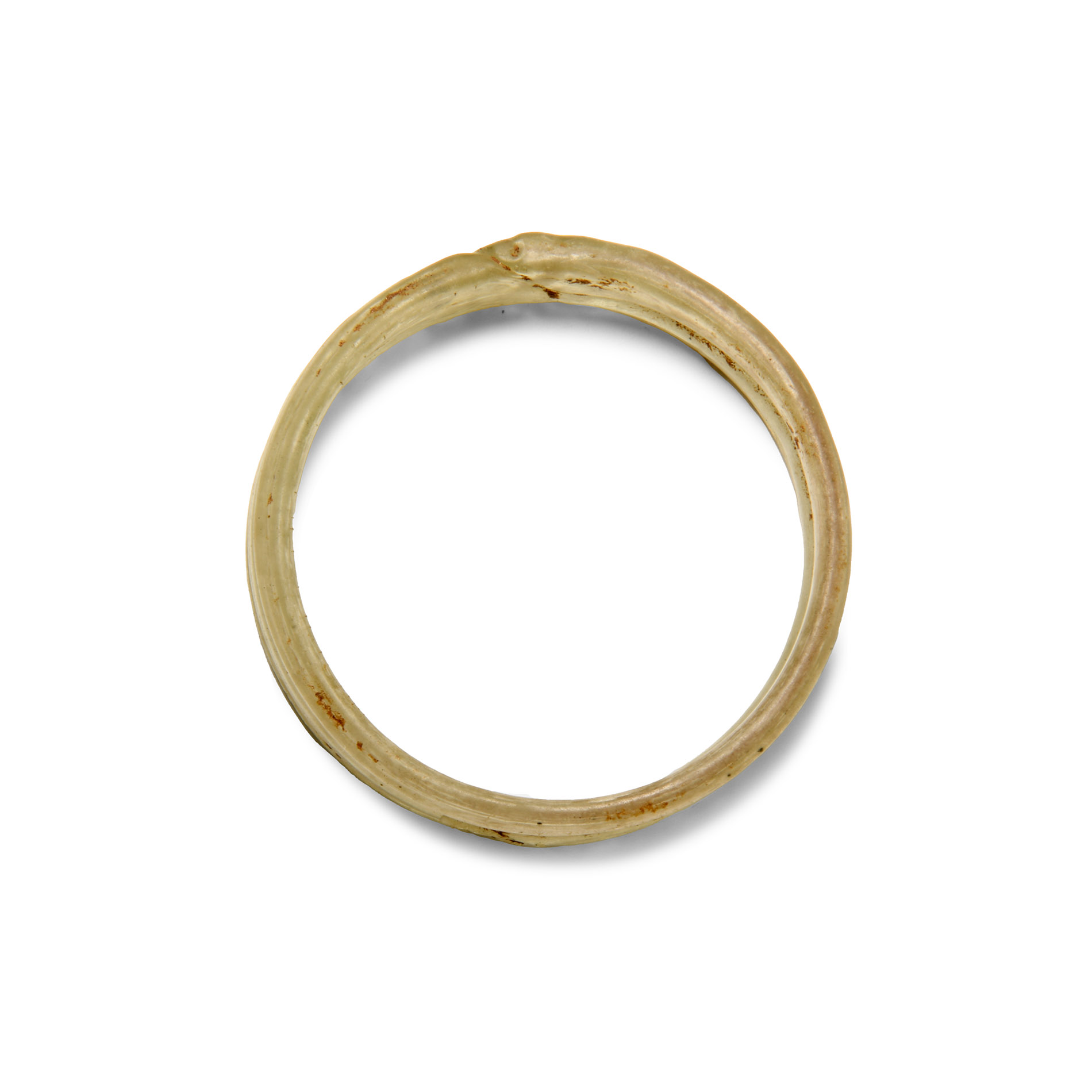
Late Roman Glass Bangle
5TH-7TH CENTURY A.D.
2 5/8 in. (29.5 grams, 66 mm).
Aqua-coloured glass lamp-work bangle with ribbed construction. [No Reserve]
ProvenanceAcquired from Allan Cherry, Bournemouth, UK, 2005.
Ian Wilkinson collection, Nottinghamshire, UK.
Accompanied by an illustrated display card.
Cf. fragment of a similar item in the British Museum under accession no.1934,1016.1; cf. Whitehouse, D., Roman Glass in the Corning Museum of Glass, vol.III, no.1004, for similar type in translucent purple.
FootnotesThe type is well known in the Eastern Empire from the 5th to the 7th century A.D. Usually these bracelets are decorated on outer surface with five continuous parallel horizontal ribs.
CONDITIONTimeLine Auctions follows a vetting process to ensure the authenticity and legality of all items, reinforcing our commitment to integrity and responsible trading. Each antiquity, antique, and coin lot undergoes thorough examination by a vetting committee of at least ten external specialists, professional trade association members, scientists, and archaeologists: Our Vetting Process
AUCTIONS:
TimeLine is a leading auction house specialising in antiquities, ancient art, collectables, natural history, coins, medals, and books. Our auctions offer museums, collectors, historians, and enthusiasts the opportunity to acquire unique and historically significant pieces.
-
Roman Bronze Miniature Flagon
2nd-3rd century A.D.Sold for (Inc. bp): £91
With piriform body, short neck, everted rim and strap handle, circumferential bands to the body. 10.9 grams, 42 mm
Acquired from Den of Antiquity, Cambridgeshire, UK, 2010. Ian Wilkinson collection, Nottinghamshire, UK.
The small size of this bronze container suggests that it was intended as a toilette object, or as an oil vessel for athletes, generally associated with a strigil. Its could also have been used as a balsamarium. -
Roman Lead Coffin Panel with Sphinx, Medusa and Dolphins
2nd-3rd century A.DSold for (Inc. bp): £1,430
Decorated with a high-relief pattern comprising sphinxes surrounded by dolphins and masks of Medusa surrounded by laurel leaves all between Corinthian columns; ropework and floral border strips with laurel leaves above and lip below the upper edge. 13.65 kg, 80 cm
Acquired 1970s-early 1990s. Property of a North American collector. London collection, 2016. -
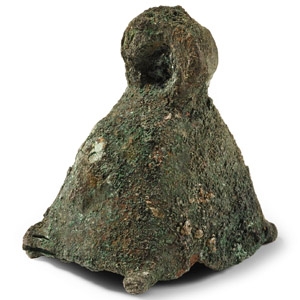
Roman Bronze Square Bell
1st-4th century A.D.Sold for (Inc. bp): £46
With integral loop and four spurs to the lower edge; remains of ferrous clapper in situ. 43.1 grams, 42 mm
Ex German art market, 2000s. Acquired from an EU collector living in London. From the collection of Surrey, UK, gentleman.
