
Loading, please wait...
LOT 0750
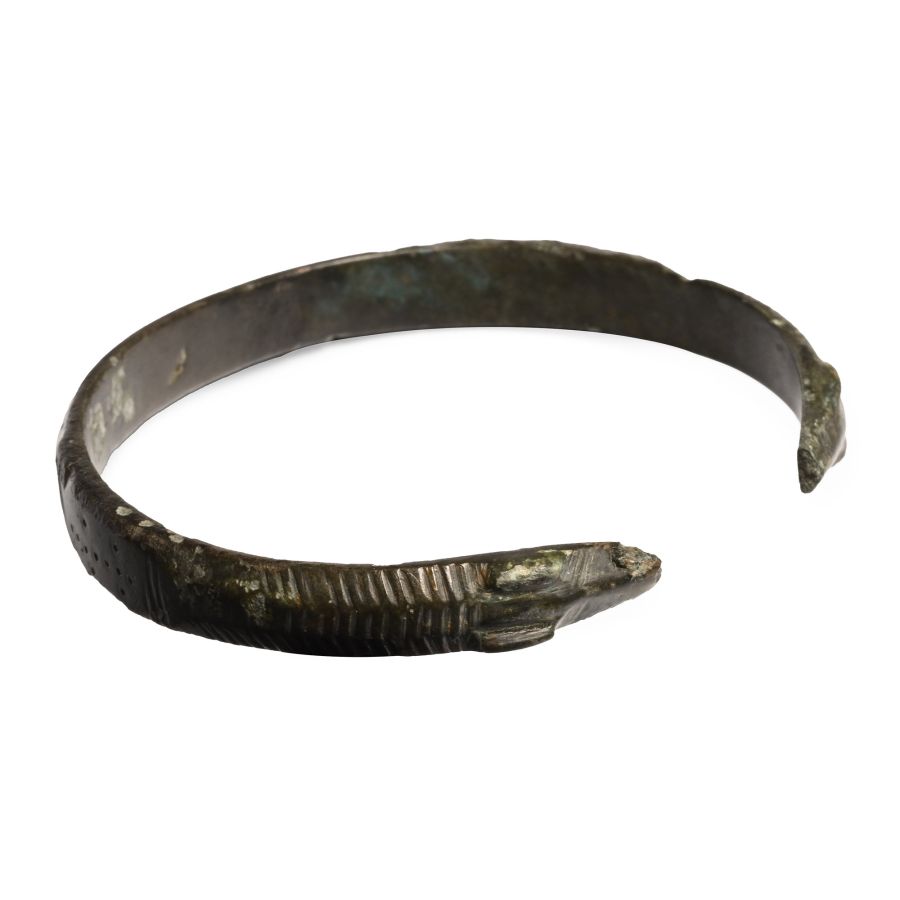
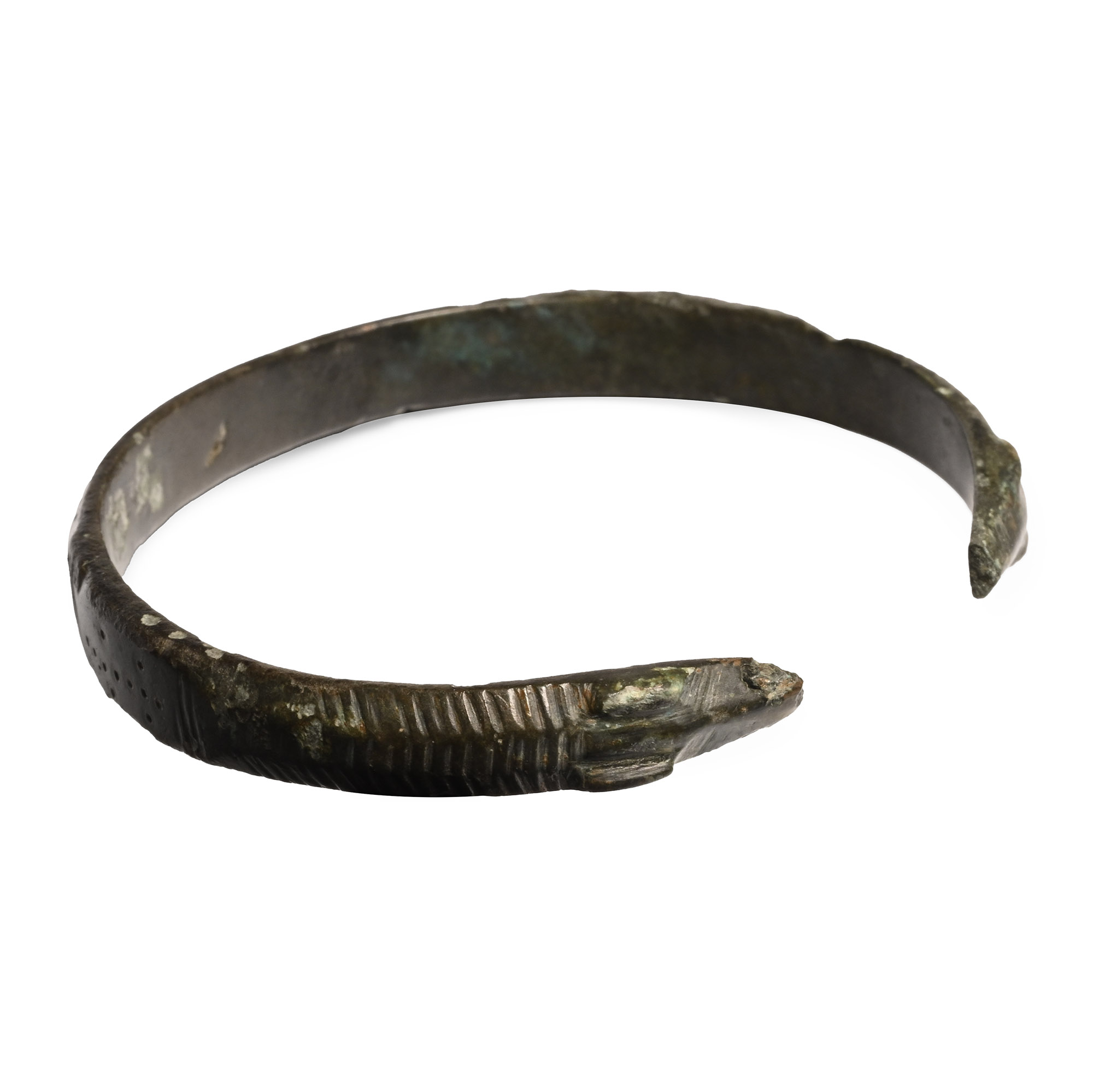
Late Roman Bronze Military Bracelet with Snake-Heads
4TH-5TH CENTURY A.D.
2 3/8 in. (14.7 grams, 60 mm).
D-section penannular body with linear and pellet decoration, tapering snake-head terminals with scale detailing. [No Reserve]
ProvenanceEx German art market, 2000s.
Acquired from an EU collector living in London.
From the collection of a Surrey, UK, gentleman.
This lot is accompanied by an illustrated lot declaration signed by the Head of the Antiquities Department, Dr Raffaele D'Amato.
TimeLine Auctions follows a vetting process to ensure the authenticity and legality of all items, reinforcing our commitment to integrity and responsible trading. Each antiquity, antique, and coin lot undergoes thorough examination by a vetting committee of at least ten external specialists, professional trade association members, scientists, and archaeologists: Our Vetting Process
AUCTIONS:
TimeLine is a leading auction house specialising in antiquities, ancient art, collectables, natural history, coins, medals, and books. Our auctions offer museums, collectors, historians, and enthusiasts the opportunity to acquire unique and historically significant pieces.
-
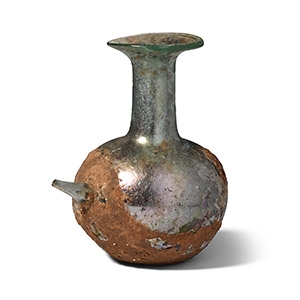
Roman Iridescent Glass Feeder Bottle
2nd-4th century A.D.Sold for (Inc. bp): £208
With bulbous bottle, tubular neck, broad everted rim and conical spout; extensive iridescence. 40 grams, 10.2 cm high
Acquired early 1990s. Ex private American collection; thence by descent. Private collection since 1998. This lot is accompanied by an illustrated lot declaration signed by the Head of the Antiquities Department, Dr Raffaele D'Amato. -
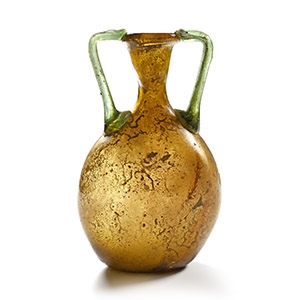
Roman Honey and Green Double-Handled Glass Pilgrim's Flask
1st-4th century A.D.Sold for (Inc. bp): £1,170
Amphoriskos with flat disc-shaped body, tubular neck with flared rim, two lateral knee-shaped handles to the shoulder. 105 grams, 13.9 cm
From an important London collection of glass, 1990s. This lot is accompanied by an illustrated lot declaration signed by the Head of the Antiquities Department, Dr Raffaele D'Amato. -
.jpg)
Roman Tinned Bronze Galley Brooch
2nd century A.D.Sold for (Inc. bp): £650
Plate brooch with pin-lugs, pin and catch to reverse, formed as a galley with ramming beam in the prow, high stern and anchor below. 11.9 grams, 44 mm
Ex important German collection of brooches, 1980s. This lot is accompanied by an illustrated lot declaration signed by the Head of the Antiquities Department, Dr Raffaele D'Amato.
