
Loading, please wait...
LOT 0782
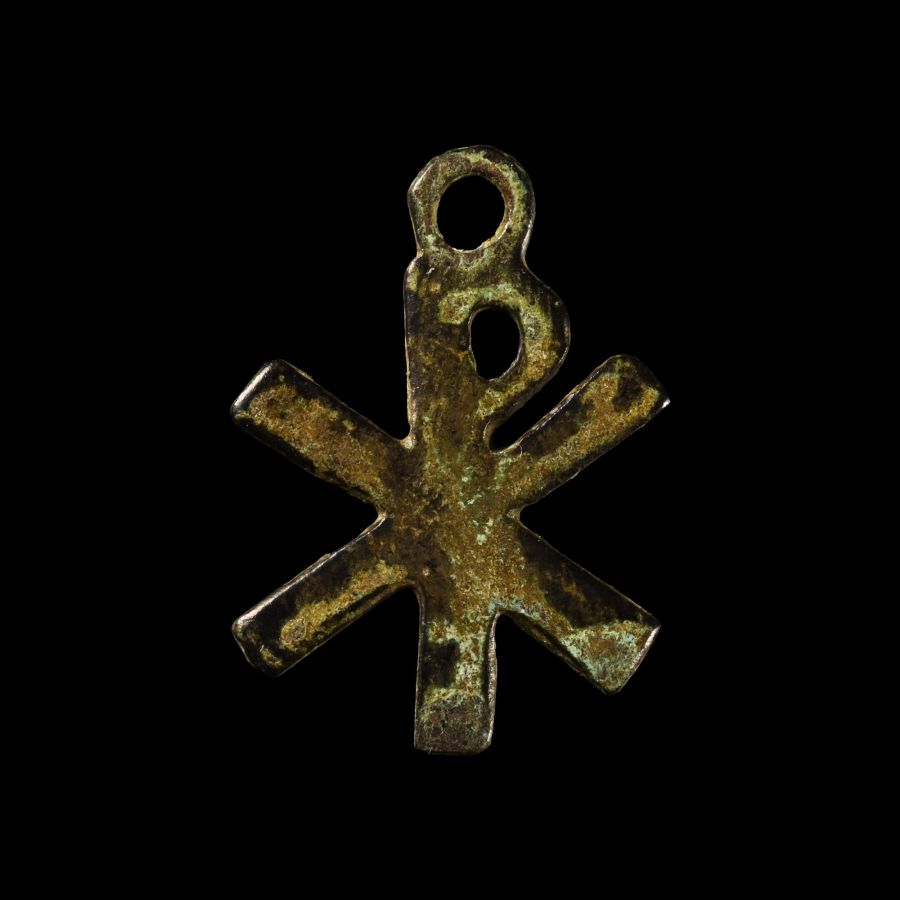
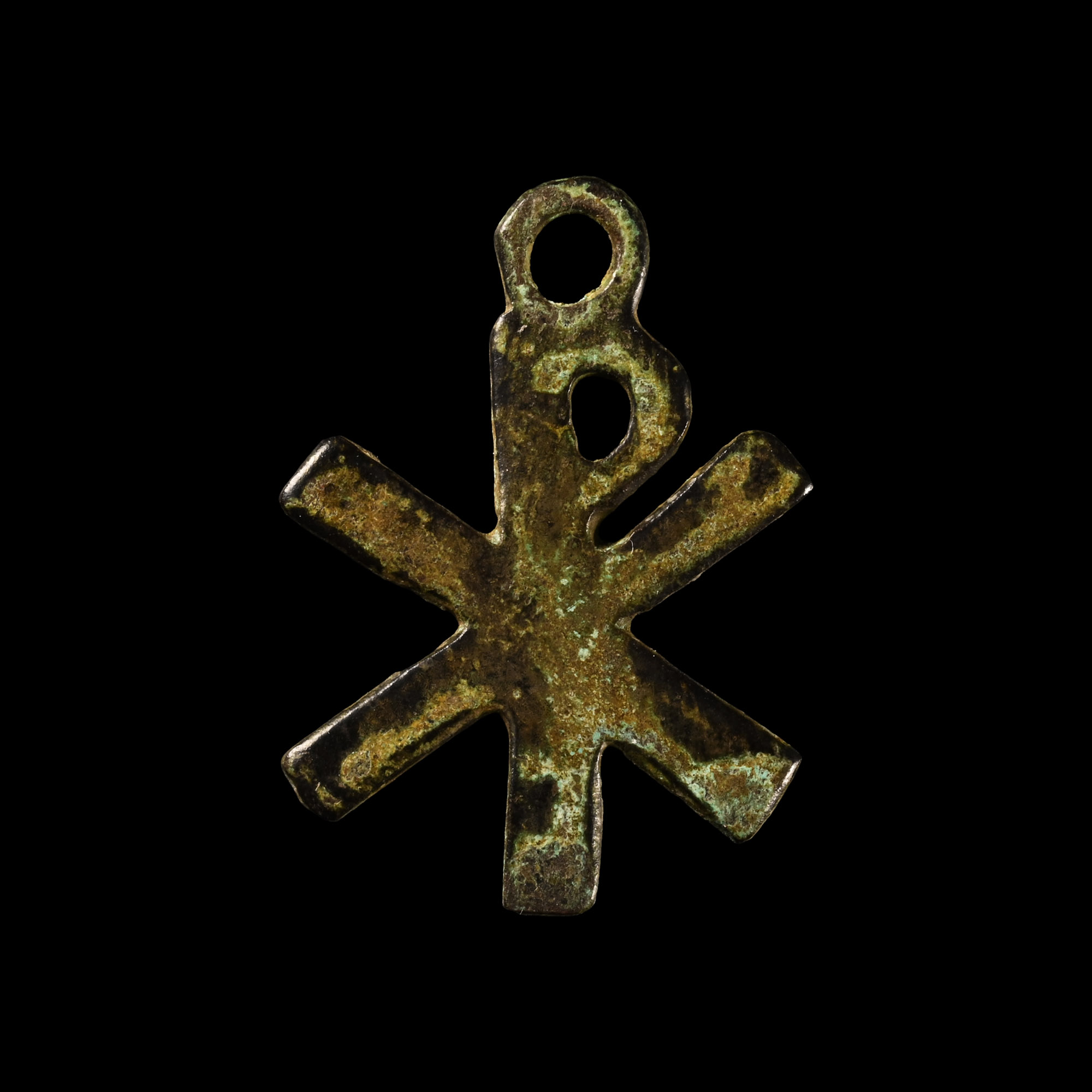
Late Roman Bronze Chi Rho Pendant
4TH-6TH CENTURY A.D.
1 1/2 in. (2.71 grams, 37 mm).
Amuletic Christogram pendant with loop above. [No Reserve]
ProvenanceFrom a collection acquired on the UK art market from various auction houses and collections mostly before 2000.
From an important Cambridgeshire estate; thence by descent.
TimeLine Auctions follows a vetting process to ensure the authenticity and legality of all items, reinforcing our commitment to integrity and responsible trading. Each antiquity, antique, and coin lot undergoes thorough examination by a vetting committee of at least ten external specialists, professional trade association members, scientists, and archaeologists: Our Vetting Process
AUCTIONS:
TimeLine is a leading auction house specialising in antiquities, ancient art, collectables, natural history, coins, medals, and books. Our auctions offer museums, collectors, historians, and enthusiasts the opportunity to acquire unique and historically significant pieces.
-
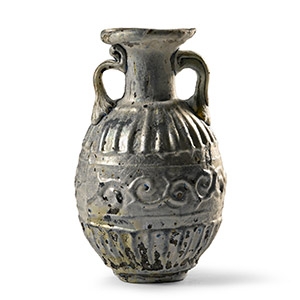
Roman Sidonian Mould-Blown Two-Handled Flask with Silver Iridescence
2nd-4th century A.D.Estimate: £2,500 - 3,500 (+bp*)
Opening Bid: £1,250
With barrel-shaped body, trumpet-shaped mouth and two applied strap handles to the shoulder; band of scrolled tendrils to the equator, vertically ribbed bands above and below. 20 grams, 75 mm
From an important London, UK, collection, 1970-1990s. This lot has been checked against the Interpol Database of stolen works of art and is accompanied by search certificate number no.12236-222279. -
.jpg)
Roman Bronze Mars Rider Statuette
2nd-3rd century A.D.Sold for (Inc. bp): £221
Modelled in the round, nude male with legs in straddling pose, left hand thrust forward and right arm raised with hand open; head exaggerated with shoulder-length hair and crested helmet. 35.6 grams, 60 mm
From a collection acquired on the UK art market from various auction houses and collections mostly before 2000. From an important Cambridgeshire estate; thence by descent.
The pseudo-Corinthian or Apulo-Corinthian helmet, here represented on the head of the divinity, was originally a legionary helmet, then became, in the Late Consular Age, an officer's helmet, then a typical attribute of military commanders and then of the war god, Mars. However, this statuette of Mars has strong Celtic connotations, as evidenced by the torques around the neck and the warrior god's hair. -
.jpg)
Roman Marble Head of a Young Man
2nd-3rd century A.D.Estimate: £3,500 - 4,500 (‡+bp*)
Opening Bid: £1,250
Worked in high-relief with hairstyle typical of the transitional period from the Consulate to the Empire; oval face with a prominent forehead, oval eyelids and clearly defined lines around the eyes; hair arranged in vertical lines combed back from the forehead; pronounced lips, typical rendering of the wide auricles; the lower part of the tunic visible with a well defined round edge around the neck; mounted on a custom-made display stand. 5.94 kg total, 22.5 cm high including stand
Acquired from Gallery Gryphos, Munich, 1992. European private collection. Accompanied by an academic report by Dr Raffaele D’Amato. This lot has been checked against the Interpol Database of stolen works of art and is accompanied by search certificate number no.11996-211878.
The head was probably pertinent to a series of funerary family portraits. It has realistic modelling of male features, which speaks of a portrait in reduced dimensions or a reference to a well-known person in the environment where it was exhibited. The portrait is worked only on the front, leaving the back, as well as the lower part of the sculpture, roughly treated.
