
Loading, please wait...
LOT 0746
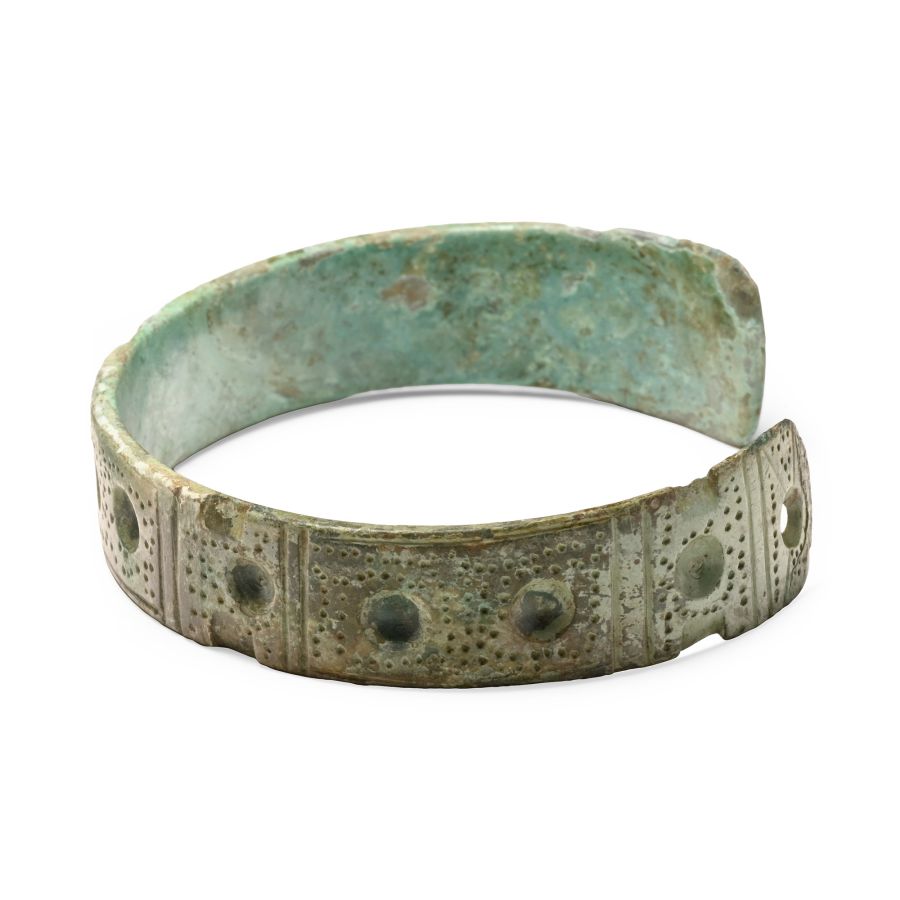
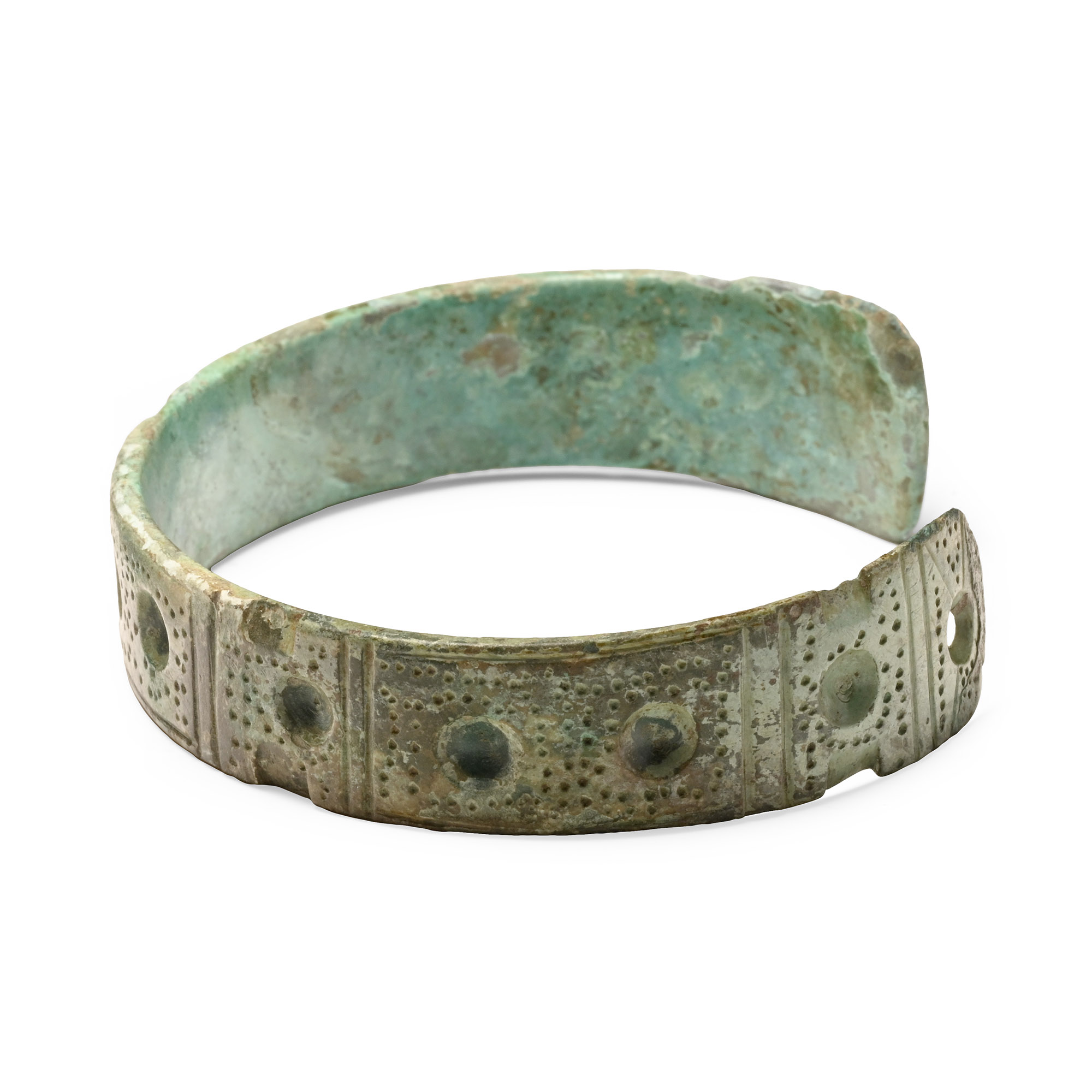
Late Roman Bronze Bracelet
4TH-6TH CENTURY A.D.
2 3/8 in. (34.1 grams, 61 mm).
Rectangular-section penannular body with punched pellets on pointillé decorated field divided with transverse lines.
ProvenanceEx German art market, 2000s.
Acquired from an EU collector living in London.
From the collection of a Surrey, UK, gentleman.
TimeLine Auctions follows a vetting process to ensure the authenticity and legality of all items, reinforcing our commitment to integrity and responsible trading. Each antiquity, antique, and coin lot undergoes thorough examination by a vetting committee of at least ten external specialists, professional trade association members, scientists, and archaeologists: Our Vetting Process
AUCTIONS:
TimeLine is a leading auction house specialising in antiquities, ancient art, collectables, natural history, coins, medals, and books. Our auctions offer museums, collectors, historians, and enthusiasts the opportunity to acquire unique and historically significant pieces.
-
Large Roman Bronze Vessel Handle with Conjoined Dolphins
2nd century A.D.Sold for (Inc. bp): £27
Comprising a crescentic band with ribbed detailing of two opposed dolphins, each with a pierced P-shaped lug to the lower end; 55 grams, 11.3 cm
Found Gloucestershire, UK. -
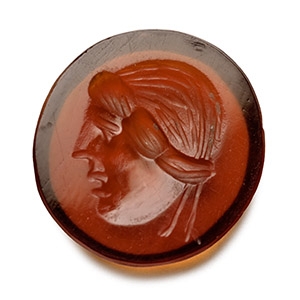
Roman Sard Gemstone with a Maenad Mask
1st century B.C.-1st century A.D.Estimate: £400 - 600 (+bp*)
Opening Bid: £200
With intaglio profile bust of a woman facing left; supplied with a museum-quality impression. 0.49 grams, 11 mm
Private English collection, formed between the late 1970s and early 1990s. Private collection, London, UK. -
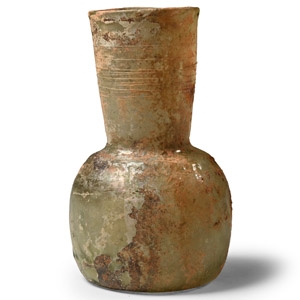
Roman Glass Flask with Everted Spout
4th century A.D.Estimate: £100 - 140 (+bp*)
Opening Bid: £50
Piriform in profile in aqua glass with broad flared neck; applied trails to the neck, dimple base; areas of iridescence. 38 grams, 98 mm
From a London, UK, collection, 1990s. This lot is accompanied by an illustrated lot declaration signed by the Head of the Antiquities Department, Dr Raffaele D’Amato.
The flask is a common Late Roman type, especially diffused in Syria and Palestine. Hayes suggested that examples with straight necks are relatively early in date, while those with necks having a bulge at the top and are narrow below were produced slightly later.
