
Loading, please wait...
LOT 0724
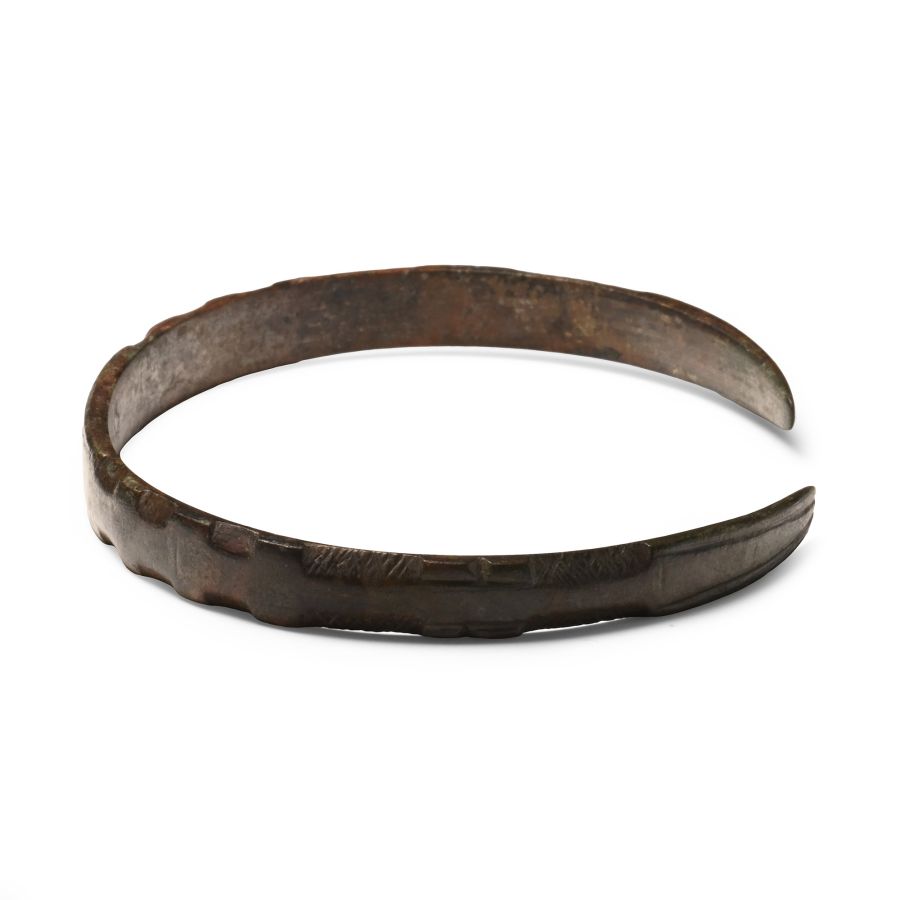
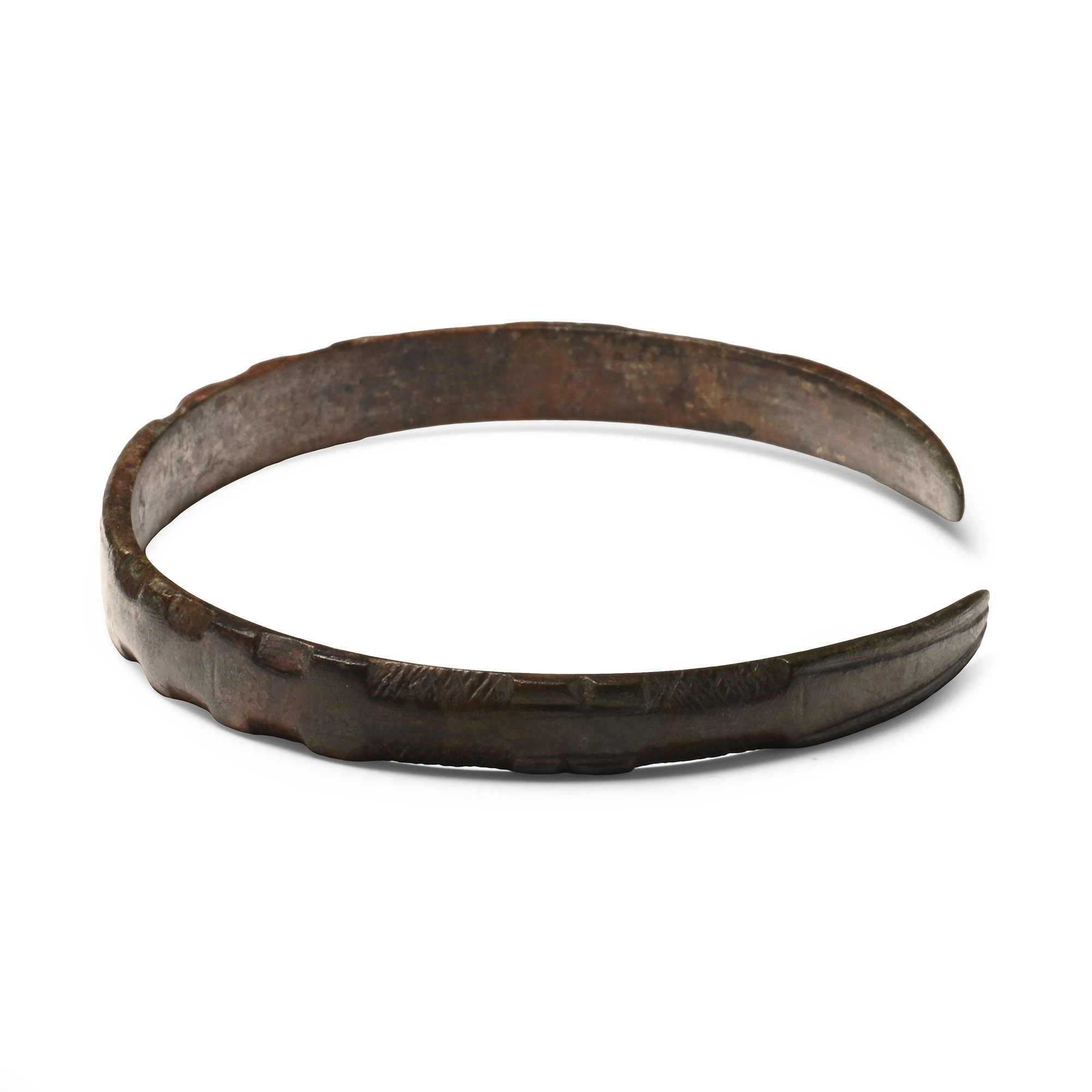
Late Roman Bronze Bracelet
4TH-6TH CENTURY A.D.
2 1/2 in. (20.3 grams, 63 mm).
Penannular rectangular-section body with notched edges and tapering finials. [No Reserve]
ProvenanceEx German art market, 2000s.
Acquired from an EU collector living in London.
From the collection of a Surrey, UK, gentleman.
TimeLine Auctions follows a vetting process to ensure the authenticity and legality of all items, reinforcing our commitment to integrity and responsible trading. Each antiquity, antique, and coin lot undergoes thorough examination by a vetting committee of at least ten external specialists, professional trade association members, scientists, and archaeologists: Our Vetting Process
AUCTIONS:
TimeLine is a leading auction house specialising in antiquities, ancient art, collectables, natural history, coins, medals, and books. Our auctions offer museums, collectors, historians, and enthusiasts the opportunity to acquire unique and historically significant pieces.
-
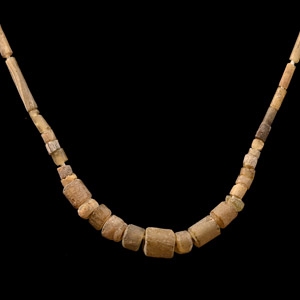
Roman Yellow Glass Bead Necklace String
1st-4th century A.D. and laterSold for (Inc. bp): £26
Restrung group of tubular and other types. 9.2 grams, 46 cm
London, UK, collection, 2000s. -
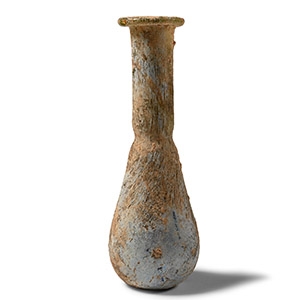
Roman Glass Vessel
1st-2nd century A.D.Estimate: £100 - 140 (+bp*)
Opening Bid: £50
With piriform lower body, extended cylindrical neck and flange rim; iridescent surfaces. 31.4 grams, 10.1 cm
From a London, UK, collection, 1990s. This lot is accompanied by an illustrated lot declaration signed by the Head of the Antiquities Department, Dr Raffaele D’Amato.
This toilet bottle (Clairmont balsamarium type F) is characterised by the cylindrical neck with slight constriction at the bottom. Similar examples have been found in the Wadi Eshari, Jordan (Wadi-Es-Sir). -
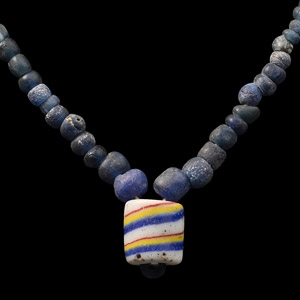
Roman Blue Glass Bead Necklace String
1st-4th century A.D. and laterSold for (Inc. bp): £39
Restrung designer necklace string of tubular, oblate and other types with a modern Indian polychrome centrepiece. 20.38 grams, 43 cm
London, UK, collection, 2000s.
