
Loading, please wait...
LOT 0612
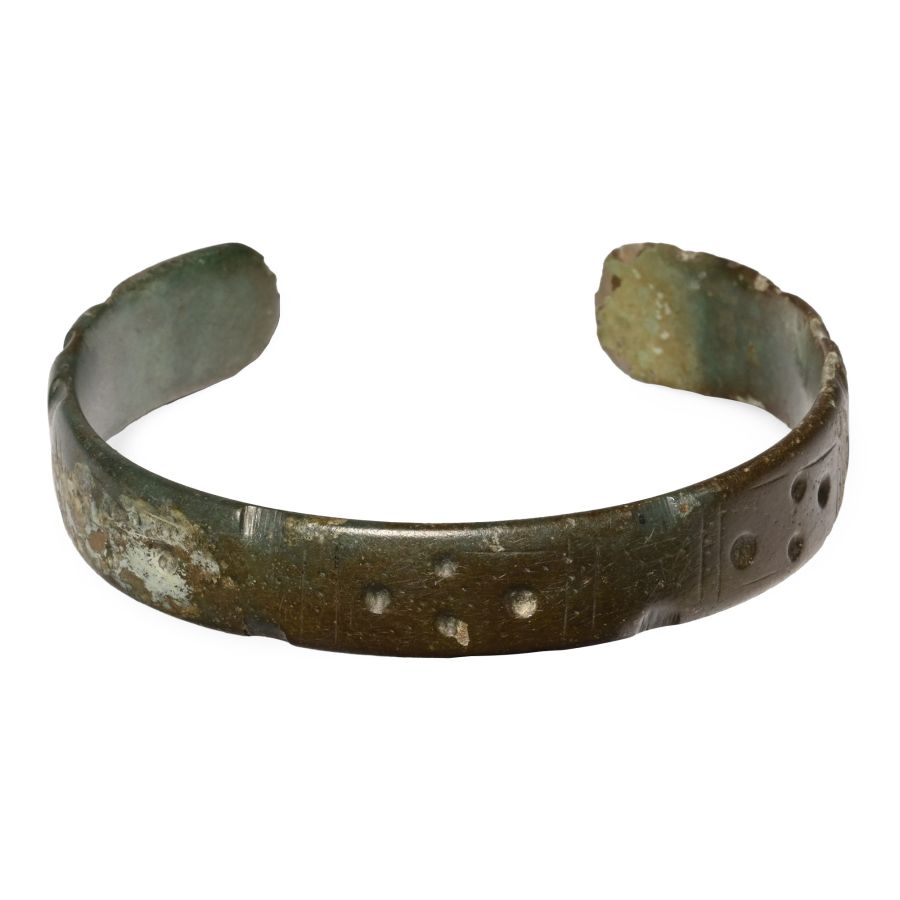
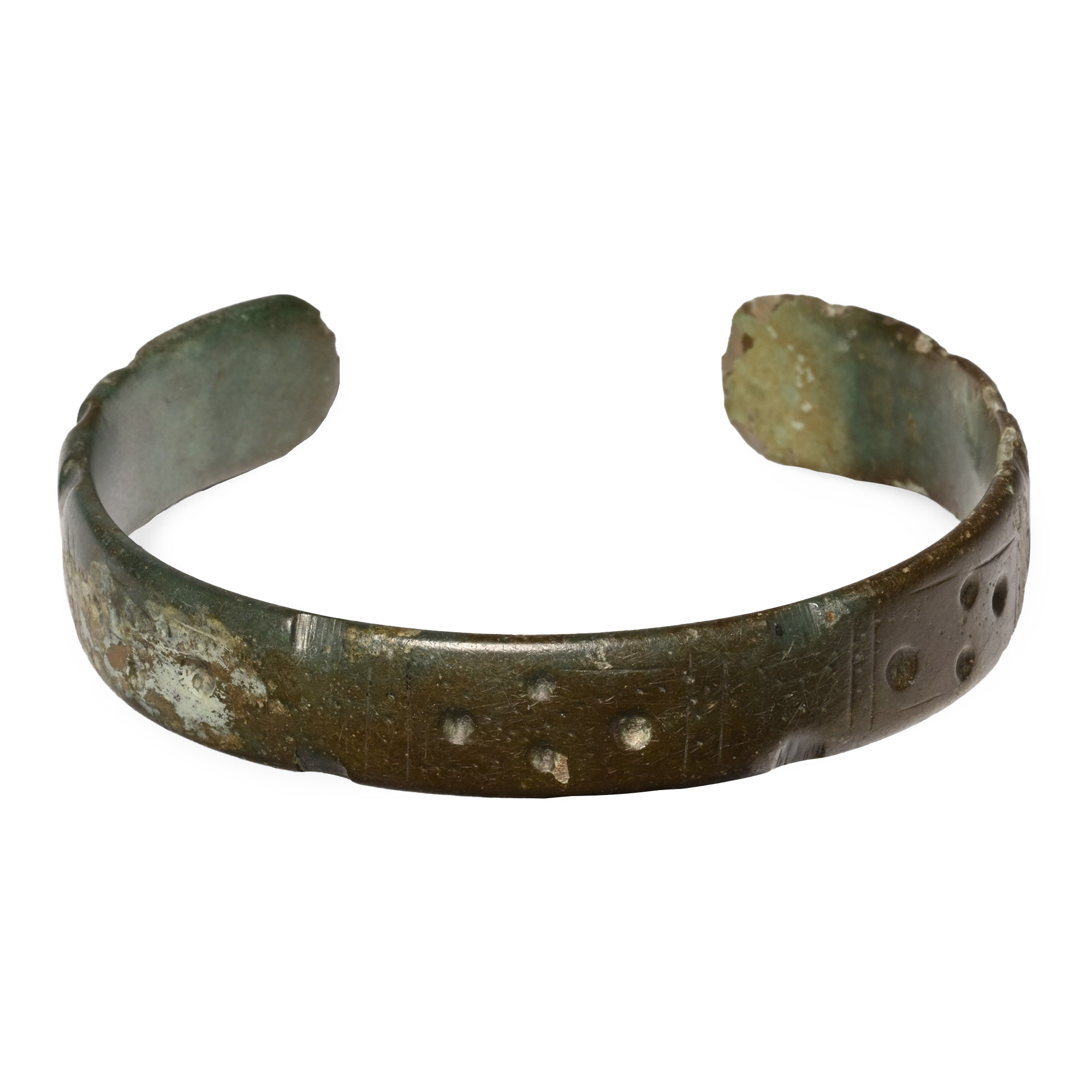
Late Roman Bronze Bracelet
4TH-5TH CENTURY A.D.
2 3/8 in. (30.6 grams, 61 mm).
Flat-section penannular body with rounded terminals, the upper body divided into segments with vertical lines and each segment with four punched pellets, single punched pellet to each terminal. [No Reserve]
ProvenanceEx German art market, 2000s.
Acquired from an EU collector living in London.
From the collection of a Surrey, UK, gentleman.
This lot is accompanied by an illustrated lot declaration signed by the Head of the Antiquities Department, Dr Raffaele D'Amato.
TimeLine Auctions follows a vetting process to ensure the authenticity and legality of all items, reinforcing our commitment to integrity and responsible trading. Each antiquity, antique, and coin lot undergoes thorough examination by a vetting committee of at least ten external specialists, professional trade association members, scientists, and archaeologists: Our Vetting Process
AUCTIONS:
TimeLine is a leading auction house specialising in antiquities, ancient art, collectables, natural history, coins, medals, and books. Our auctions offer museums, collectors, historians, and enthusiasts the opportunity to acquire unique and historically significant pieces.
-
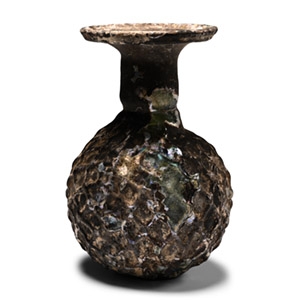
Roman Glass 'Sprinkler' Vessel with Net Pattern
4th century A.D.Estimate: £800 - 1,000 (‡+bp*)
Opening Bid: £360
Mould-blown with reticulated pattern to the body; the rim everted with applied trail beneath; iridescent surface. 70 grams, 10 cm
Ex Hanan Suszm, Herzliyya Pituah. Ex Archaeological Center, Jerusalem, 2015. This lot is accompanied by an illustrated lot declaration signed by the Head of the Antiquities Department, Dr Raffaele D'Amato. -
.jpg)
Roman Gold Ring with Eros Gemstone
1st-2nd century A.D.Sold for (Inc. bp): £1,105
Hollow-formed shank, integral plaque with inset glass disc, low-relief Eros face in three-quarter view. 2.35 grams, 21.19 mm overall, 15.00 mm internal diameter (approximate size British D 1/2, USA 2, Europe 1.78, Japan 1)
Acquired in 1992. Private collection, Switzerland, thence by descent. Private collection, since the late 1990s. This lot is accompanied by an illustrated lot declaration signed by the Head of the Antiquities Department, Dr Raffaele D'Amato. -
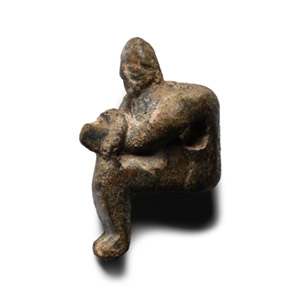
Roman Bronze Bound Captive Toggle
Late 2nd century A.D.Sold for (Inc. bp): £202
Depicted as a male seated and naked with rope binding the hands together; pierced vertically at the shoulders; probably a sliding mount for a thong or cord. 35 grams, 40 mm
From the collection of a gentleman, acquired on the London art market in the 1990s. This lot is accompanied by an illustrated lot declaration signed by the Head of the Antiquities Department, Dr Raffaele D'Amato.
