
Loading, please wait...
LOT 0605
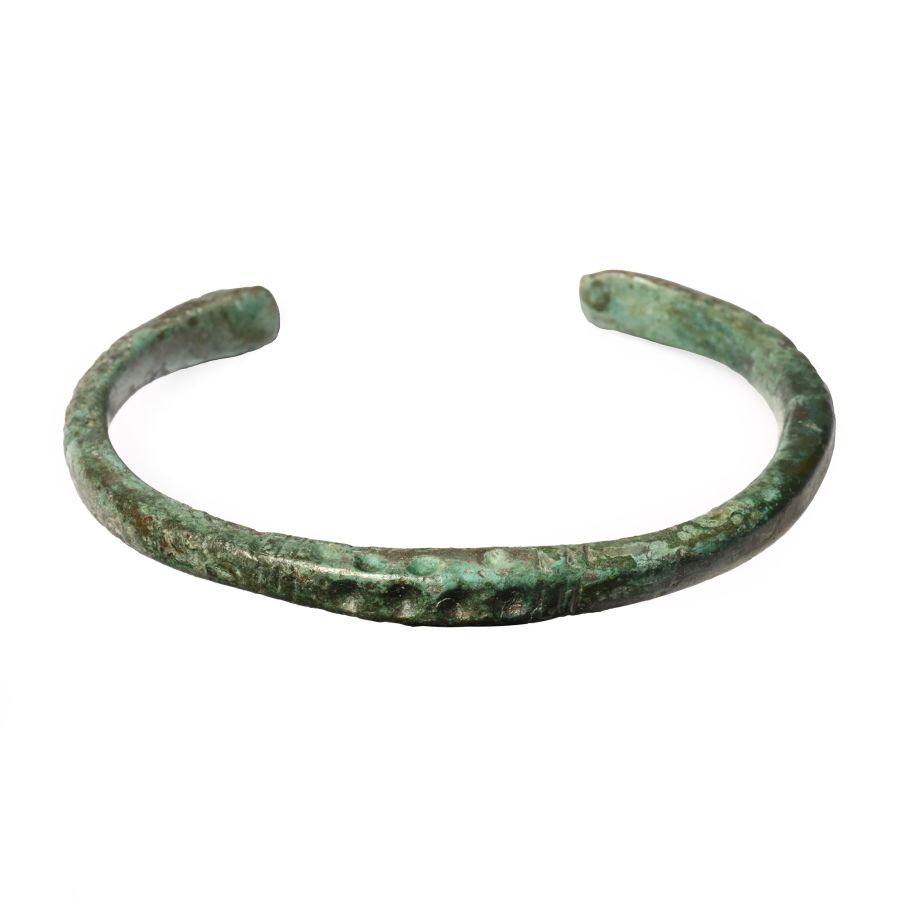
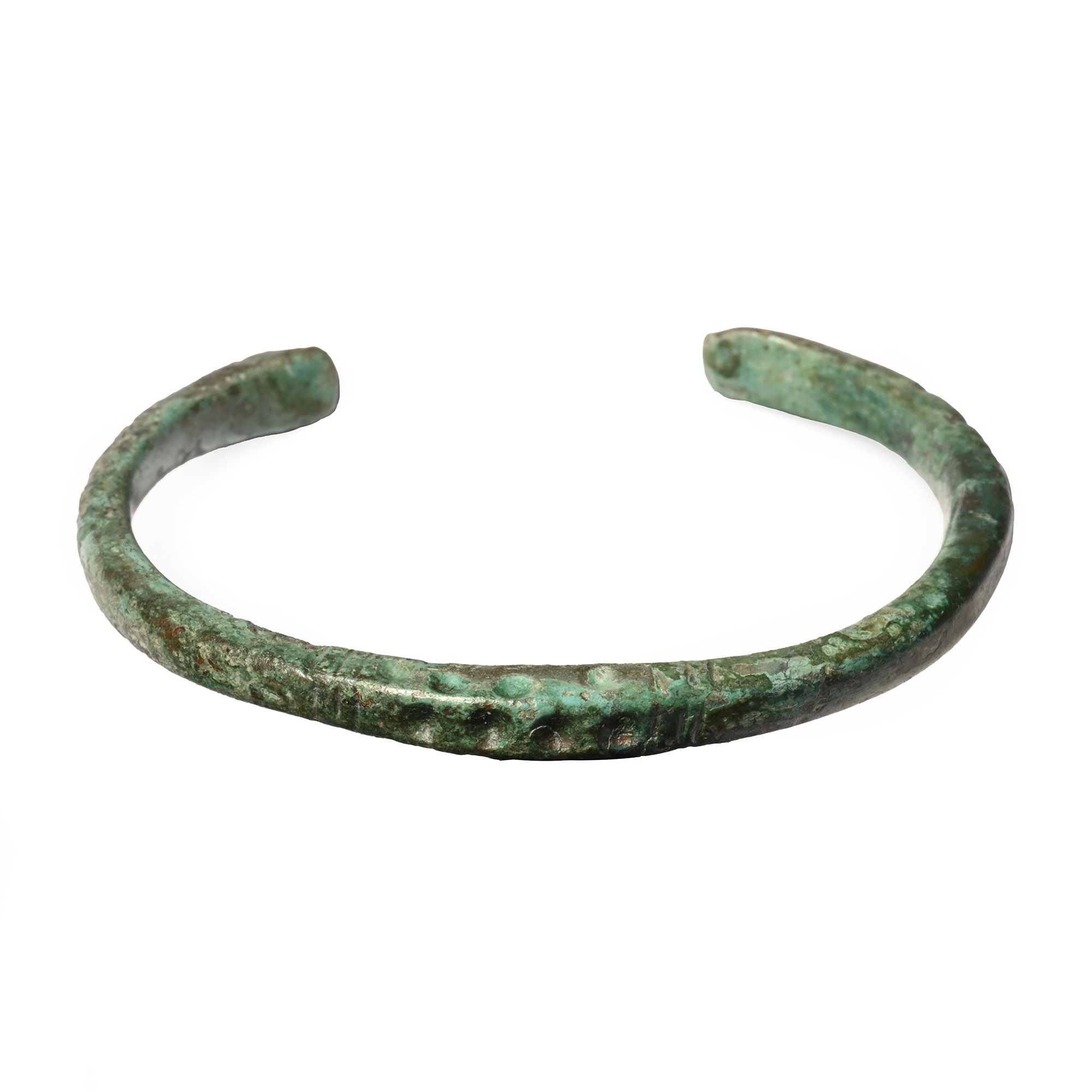
Late Roman Bronze Bracelet with Beast-Heads
4TH-5TH CENTURY A.D.
2 3/8 in. (20.6 grams, 62 mm).
Rectangular-section penannular body with punched pellet and linear decoration, terminals fashioned as stylised beast-heads with simple eye detailing and a pellet on the head. [No Reserve]
ProvenanceEx German art market, 2000s.
Acquired from an EU collector living in London.
From the collection of a Surrey, UK, gentleman.
This lot is accompanied by an illustrated lot declaration signed by the Head of the Antiquities Department, Dr Raffaele D'Amato.
TimeLine Auctions follows a vetting process to ensure the authenticity and legality of all items, reinforcing our commitment to integrity and responsible trading. Each antiquity, antique, and coin lot undergoes thorough examination by a vetting committee of at least ten external specialists, professional trade association members, scientists, and archaeologists: Our Vetting Process
AUCTIONS:
TimeLine is a leading auction house specialising in antiquities, ancient art, collectables, natural history, coins, medals, and books. Our auctions offer museums, collectors, historians, and enthusiasts the opportunity to acquire unique and historically significant pieces.
-
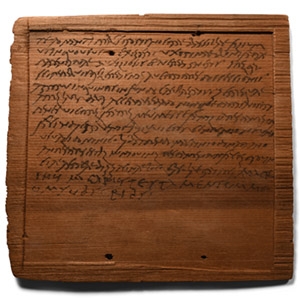
Roman Inked Wooden Tablet, a Testament Overseen by Bonatianus with the Head Witness Being Iulius Lovianus
Mid 4th century A.D.Sold for (Inc. bp): £9,750
A reused rectangular wax tablet with a shallow recessed panel to one face and thirteen lines of Roman cursive script; the text contains the end of testamentary instructions followed by the obligatory mancipatory formula which includes the ritual purchase of the entire property of the deceased (familia testamenti faciundi erga emit), with the "Libripens" (balance holder) being Bonatianus, and the first of the witnesses was Iulius Lovianus; in the last lines the testator's handwritten signature, after he had dictated his will to a friend; on the outer face two sulci, which were filled with wax into which the signet rings of the witnesses could be impressed, with traces of the signatures of witnesses; four small holes for attachment. 50 grams, 17.7 x 16.6 cm
Acquired by Albert Sfez in the early 1950s. Formerly the property of Monsieur Alain Sfez, a Belgium collector; acquired by gift from his father Albert Sfez, in 1965. Acquired by a London dealer in 1973. From an important London collection since 1975; thence by descent. Accompanied by a copy of a four page illustrated academic report by Professor Dr. phil. Peter Rothenhöfer. This lot has been checked against the Interpol Database of stolen works of art and is accompanied by a search certificate number no.12568-218137. This lot has been cleared against the Art Loss Register database, and is accompanied by an illustrated lot declaration signed by the Head of the Antiquities Department, Dr Raffaele D'Amato.
The contract follows standard Roman legal formulae. -
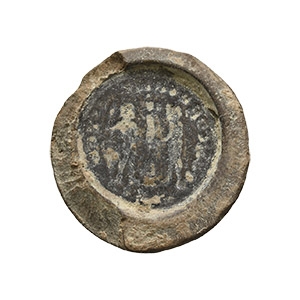
Roman Diocletian Terracotta Forger's Coin Mould
Late 3rd century A.D.Sold for (Inc. bp): £124
Terracotta disc with Diocletian (284-305 A.D.) coin impression to each face from which to cast counterfeit coins. 5.3 grams, 27 mm
From the collection of a gentleman, acquired on the London art market in the 1990s. This lot is accompanied by an illustrated lot declaration signed by the Head of the Antiquities Department, Dr Raffaele D'Amato. -
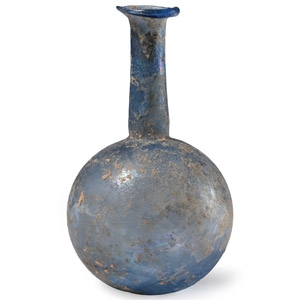
Roman Blue Glass Bottle
3rd century A.D.Sold for (Inc. bp): £390
With slightly flattened base and spherical body, tubular neck with flared and rolled rim. 10.1 grams, 79 mm
From an important London collection of glass, 1990s. This lot is accompanied by an illustrated lot declaration signed by the Head of the Antiquities Department, Dr Raffaele D'Amato.
