
Loading, please wait...


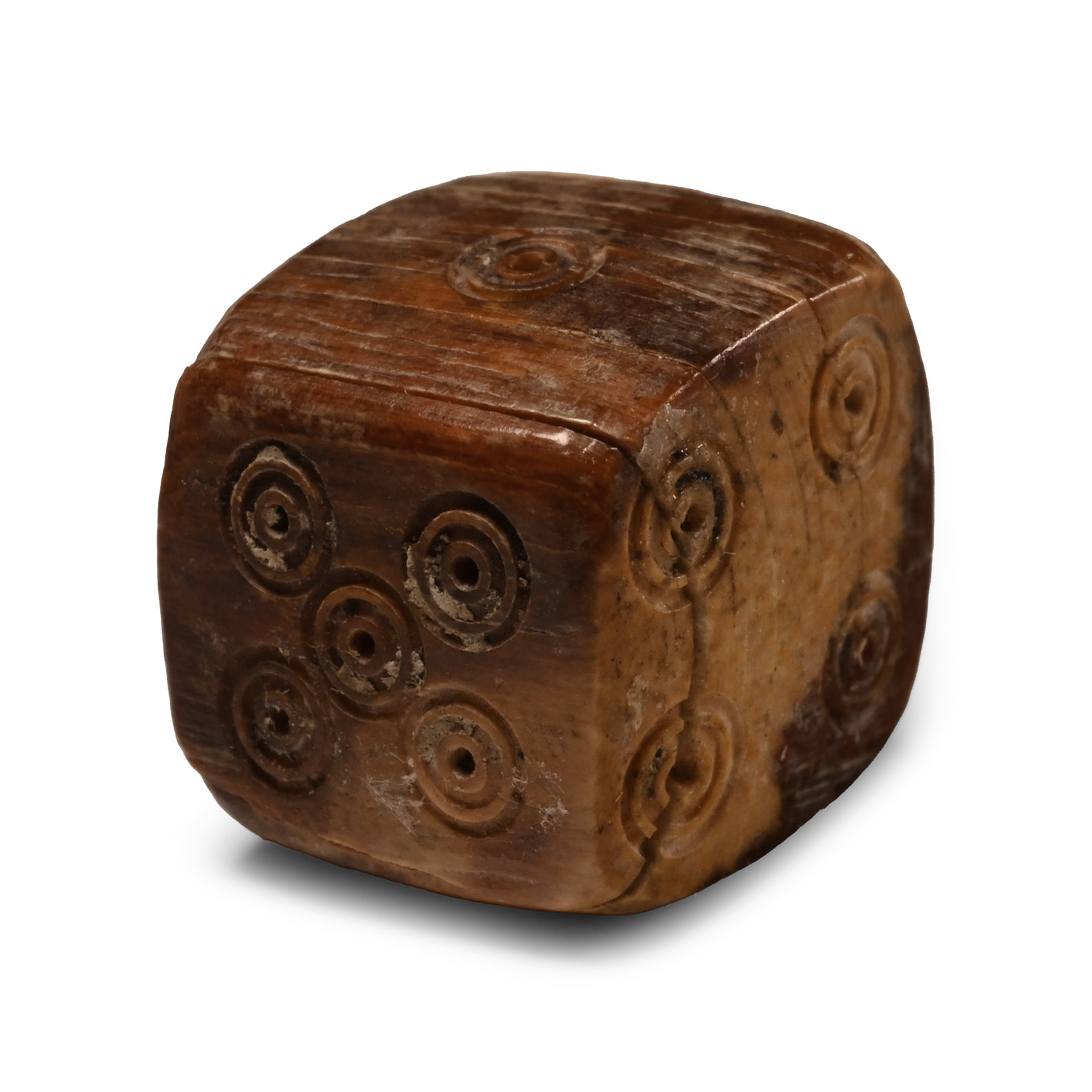
LOT 0679
Late Roman Bone Dice Gaming Piece
4TH-6TH CENTURY A.D.
5/8 in. (4.08 grams, 14 mm).
Cuboid with rounded edges and corners, ring-and-dot markings disposed 1:2, 3:4, 5:6; with old collector's identification tag '156'. [No Reserve]
ProvenanceFound Wiltshire, UK.
From the important private collection of dice and gaming pieces of Colin Narbeth, London, UK, collection no.156.
See Beutler, F. et al., Der Adler Roms. Carnuntum und der Armee der Cäsaren, Bad-Deutsch Altenberg, 2017, item 724, for type.
CONDITIONTimeLine Auctions follows a vetting process to ensure the authenticity and legality of all items, reinforcing our commitment to integrity and responsible trading. Each antiquity, antique, and coin lot undergoes thorough examination by a vetting committee of at least ten external specialists, professional trade association members, scientists, and archaeologists: Our Vetting Process
AUCTIONS:
TimeLine is a leading auction house specialising in antiquities, ancient art, collectables, natural history, coins, medals, and books. Our auctions offer museums, collectors, historians, and enthusiasts the opportunity to acquire unique and historically significant pieces.
-
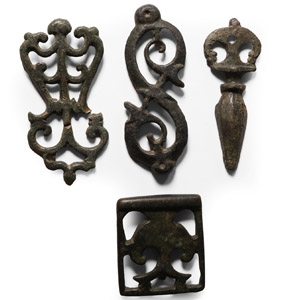
Roman Military Bronze Belt Mount Collection
2nd-3rd century A.D.Sold for (Inc. bp): £143
Including La Tène scrolls, rectangular panel with pelta and other types. 46 grams total, 32-53 mm
Property of the vendor's grandfather, thence by family descent, circa 1985. From the private collection of a New York, USA gentleman. -

Roman Bronze Ring with Palm Branch
2nd-3rd century A.D.Sold for (Inc. bp): £33
With an expanding flat-section hoop, hatching to the shoulders, wide bezel with an upright palm branch. 3.00 grams, 20.28 mm overall, 17.34 mm internal diameter (approximate size British N, USA 6 1/2, Europe 13.72, Japan 13)
Private collection formed since the 1940s. UK art market. Property of an Essex, UK, gentleman. -
.jpg)
Roman Marble Head of Euripides
2nd century A.D.Estimate: £18,000 - 24,000 (‡+bp*)
Opening Bid: £10,000
An impressive carved herm of the tragic author of the tragic author Euripides, portrayed as an elderly man with full beard and long hair forming compact, slightly wavy strands, radiating from a single point at the back of the head and combed forwards over the forehead; heavy brow and small mouth; cracked and repaired. 7.46 kg, 25 cm
English private collection, acquired in the late 1970s/early 1980s. David Cambridge, Cheltenham. with Galerie Chenel, Paris, acquired from the above in 1998. French private collection, acquired from the above in 1999/2000. Ancient Marbles, Classical Sculpture and works of art; Sotheby's, London, 13 June 2016, no.49. Accompanied by an academic report by Dr Raffaele D’Amato. This lot has been checked against the Interpol Database of stolen works of art and is accompanied by search certificate number no.12191-222443.
Euripides was a classical Athenian playwright and one of the three great tragedians of ancient Greece, alongside Aeschylus and Sophocles. Born in 480 B.C., his work is renowned for its complex characters and psychological depth, often exploring the darker aspects of human nature and societal norms. Euripides' plays, such as Medea, The Bacchae, and Hippolytus, are marked by their innovative use of mythological themes to comment on contemporary issues.
