
Loading, please wait...
LOT 0389
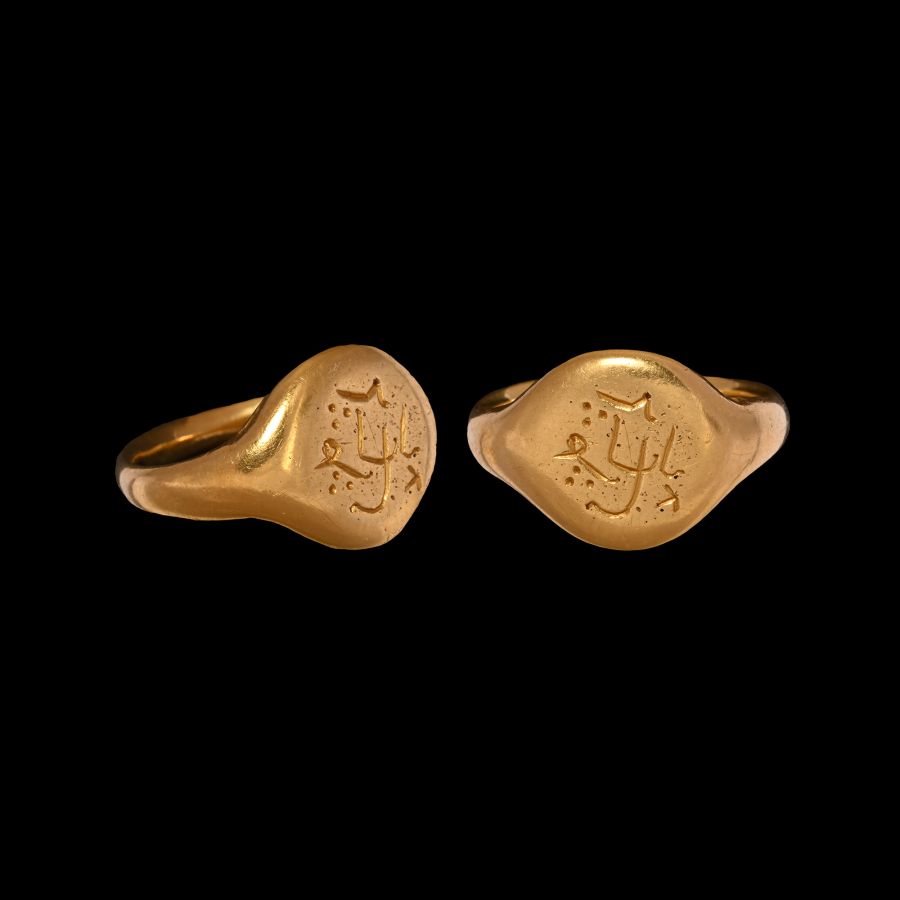
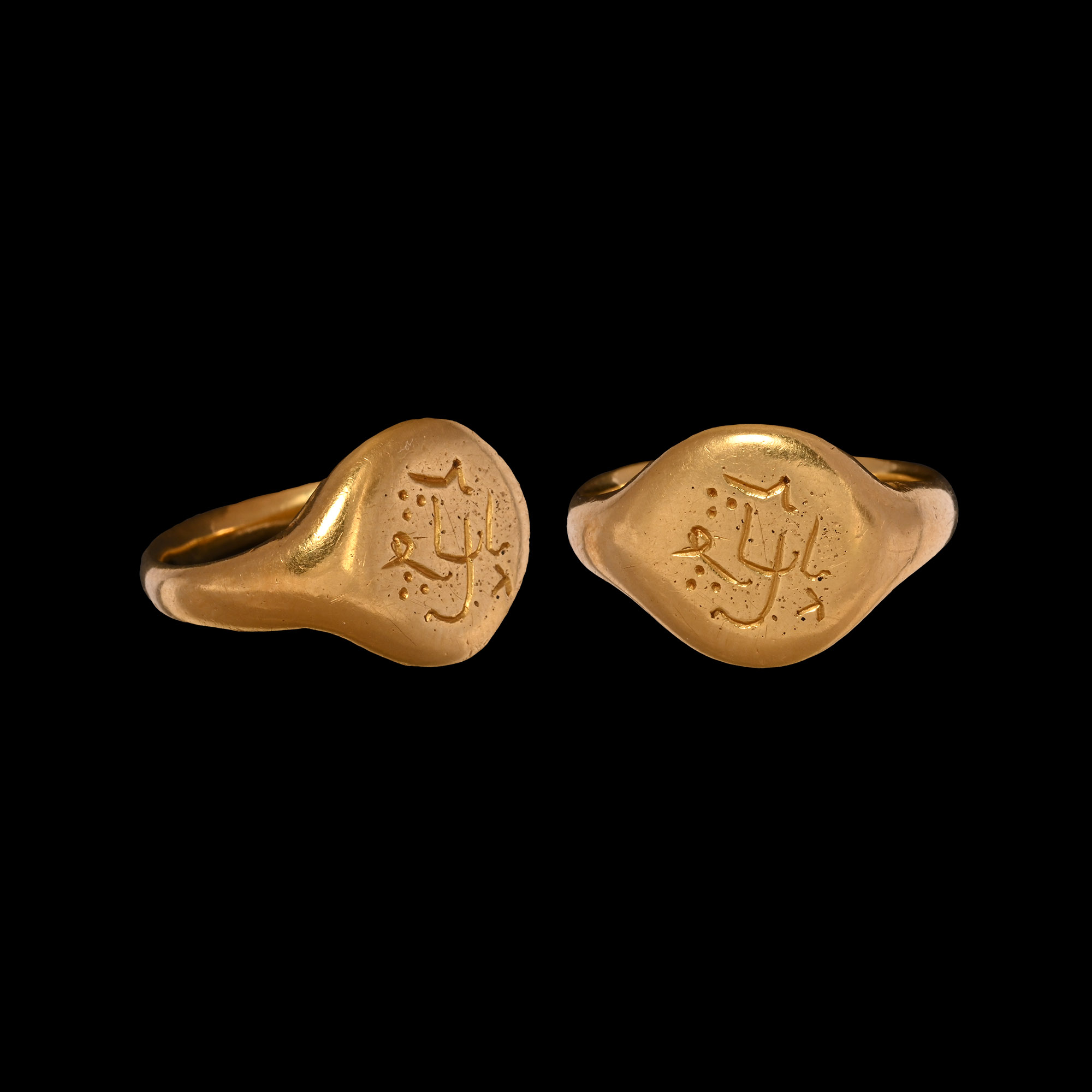
Late Medieval Period Gold Signet Ring with Arabic Inscription
15TH-16TH CENTURY A.D.
3/4 in. (8.13 grams, 20.48 mm overall, 17.47 mm internal diameter (approximate size British M, USA 6, Europe 12.46, Japan 12)).
With D-section hoop and disc bezel, incised nasta'liq inscription. [No Reserve]
ProvenanceFrom an old French collection believed to have been formed in the 1960s.
Acquired privately as part of a collection in the early 1990s.
This lot has been checked against the Interpol Database of stolen works of art and is accompanied by a search certificate number no.12298-214825.
Cf. Chadour, A.B., Rings. The Alice and Louis Koch Collection, volume I, Leeds, 1994, item 540; Content, D.J. (ed.), Islamic Rings & Gems. The Zucker Collection, London, 1967, item 94, for type.
CONDITIONTimeLine Auctions follows a vetting process to ensure the authenticity and legality of all items, reinforcing our commitment to integrity and responsible trading. Each antiquity, antique, and coin lot undergoes thorough examination by a vetting committee of at least ten external specialists, professional trade association members, scientists, and archaeologists: Our Vetting Process
AUCTIONS:
TimeLine is a leading auction house specialising in antiquities, ancient art, collectables, natural history, coins, medals, and books. Our auctions offer museums, collectors, historians, and enthusiasts the opportunity to acquire unique and historically significant pieces.
LOT 0389
Late Medieval Period Gold Signet Ring with Arabic Inscription
Sold for (Inc. bp): £975
-
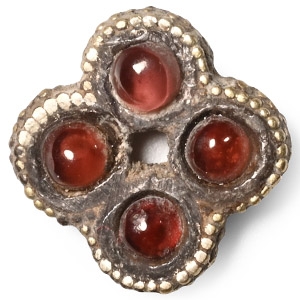
Medieval Gold Quatrefoil Mount with Garnet
14th-16th century A.D.Sold for (Inc. bp): £130
With beaded wire rim and four garnets set around a central hole. 0.38 grams, 7 mm
Ex property of a late Japanese collector, 1970-2000s. -
.jpg)
Medieval Iron Horse Shoe Group
14th-16th century A.D.Sold for (Inc. bp): £156
Comprising shoes of various sizes, types and dates and including examples retaining nails. 8.35 kg total, 11-14 cm
Acquired 1990s-early 2000s. East Anglian private collection.
Late medieval and Renaissance horseshoes had an angular inner profile. These horse shoes were broadly C-shaped and rectangular in section. -
.jpg)
Medieval Bronze Buckle Collection
12th-16th century A.D.Sold for (Inc. bp): £46
Mixed group of mainly bronze buckles, buckle plates and buckle loops, some with mounting tags. 161 grams total, 13-42 mm
Found near York, UK.
