
Loading, please wait...
LOT 1873
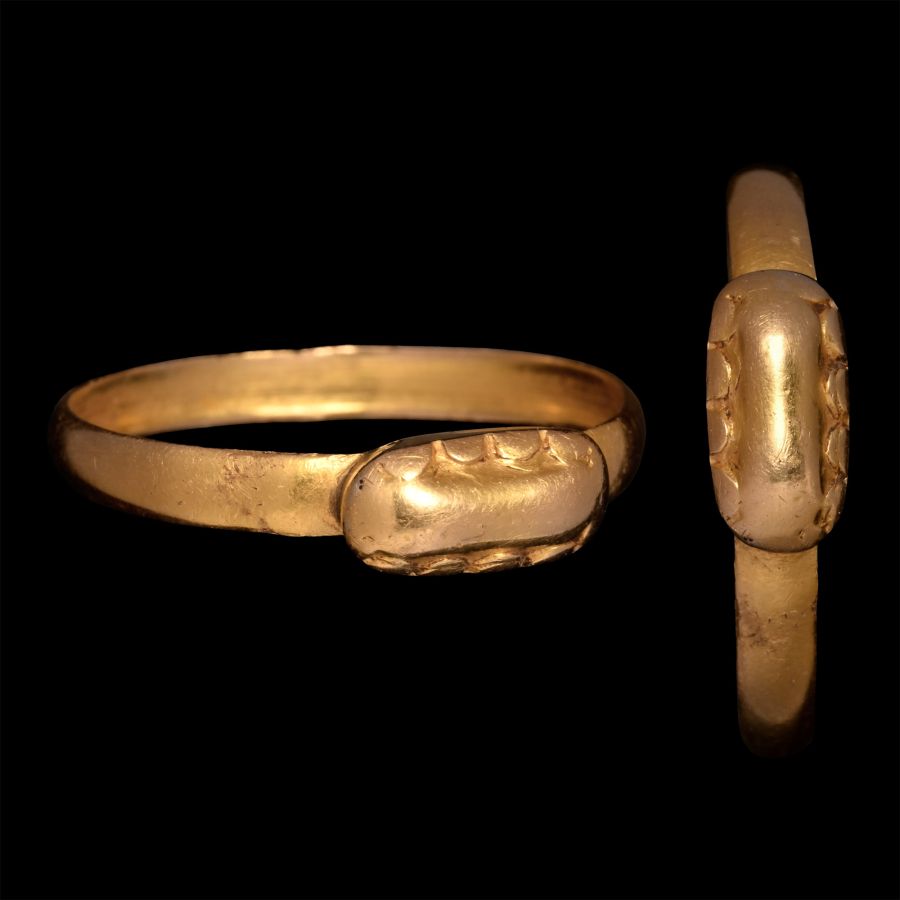
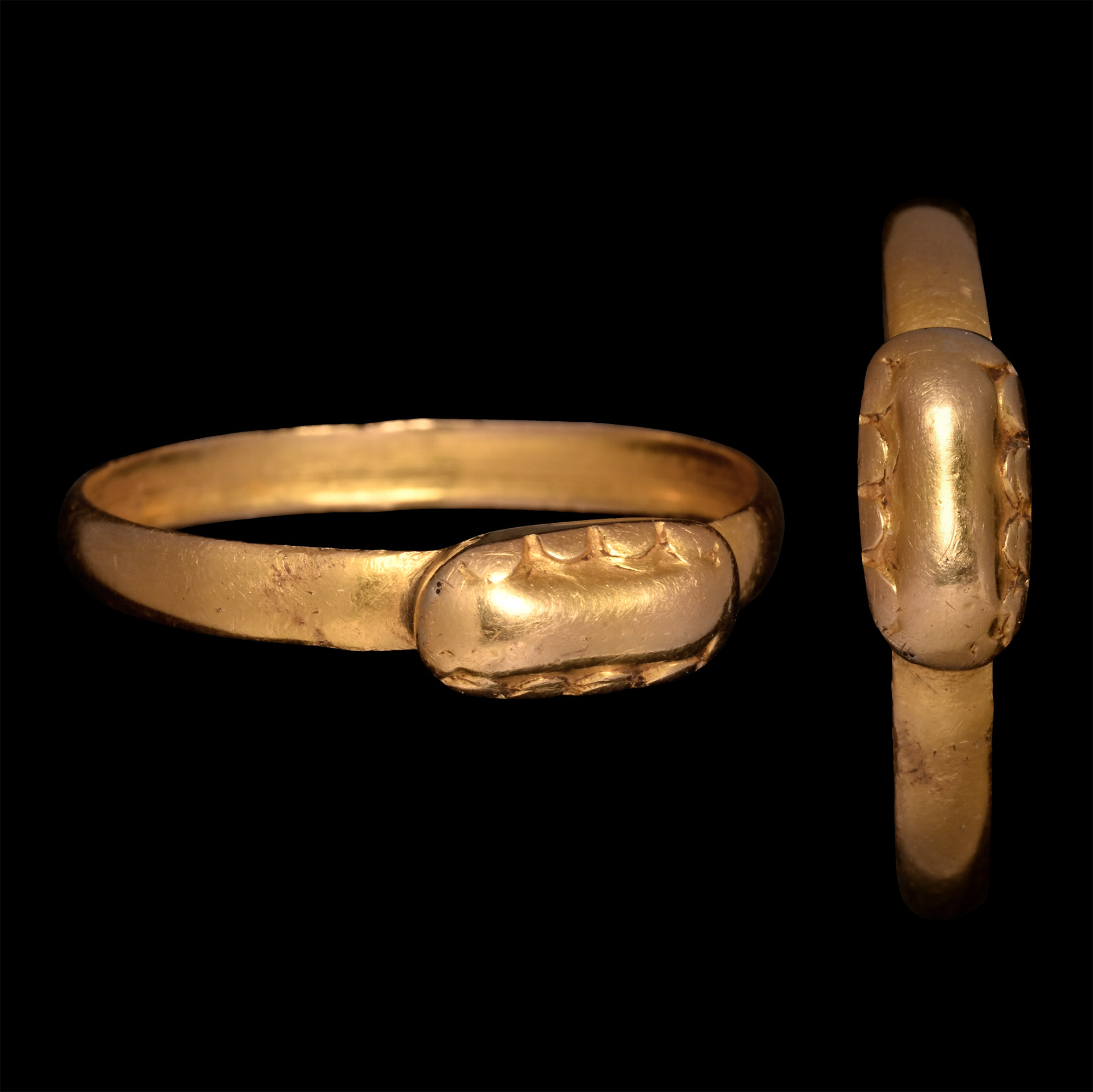
Late Medieval Gold Ring
15TH-16TH CENTURY A.D.
7/8 in. (2.21 grams, 22.42 mm overall, 18.73 mm internal diameter (approximate size British P, USA 7 1/2, Europe 16.23, Japan 15)).
Comprising a slender C-shaped hoop, hollow raised bezel with scalloped border. [No Reserve]
ProvenanceFrom a UK collection since before 1990.
CONDITIONTimeLine Auctions follows a vetting process to ensure the authenticity and legality of all items, reinforcing our commitment to integrity and responsible trading. Each antiquity, antique, and coin lot undergoes thorough examination by a vetting committee of at least ten external specialists, professional trade association members, scientists, and archaeologists: Our Vetting Process
AUCTIONS:
TimeLine is a leading auction house specialising in antiquities, ancient art, collectables, natural history, coins, medals, and books. Our auctions offer museums, collectors, historians, and enthusiasts the opportunity to acquire unique and historically significant pieces.
-
.jpg)
Medieval Terracotta Jar
Circa 13th-15th century A.D.Sold for (Inc. bp): £40
Biconvex in profile with low neck and rolled rim; old inked inscription to the sidewall with three signatures and '1920-1927'; feint pencilled inscription to base including the word 'Polish'. 1.11 kg, 16 cm
Believed to have been in the collection of George Adolphus Gray (c.1850), Captain of a merchant vessel and avid collector. Acquired by the present owner circa 15 years ago, reportedly recovered from a skip. -
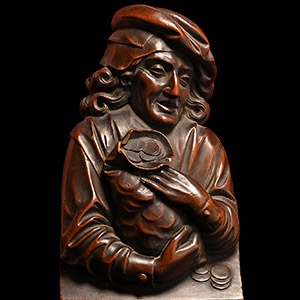
Medieval Bas Relief Representing a Gentleman Illustrating an Allegory of Avarice
Netherlands, 16th century A.D.Estimate: £2,000 - 3,000 (+bp*)
Opening Bid: £833
Carved in the half-round, clean-shaven male figure wearing a floppy chaperon hat, clutching a bulging sack of coins to his chest, with some stray coins on the surface of the table below; mounted on a velvet-covered board in a carved wooden frame. 694 grams, 33.2 x 27.1 cm
Private collection, Spain, until 2024. This lot has been checked against the Interpol Database of stolen works of art and is accompanied by search certificate number no.12992-246434. -
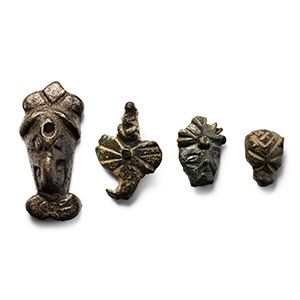
Large Medieval Bronze Belt Mount Group
14th-15th century A.D.Sold for (Inc. bp): £26
Including lion-head, eagle and other types. 11.4 grams total, 12-29 mm
From the collection of a Buckinghamshire, UK, collector established from the earlier 1960s.
