
Loading, please wait...


LOT 0532
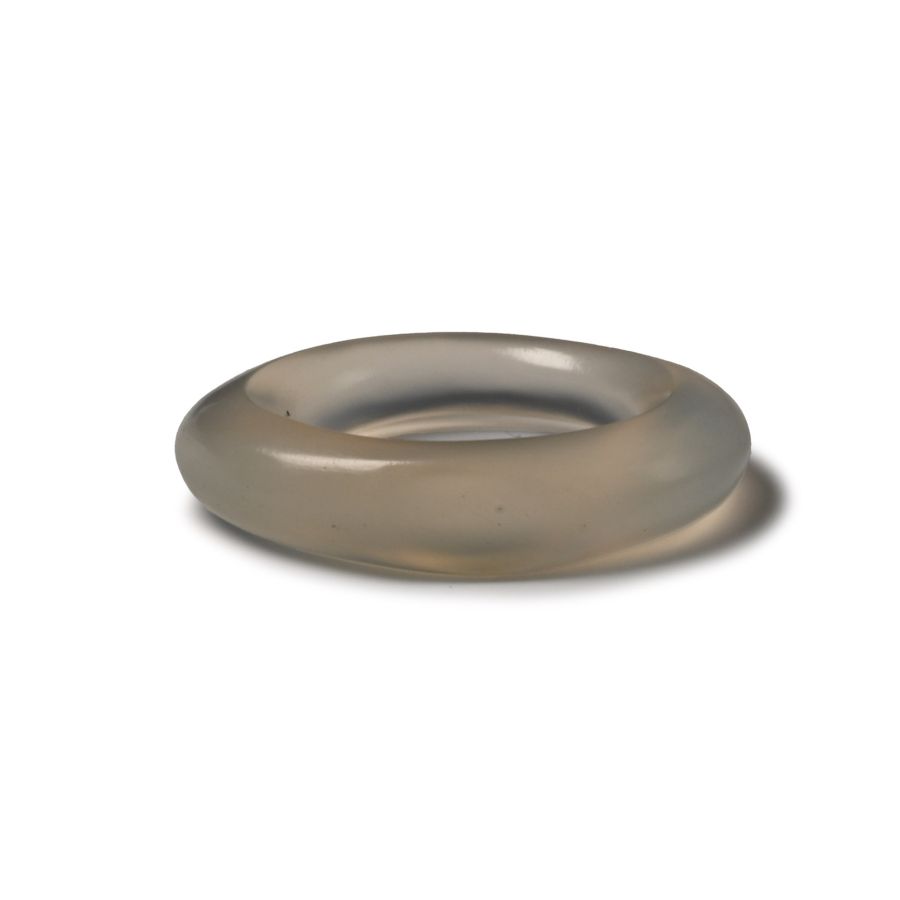
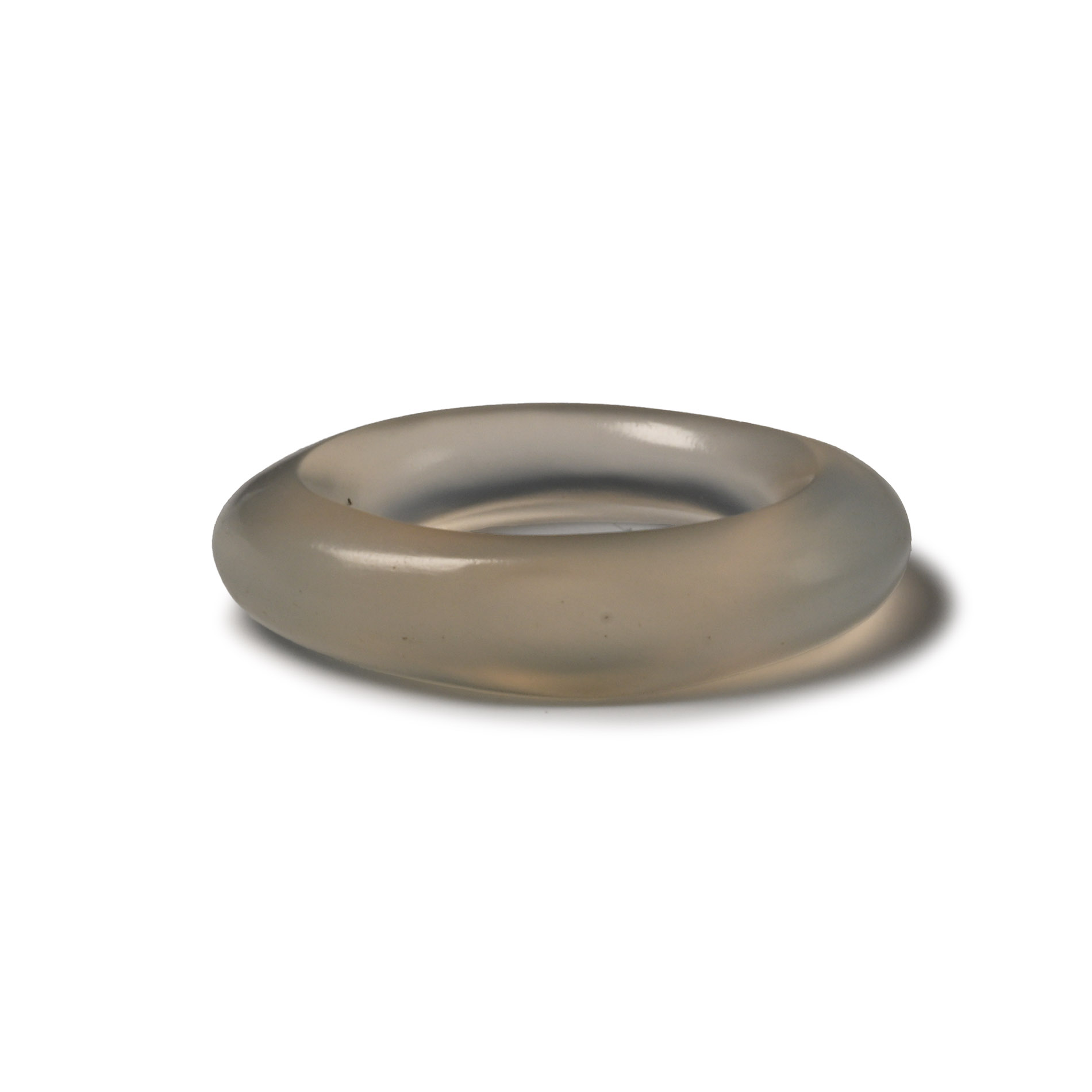
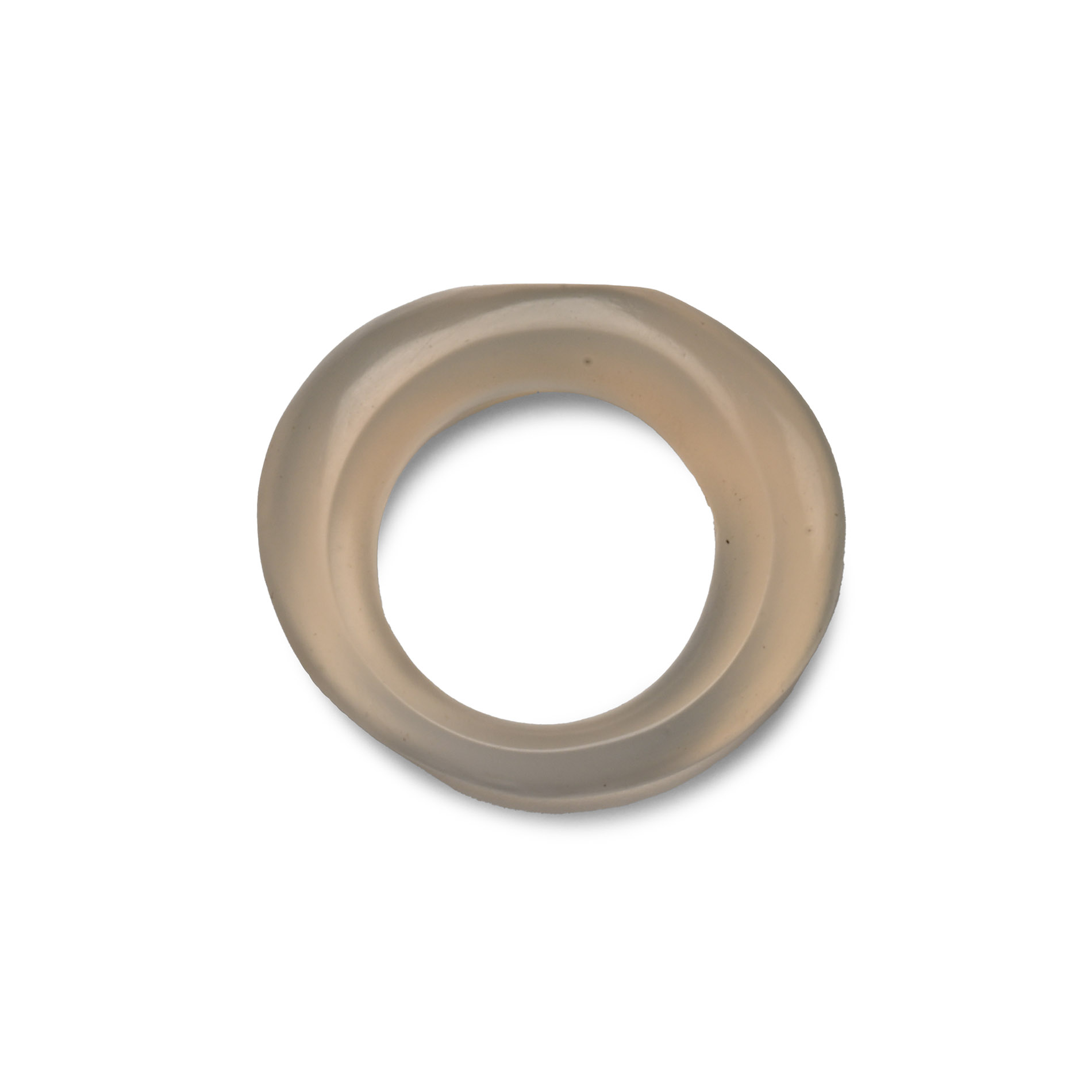
Late Hellenistic Chalcedony Ring
1ST CENTURY B.C.-1ST CENTURY A.D. OR LATER
1 in. (3.04 grams, 26.02 mm overall, 14.79 mm internal diameter (approximate size British H, USA 3 3/4, Europe 6.18, Japan 6)).
Of facetted section, with broad shoulders, flat bezel, polished. [No Reserve]
Provenancewith H.A.C.A.G., Basel, prior 1999.
This lot is accompanied by an illustrated lot declaration signed by the Head of the Antiquities Department, Dr Raffaele D’Amato.
This lot is accompanied by an illustrated lot declaration signed by the Head of the Antiquities Department, Dr Raffaele D'Amato.
See a similar example in glass at the British Museum, inventory no.1896,0201.122.
CONDITIONTimeLine Auctions follows a vetting process to ensure the authenticity and legality of all items, reinforcing our commitment to integrity and responsible trading. Each antiquity, antique, and coin lot undergoes thorough examination by a vetting committee of at least ten external specialists, professional trade association members, scientists, and archaeologists: Our Vetting Process
AUCTIONS:
TimeLine is a leading auction house specialising in antiquities, ancient art, collectables, natural history, coins, medals, and books. Our auctions offer museums, collectors, historians, and enthusiasts the opportunity to acquire unique and historically significant pieces.
-
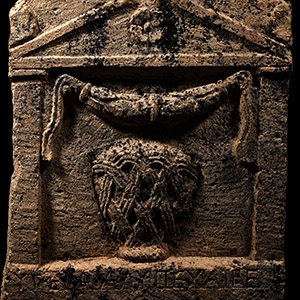
Graeco-Roman Naiskos-Type Limestone Stele with 'Long Life, Free from Sorrow, Farewell' Inscription
Asia Minor, 1st century B.C.-1st century A.D.Sold for (Inc. bp): £11,700
With rosette in the gable, a basket filled with wool and a garland above it; inscription in Greek reading: 'ΥΓΕΙΑ ΑΛΥΠΕ ΧΑΙΡΕ (HEGHIA ALYPE CHAERE' (Long life [or health], free from sorrow, farewell!). 88 kg, 70.5 cm
Ex Schloss Solitude, Stuttgart, Germany, during the 19th century. with Galerie Rhéa, Zurich, Switzerland. This lot has been checked against the Interpol Database of stolen works of art and is accompanied by a search certificate number no.12657-236384. This lot has been cleared against the Art Loss Register database, and is accompanied by an illustrated lot declaration signed by the Head of the Antiquities Department, Dr Raffaele D'Amato.
This type of stele is comparatively rare, and highly gendered: it is intended to represent a woman when decorated with a basket of wool, and for a man when decorated with an eagle. They are typical of the Zeugma area of the Euphrates river in ancient Seleukia. -
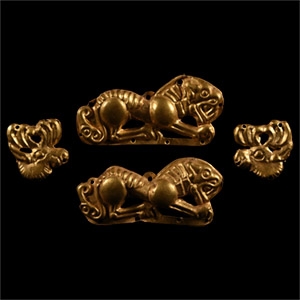
Scythian Gold Appliqué Collection
5th-3rd century B.C.Sold for (Inc. bp): £4,680
Group of sheet-gold appliqué mounts with repoussé detailing comprising a pair of advancing lions with coiled tail and open mouth; a pair of elk heads with curved antlers; supplied with a custom-made presentation mount. 5.28 grams total, 19-47 mm (124 grams total, mount: 11.5 cm high)
German art market. European private collection, 1970s-early 2000s. Acquired from the above; thence by descent. Private collection, London, UK. This lot has been checked against the Interpol Database of stolen works of art and is accompanied by a search certificate number no.12670-234552. This lot has been cleared against the Art Loss Register database, and is accompanied by an illustrated lot declaration signed by the Head of the Antiquities Department, Dr Raffaele D'Amato. -
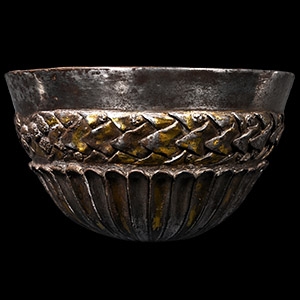
Hellenistic Silver-Gilt Drinking Cup
2nd-1st century B.C.Sold for (Inc. bp): £13,000
A heavy hemispherical vessel with simulated braid beneath the rim and Hercules' knot; the body with lotus-flower ornament. 508 grams, 10.9 cm
Acquired before 1983. Ex London gallery, 1990s. This lot has been checked against the Interpol Database of stolen works of art and is accompanied by a search certificate number no.12661-236259. This lot has been cleared against the Art Loss Register database, and is accompanied by an illustrated lot declaration signed by the Head of the Antiquities Department, Dr Raffaele D'Amato.
