
Loading, please wait...
LOT 0639
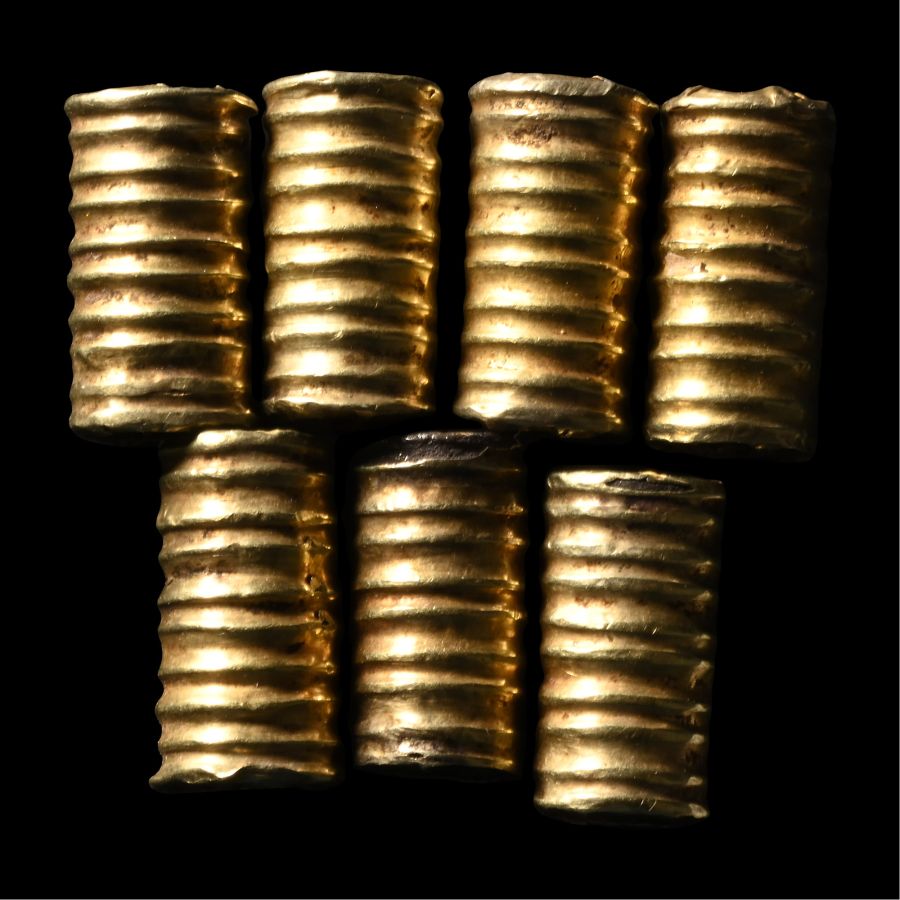
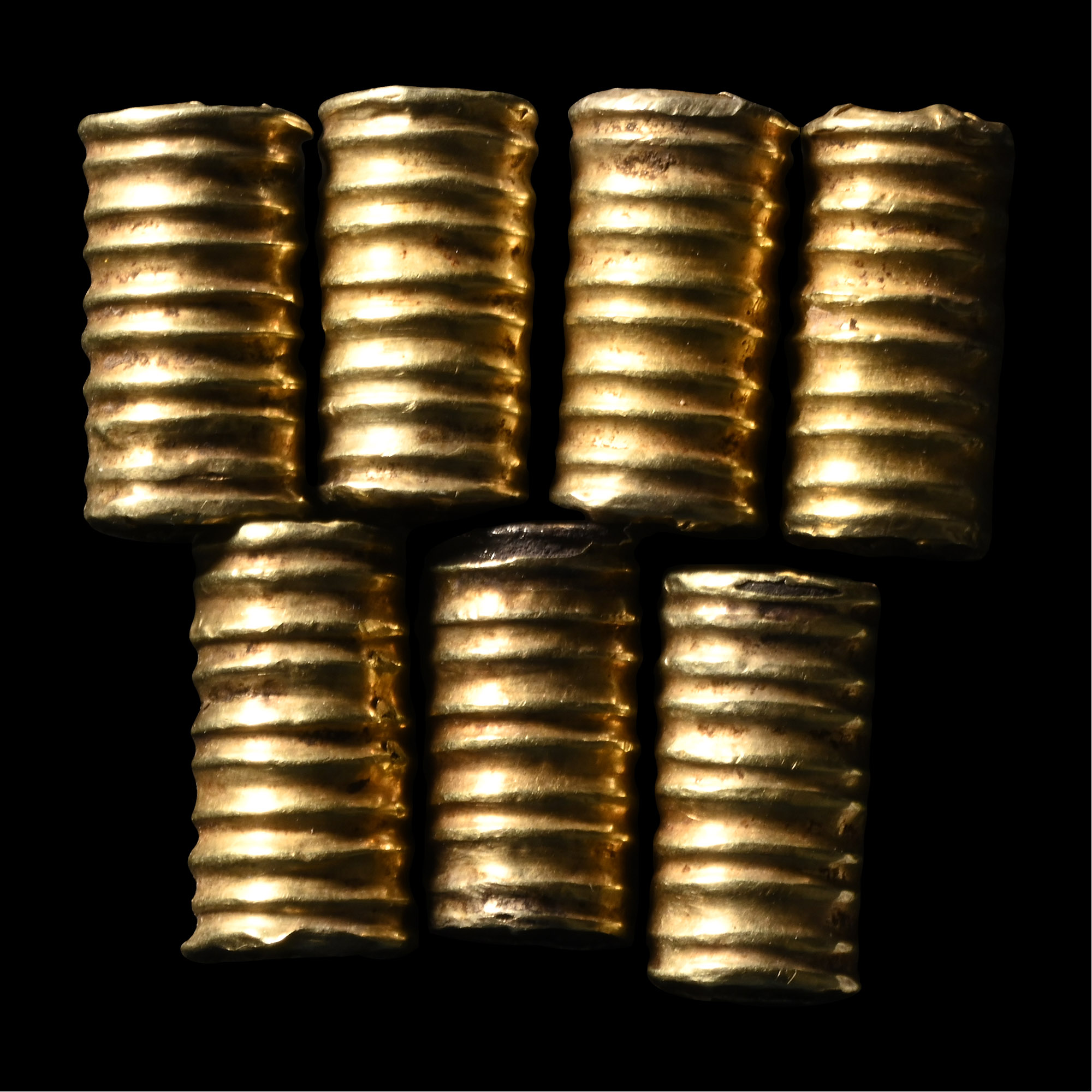
Late Eastern Mediterranean Gold and Silver Fluted Beads
BRONZE AGE, 1550-1050 B.C.
5/8 in. (19.61 grams total, 15 mm each).
Comprising seven fluted beads, each formed from sheet-gold over a silver core. [7]
ProvenancePrivate English collection, formed between the late 1970s and early 1990s.
Private collection, UK.
See the British Museum, London, museum nos.1897,0401.252, 1897,0401.254, 1897,0401.808, 1897,0401.809 and 1897,0401.255, for similar.
CONDITIONTimeLine Auctions follows a vetting process to ensure the authenticity and legality of all items, reinforcing our commitment to integrity and responsible trading. Each antiquity, antique, and coin lot undergoes thorough examination by a vetting committee of at least ten external specialists, professional trade association members, scientists, and archaeologists: Our Vetting Process
AUCTIONS:
TimeLine is a leading auction house specialising in antiquities, ancient art, collectables, natural history, coins, medals, and books. Our auctions offer museums, collectors, historians, and enthusiasts the opportunity to acquire unique and historically significant pieces.
LOT 0639
Late Eastern Mediterranean Gold and Silver Fluted Beads
Sold for (Inc. bp): £351
-
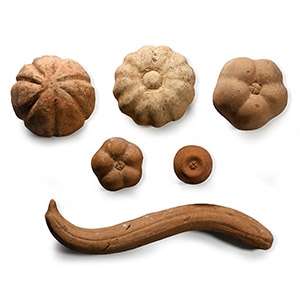
Greek Terracotta Model Fruit and Vegetable Group
4th century B.C.Estimate: £800 - 1,000 (‡+bp*)
Opening Bid: £444
Including pomegranates, apples and a gourd. 989 grams total, 4.5-18.7 cm
Estate of Mr Bruno Fellinger (1926-2016), Küsnacht, Switzerland. with Galerie Rhéa, Zurich, Switzerland. -
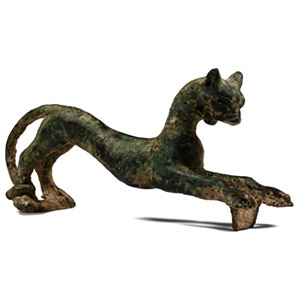
Bronze Handle of a Leaping Panther
2nd-4th century A.D.Sold for (Inc. bp): £2,340
Roman or Parthian handle modelled in the round in leaping stance with forepaws extended, tail curled between the legs, mouth gaping in a roar; tab and sprue between the forelegs, bar between the hind feet; furniture fitting. 180 grams, 14 cm
Acquired in the 1980s. Private collection, Switzerland, thence by descent. Private collection, since the late 1990s. This lot has been checked against the Interpol Database of stolen works of art and is accompanied by a search certificate number no.12744-234682. -
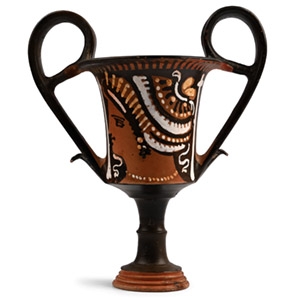
Greek Apulian Black-Glazed Kantharos with Ladies of Fashion
South Italic, circa 325-300 B.C.Sold for (Inc. bp): £1,170
High-handled with carinated lower body, socle base; profile 'ladies of fashion' busts with white and cream detailing to the hair, diadem and earrings. 436 grams, 21 cm high
From the private collection of a Canadian gentleman living in Essex, UK, formed since the 1920s-circa 1990. Property of an Essex lady until the the late 1990s; thence by descent. From the private collection of an Essex gentleman since the late 1990s. Accompanied by an original thermoluminescence analysis report no.N125k90 by Oxford Authentication.
