
Loading, please wait...
LOT 0614
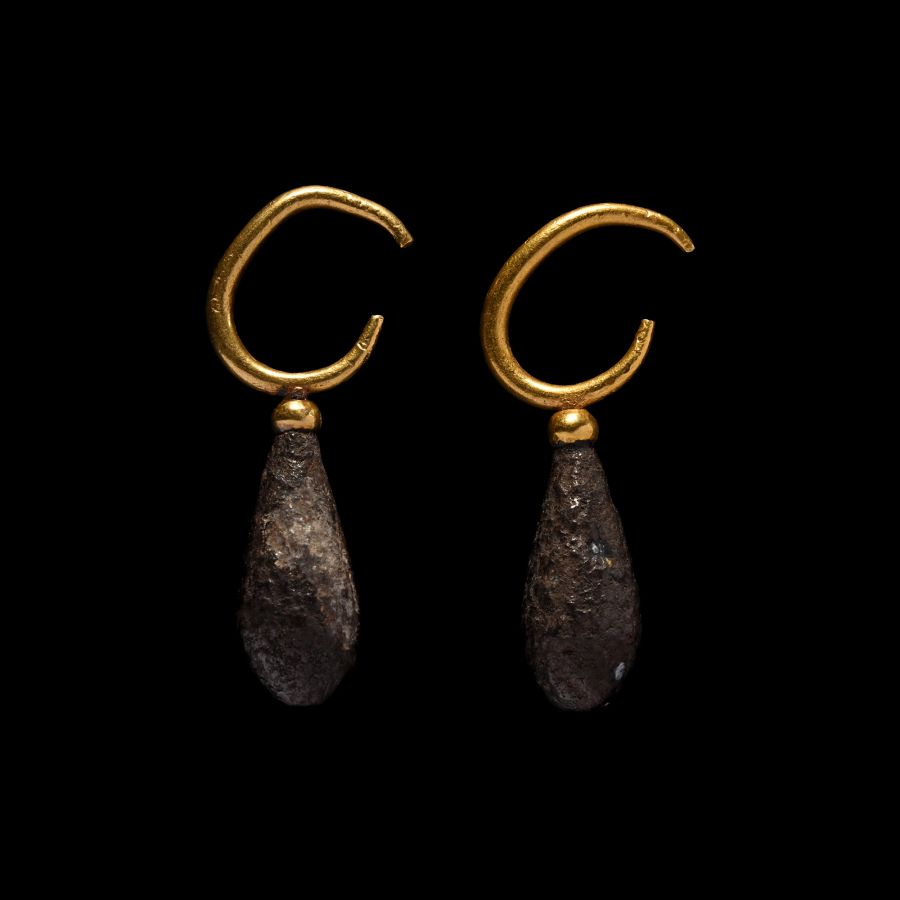
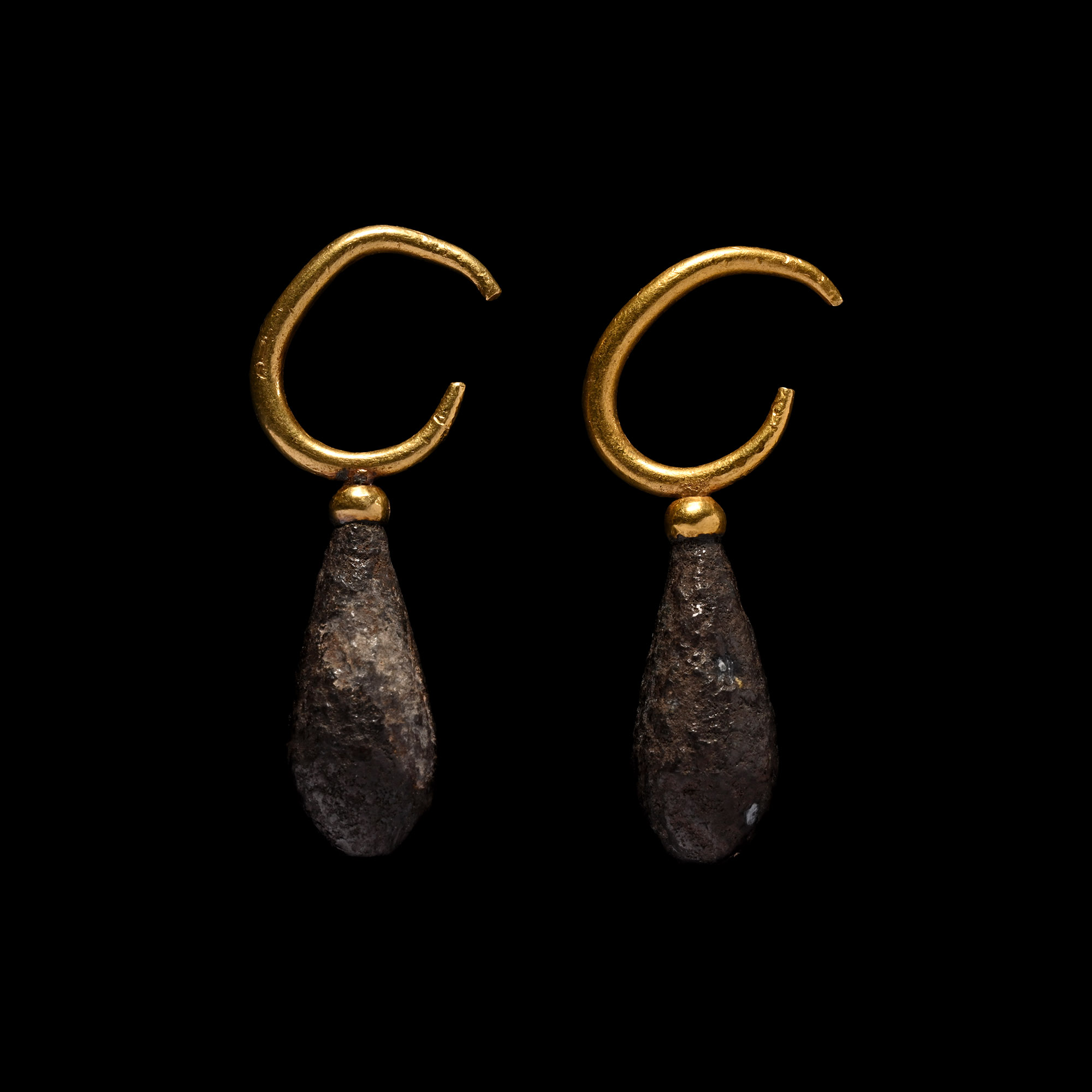
Late Eastern Greek Gold and Silver Earring Pair
1ST CENTURY B.C.-1ST CENTURY A.D.
1 5/8 in. (12.3 grams total, 41-42 mm).
Matched pair, each a gold open loop with bulb below supporting a silver imitation fig. [2]
ProvenanceAcquired in the 1980s.
Private collection, Switzerland, thence by descent.
Private collection, since the late 1990s.
TimeLine Auctions follows a vetting process to ensure the authenticity and legality of all items, reinforcing our commitment to integrity and responsible trading. Each antiquity, antique, and coin lot undergoes thorough examination by a vetting committee of at least ten external specialists, professional trade association members, scientists, and archaeologists: Our Vetting Process
AUCTIONS:
TimeLine is a leading auction house specialising in antiquities, ancient art, collectables, natural history, coins, medals, and books. Our auctions offer museums, collectors, historians, and enthusiasts the opportunity to acquire unique and historically significant pieces.
-
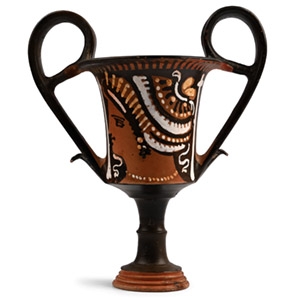
Greek Apulian Black-Glazed Kantharos with Ladies of Fashion
South Italic, circa 325-300 B.C.Sold for (Inc. bp): £1,170
High-handled with carinated lower body, socle base; profile 'ladies of fashion' busts with white and cream detailing to the hair, diadem and earrings. 436 grams, 21 cm high
From the private collection of a Canadian gentleman living in Essex, UK, formed since the 1920s-circa 1990. Property of an Essex lady until the the late 1990s; thence by descent. From the private collection of an Essex gentleman since the late 1990s. Accompanied by an original thermoluminescence analysis report no.N125k90 by Oxford Authentication. -
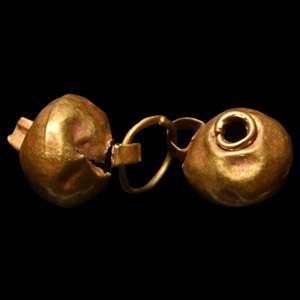
Greek Gold Pomegranate Pendant
Circa 4th century B.C.Sold for (Inc. bp): £164
Hollow-form body with detailed calyx below, the suspension formed as a hollow collared bead with a thin connecting loop. 0.28 grams, 16 mm
From the collection of a late Japanese collector, 1970s. -
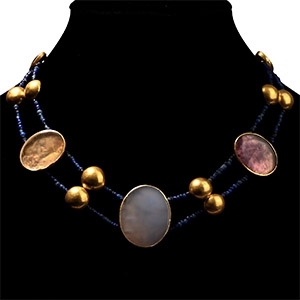
Late Hellenistic-Early Roman Gemstone, Gold and Glass Bead Necklace
Circa 2nd century B.C.-1st century A.D.Estimate: £3,500 - 4,500 (+bp*)
Opening Bid: £1,750
Restrung necklace with oval semi-precious stones and gold-domed appliqués; double strand of Roman spherical blue glass beads, varying in hues and tones, and to the top of each strand a single appliqué with a gold discoid plaque set with a garnet polished stone to the left and a vibrant green aventurine stone to the right; a double-domed appliqué behind each small plaque, and a larger discoid set with crystal on the left and pale amethyst to the right; central prominent chalcedony set discoid. 43 grams total, 44 cm including clasp
Acquired on the UK art market prior to 2000. This lot has been checked against the Interpol Database of stolen works of art and is accompanied by a search certificate number no.12947-246339.
