
Loading, please wait...
LOT 1301
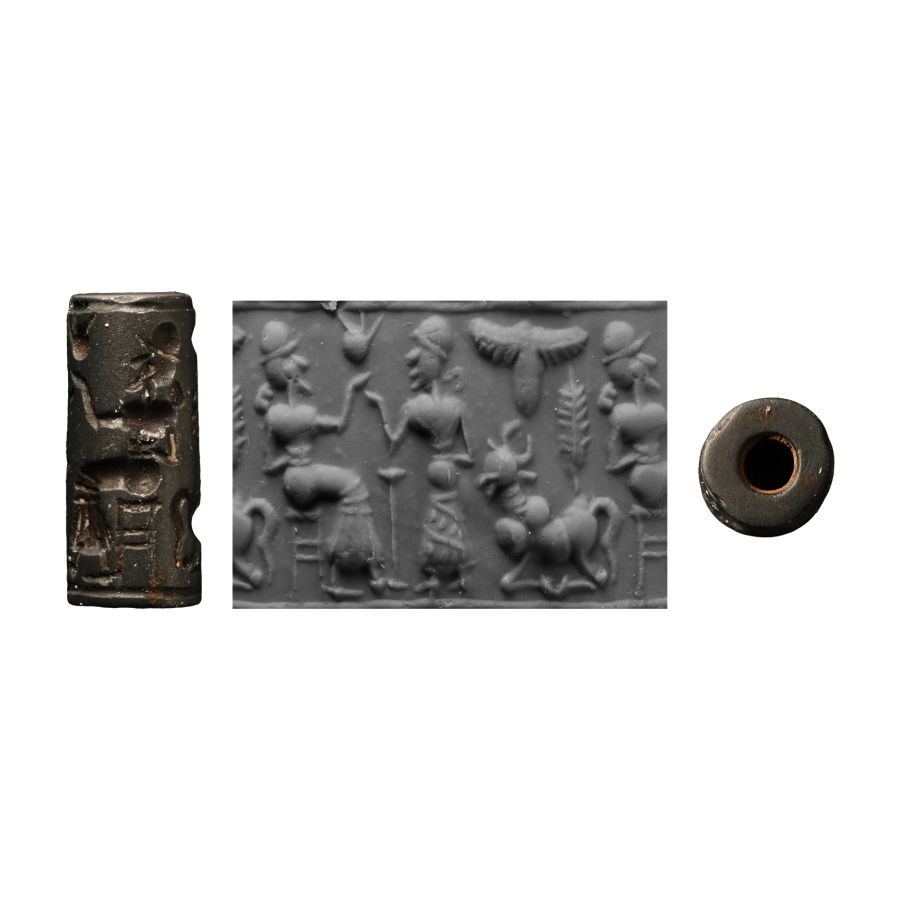
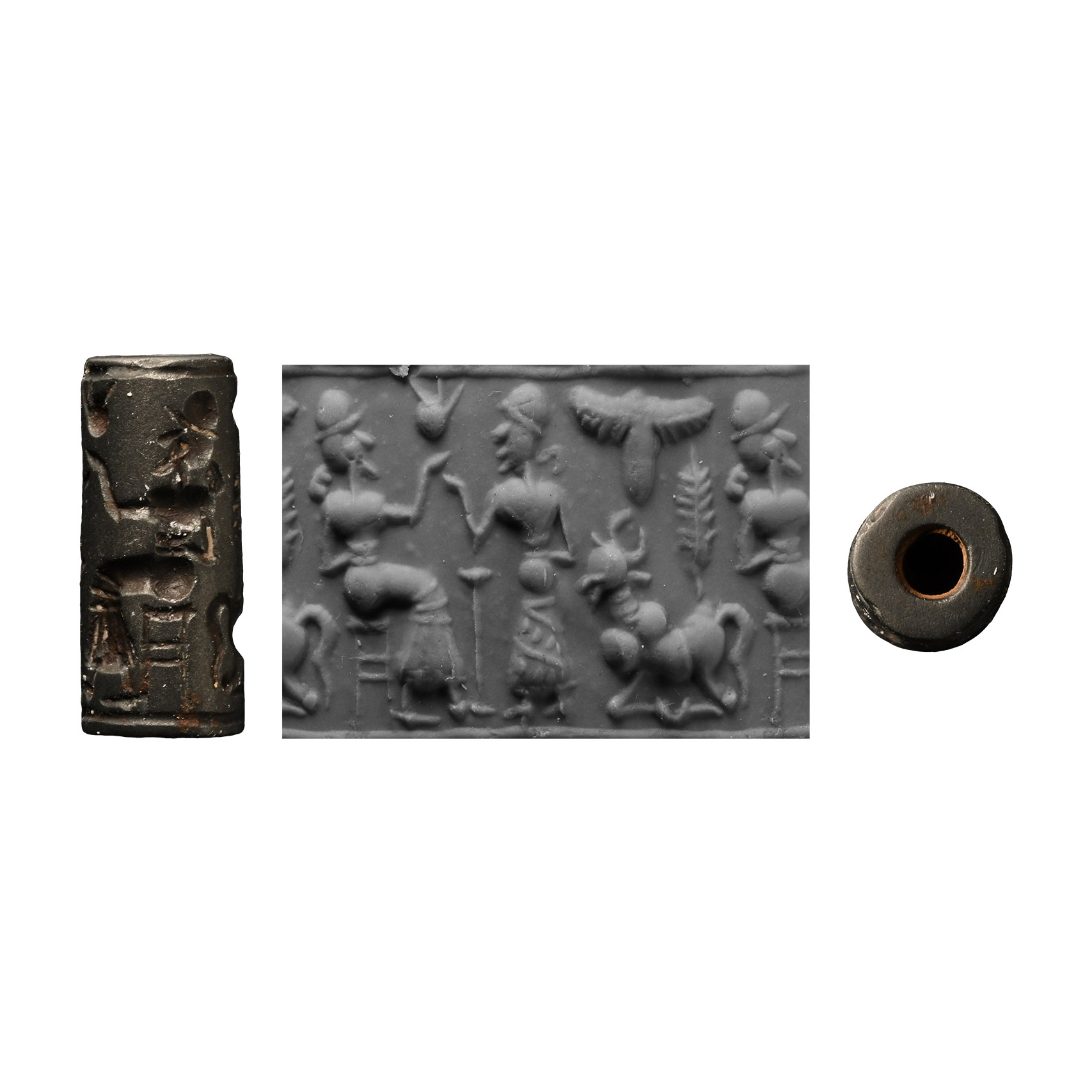
Late Babylonian Stone Cylinder Seal with Presentation Scene
CIRCA 900-600 B.C.
7/8 in. (5.69 grams, 22 mm).
The scene in a single register presenting a seated figure, possibly a deity, with a raised arm, a worshipper before him with one raised arm; a crouching horned quadruped behind the worshipper, a winged figure above; accompanied by a museum-quality impression.
ProvenanceFrom the property of late Mr SM, London, UK, 1969-1999.
CONDITIONTimeLine Auctions follows a vetting process to ensure the authenticity and legality of all items, reinforcing our commitment to integrity and responsible trading. Each antiquity, antique, and coin lot undergoes thorough examination by a vetting committee of at least ten external specialists, professional trade association members, scientists, and archaeologists: Our Vetting Process
AUCTIONS:
TimeLine is a leading auction house specialising in antiquities, ancient art, collectables, natural history, coins, medals, and books. Our auctions offer museums, collectors, historians, and enthusiasts the opportunity to acquire unique and historically significant pieces.
LOT 1301
Late Babylonian Stone Cylinder Seal with Presentation Scene
Sold for (Inc. bp): £520
-
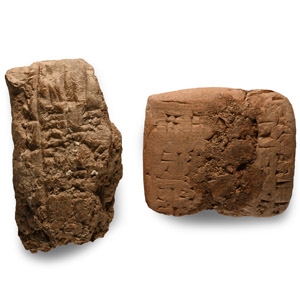
Mesopotamian Cuneiform Tablet Fragment Group
2nd millennium B.C.Sold for (Inc. bp): £195
Group of two pillow-shaped clay tablets each with cuneiform text to one broad face; repaired. 93.8 grams total, 48-61 mm
Specialised collection of cuneiform texts, the property of a London gentleman and housed in London before 1992. Thence by descent to family members. Examined by Professor Wilfrid George Lambert FBA (1926-2011), historian, archaeologist, and specialist in Assyriology and Near Eastern archaeology, in the late 1980s and early 1990s. This small collection is exceptional for the variety of types, including some very rare and well preserved examples. -
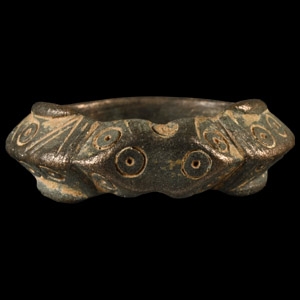
Ghaznavid Bronze Zoomorphic Ring with Annular Design
Circa 12th-13th century A.D.Sold for (Inc. bp): £156
With a keeled hoop decorated with ring-and-dot and linear designs, the shoulders formed as stylised beast heads supporting the bezel with punched ring-and-dot motifs. 9.52 grams, 26.94 mm overall, 19.21 mm internal diameter (approximate size British P, USA 7 1/2, Europe 16.23, Japan 15)
UK private collection before 2000. On the UK art market. Property of a London gentleman. -
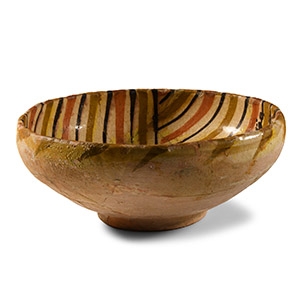
Central Asian Pottery Bowl with Kufic Inscription
Circa 10th century A.D.Estimate: £500 - 700 (+bp*)
Opening Bid: £160
Of rounded profile with painted design to inner face: quartered design of black, olive green and coral stripes on a cream field, one and a half lines of Kufic text across the centre; repaired. 384 grams, 16.5 cm wide
with a London, UK gallery 1971-early 2000s.
