
Loading, please wait...
LOT 1660
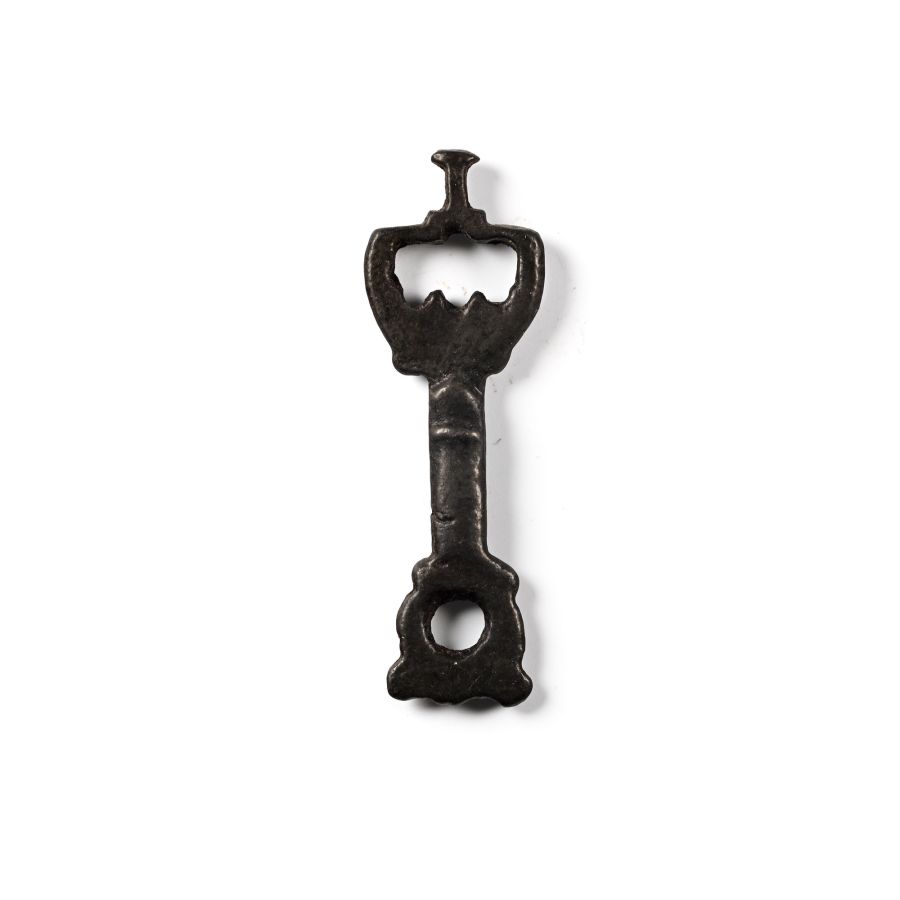
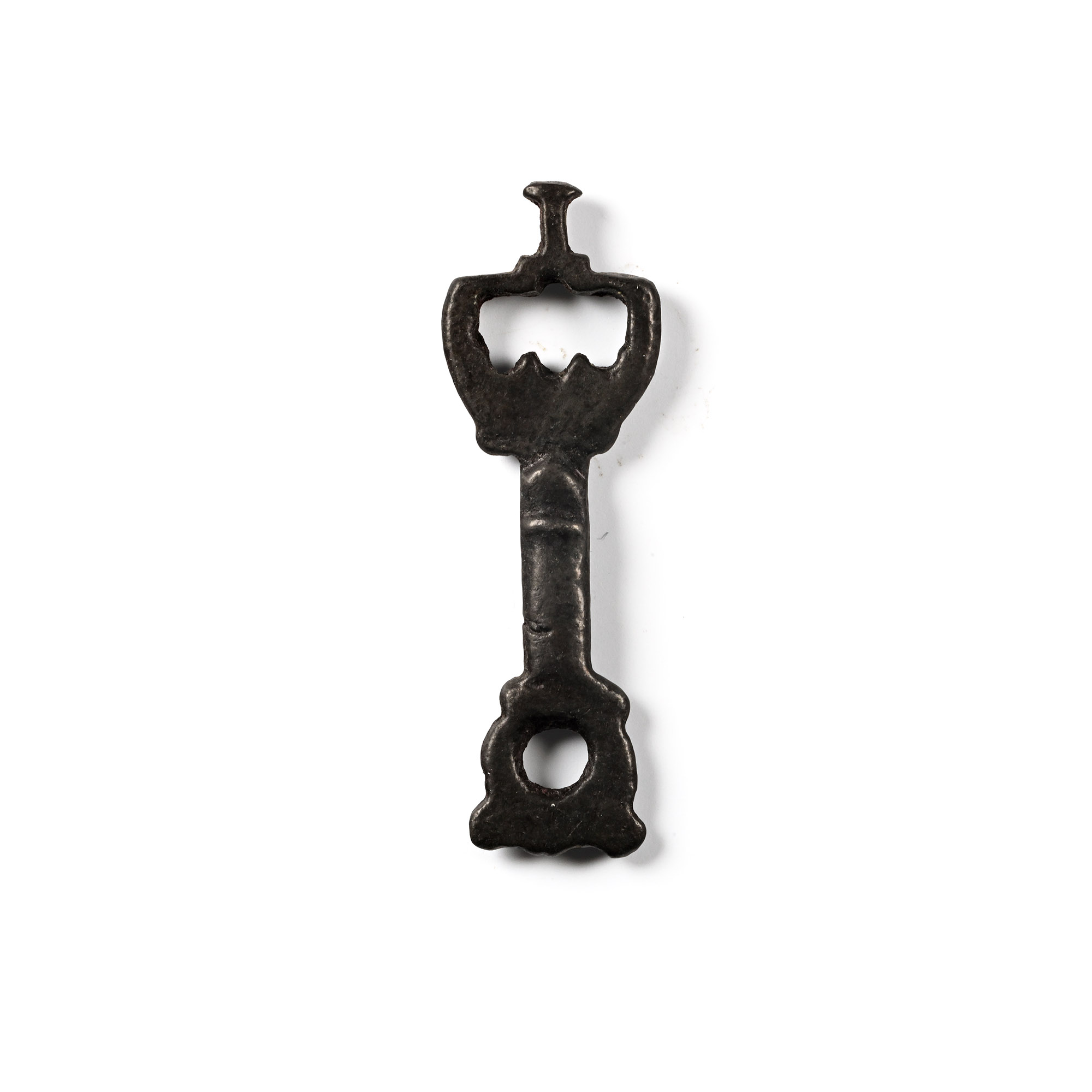
Late Anglo-Scandinavian Viking Bronze Casket Key
10TH-13TH CENTURY A.D.
2 1/8 in. (7.67 grams, 54 mm).
For a slide lock, the shaft with an open circular projection to one end and a larger openwork rectangular projection to the other end terminating with a T-shaped extension. [No Reserve]
ProvenanceAcquired on the UK art market circa 2005.
From an old North Country, UK, collection.
This lot is accompanied by an illustrated lot declaration signed by the Head of the Antiquities Department, Dr Raffaele D'Amato.
Hammond, Aaron Benet's Artefacts of England & the United Kingdom, Fourth edition, Coggeshall, 2021, p.526, nos.V17-0102, V17-0103, & V17-0104.
FootnotesThere is much discussion among the scholars on such slide keys, known popularly as 'Viking' keys. According to Kevin Leahy '...they do look something like the keys that come from Viking graves and from Viking sites but I have never seen an example that had the 'T' shaped extension for the end of the bit and I can't actually see how this would have functioned in a slide lock.' An iron example was found at Coppergate in York, in a 12th to 13th century context.
CONDITIONTimeLine Auctions follows a vetting process to ensure the authenticity and legality of all items, reinforcing our commitment to integrity and responsible trading. Each antiquity, antique, and coin lot undergoes thorough examination by a vetting committee of at least ten external specialists, professional trade association members, scientists, and archaeologists: Our Vetting Process
AUCTIONS:
TimeLine is a leading auction house specialising in antiquities, ancient art, collectables, natural history, coins, medals, and books. Our auctions offer museums, collectors, historians, and enthusiasts the opportunity to acquire unique and historically significant pieces.
-
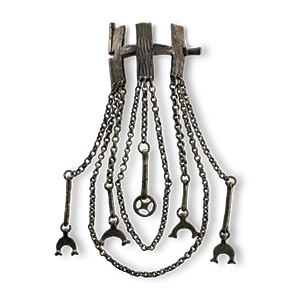
Pre-Viking Bronze Brooch with Bull-Headed Lunar Pendants and Chain
7th-8th century A.D.Estimate: £1,800 - 2,400 (+bp*)
Opening Bid: £900
Comprising: a bow-brooch with chamfered edges to the shank and three transverse ribbed bars, scooped foot, the end of each bar with three holes to accept a length of chain formed of barrel-shaped links; four chains with a balustered stem and crescent pendant, the horns terminating in stylised bull-heads; the central chain terminating in a stylised wheel; longer chain attached to the outer bars; mounted on a custom-made stand. 670 grams total, chain: 23.5 cm
Acquired on the London art market, 1990s. Private collection, London. This lot has been checked against the Interpol Database of stolen works of art and is accompanied by a search certificate number no.12737-234051. This lot has been cleared against the Art Loss Register database, and is accompanied by an illustrated lot declaration signed by the Head of the Antiquities Department, Dr Raffaele D'Amato. -
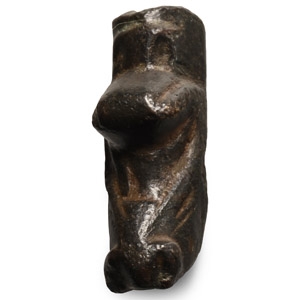
Anglo-Scandinavian Viking Stirrup Terminal with Beast
10th-11th century A.D.Sold for (Inc. bp): £59
With beast-head and other detailing, hollow to the underside. 15.3 grams, 31 mm
Found Cambridgeshire, UK. This lot is accompanied by an illustrated lot declaration signed by the Head of the Antiquities Department, Dr Raffaele D'Amato. -
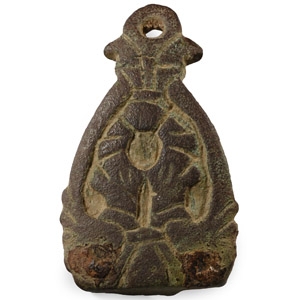
Anglo-Scandinavian Viking Bronze Stirrup Mount with Beasts
1000-1150 A.D.Sold for (Inc. bp): £208
Sub-triangular with convex sides, integral tri-lobed apex loop at the top and two rivet holes at the base with ferrous remains; front of the mount with a zoomorphic design of two beasts joined together by a knot-like devise giving the appearance of linked collars, the bodies of the beasts forming the sides of the mount with their heads back to back in the middle lower part; Williams Class A, Type 2B. 25.5 grams, 48 mm
Found near Baumber, East Lindsey, Lincolnshire, UK, on Sunday 8 September 2024. Accompanied by a copy of the British Museum's Portable Antiquities Scheme (PAS) report no.SWYOR-515FAB. This lot is accompanied by an illustrated lot declaration signed by the Head of the Antiquities Department, Dr Raffaele D'Amato.
