
Loading, please wait...
LOT 0379
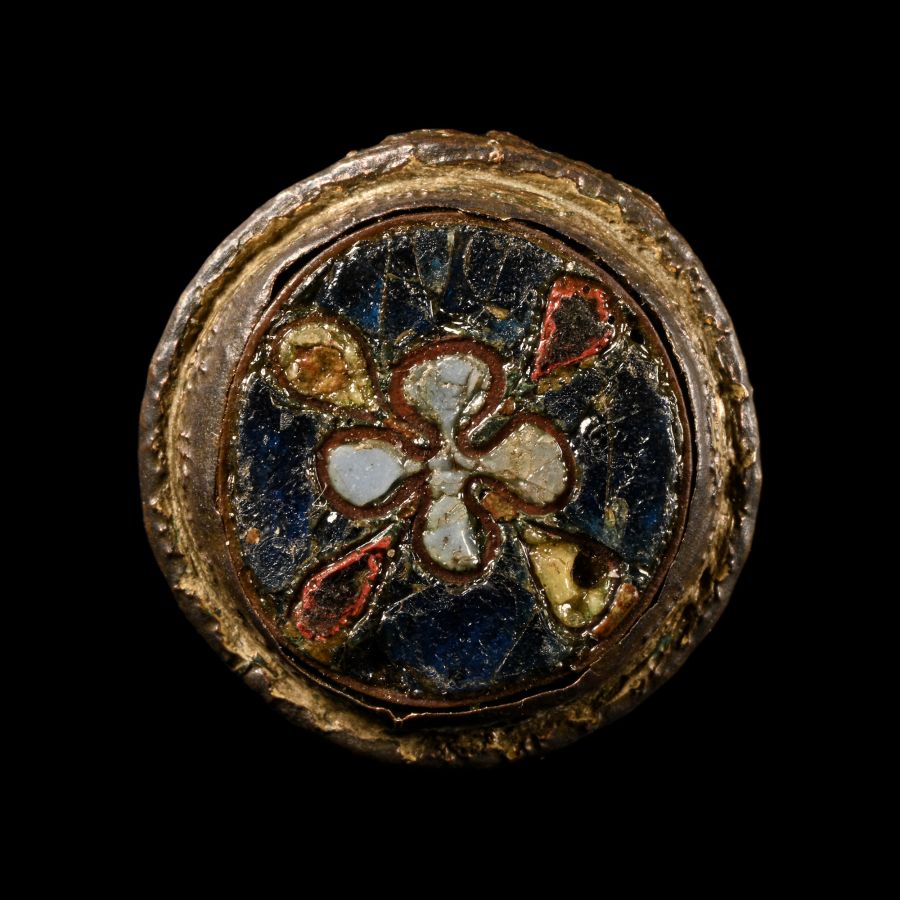
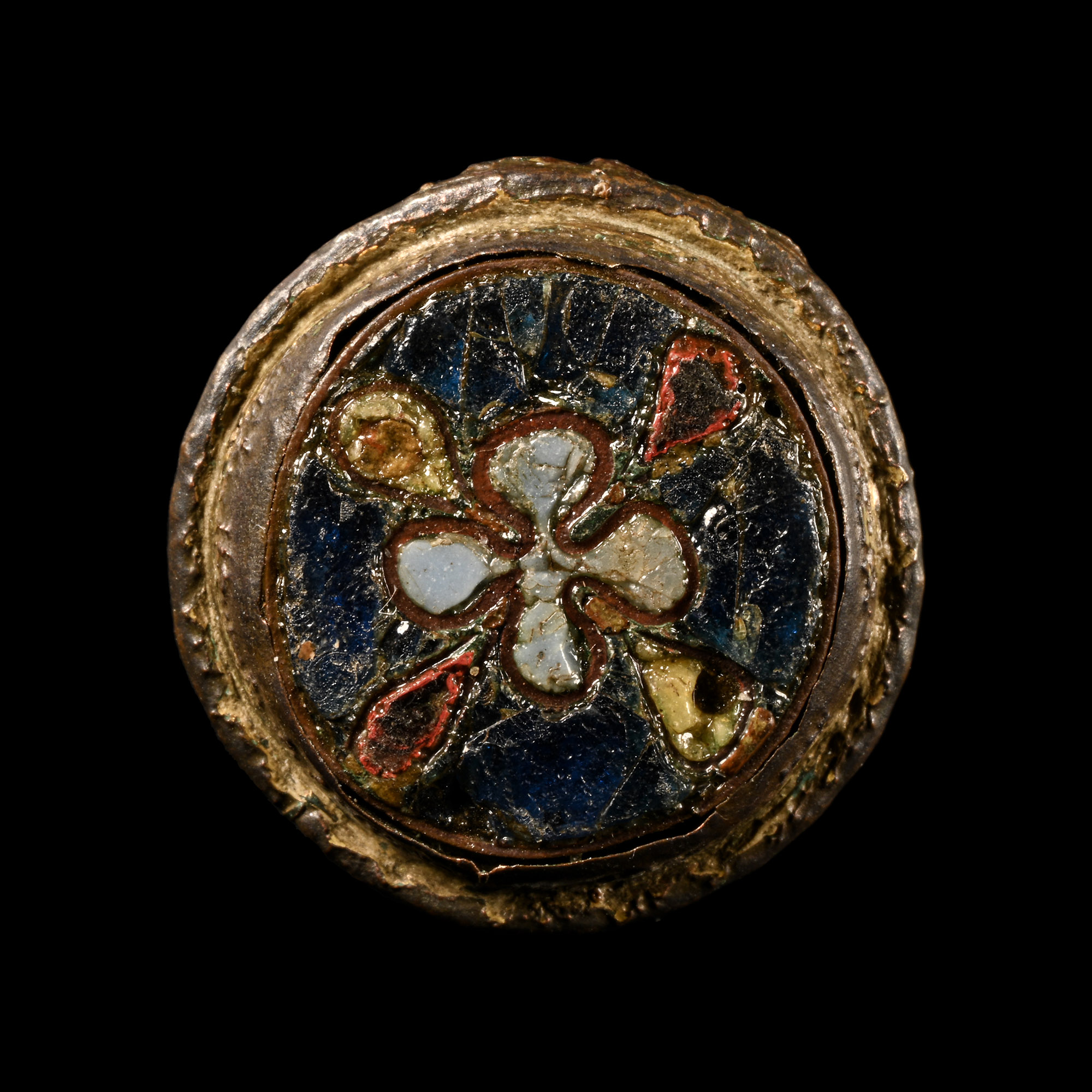
Late Anglo-Saxon Gilt Bronze Cloisonne Brooch
CIRCA 11TH CENTURY A.D.
7/8 in. (3.72 grams, 22 mm).
With central raised cell and cloisonné enamel quatrefoil, flange rim.
ProvenanceAcquired between the 1960s-early 1990s.
From an old UK private collector from Worthing, West Sussex, UK.
Property of K.P., a Cornish lady collector, UK.
Cf. Hattatt, R., Brooches of Antiquity, Oxford, 1987, item 1316, for type.
CONDITIONTimeLine Auctions follows a vetting process to ensure the authenticity and legality of all items, reinforcing our commitment to integrity and responsible trading. Each antiquity, antique, and coin lot undergoes thorough examination by a vetting committee of at least ten external specialists, professional trade association members, scientists, and archaeologists: Our Vetting Process
AUCTIONS:
TimeLine is a leading auction house specialising in antiquities, ancient art, collectables, natural history, coins, medals, and books. Our auctions offer museums, collectors, historians, and enthusiasts the opportunity to acquire unique and historically significant pieces.
-
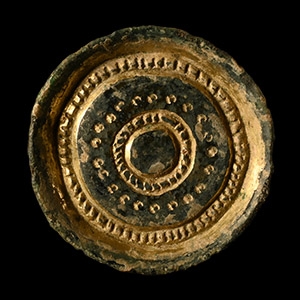
Anglo-Saxon Gold Chip-Carved Bronze Saucer Brooch
Circa 6th century A.D.Sold for (Inc. bp): £312
With central bosses within a pelletted ring, plain band with stamped roundels, billetted outer band and flared rim; pin-lug, pin and catch to the reverse. 7.01 grams, 26 mm
Found Cambridgeshire, UK. -
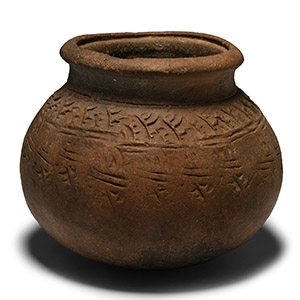
Anglo-Saxon Decorated Grey-Ware Urn
Circa 6th-11th century A.D.Sold for (Inc. bp): £442
Squat vessel with rounded underside, gusseted neck and carinated mouth with inner lip; stamped frond decoration to the shoulder and body, arched stamp pattern between; underside with impressed ropework spiral pattern. 497 grams, 14 cm wide
Ex English private collection, formed in the 1960s. Acquired from Bonhams, London, 13 April 2011, no.245 (part). From an important Cambridgeshire estate; thence by descent. Accompanied by copies of the relevant Bonhams catalogue pages and the original Bonhams lot tag. -
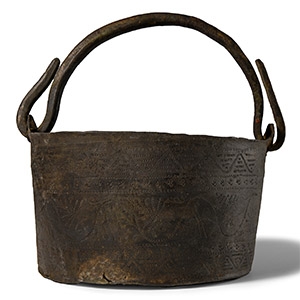
Anglo-Saxon Bronze Bucket Decorated with Foliage
Late 5th-6th century A.D.Sold for (Inc. bp): £416
Squat vessel, cylindrical in form with lateral D-shaped lugs at the rim, each pierced to accept a bronze drop-handle with returned ends; the outer face with decorative frieze executed in pointillé technique with pellets between the bands consisting of (1) an upper band of running zigzags with fill; (2) clusters of three pellets; (3) sinuous curved line with fronds in the voids; (4) repeat of (2); (5) repeat of (1); underside with three soldered silver panels, possibly ancient repairs. 527 grams, 18.5 cm wide
Found East Anglia, believed Cambridgeshire, UK. From a collection acquired on the UK art market from various auction houses and collections mostly before 2000. From an important Cambridgeshire estate; thence by descent.
The vessel is formally similar to the group of bronze vessels believed to have been made in Antioch in the 6th century, which have been recovered from 6th-7th century grave fields in England (Carver, 2005; Mango et al, 1989) and from sites in the Mediterranean area (see Drandaki, n.d.). While it lacks the elaborate hunting scenes and Greek inscriptions of the more complex examples, it shows most of the same decorative and constructional features.
