
Loading, please wait...
LOT 1173
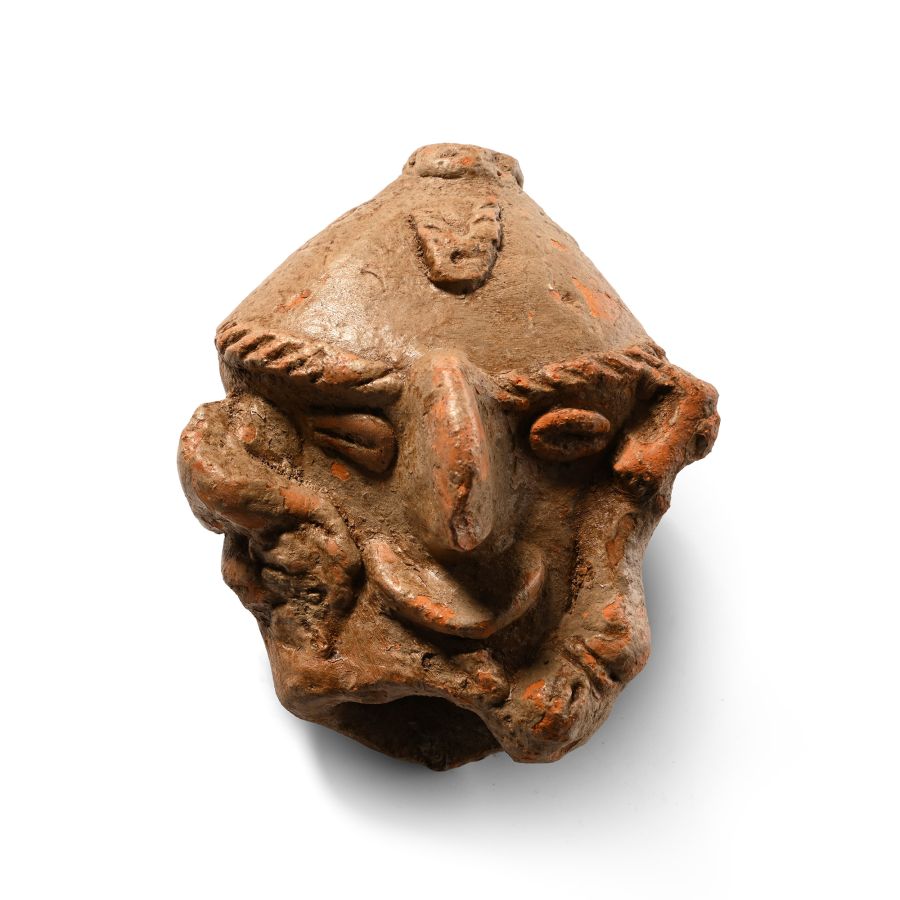
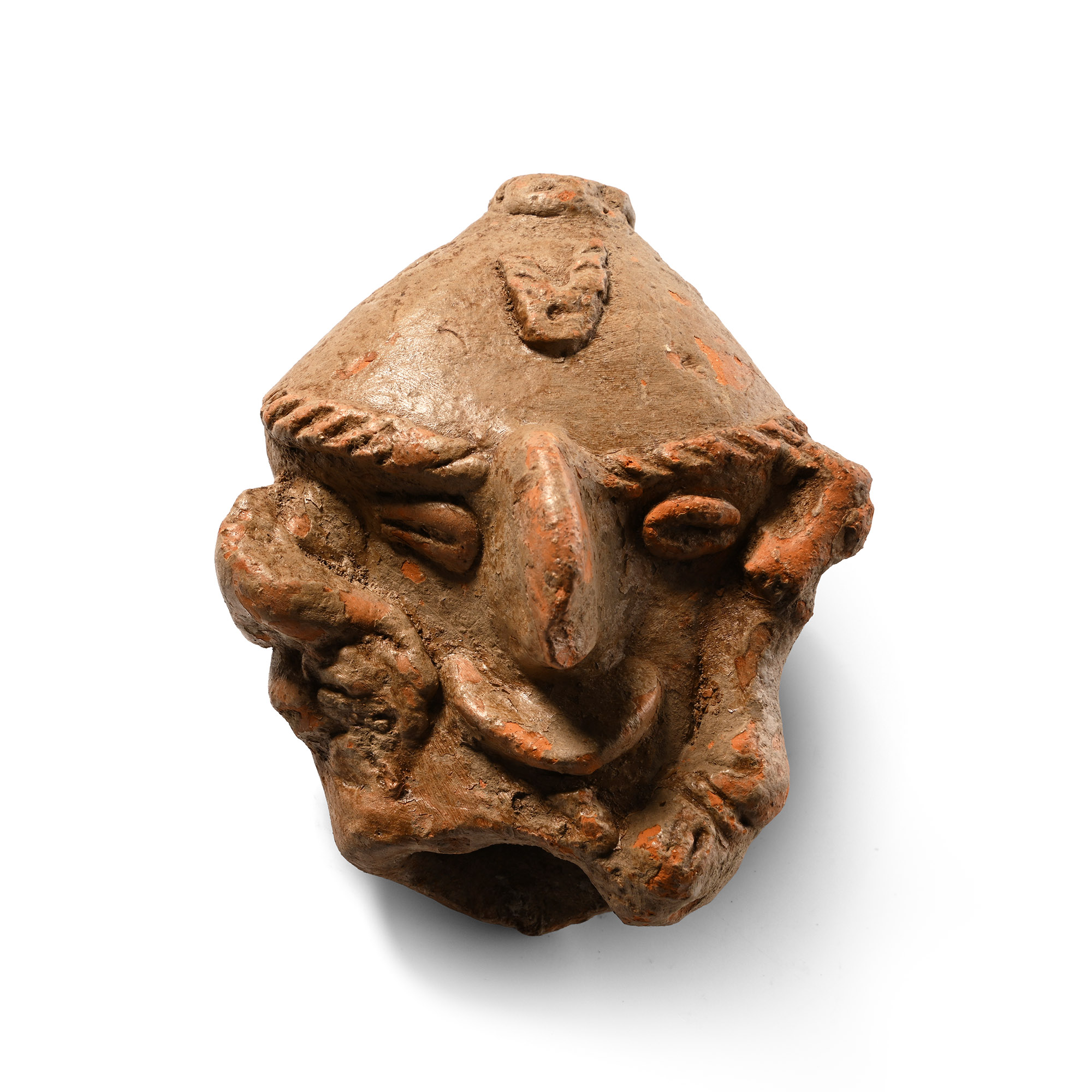
Large Western Asiatic Terracotta Statue Head
LATE 1ST MILLENNIUM B.C.
6 1/4 in. (600 grams, 16 cm).
A hollow-formed figure or idol head with conical cap, pinched facial form, applied brows and other detailing; mounted on a stand. [No Reserve]
ProvenanceProperty of a Cambridgeshire lady; formerly in the Igor Karmiloff collection (1925-2016), UN economist and author of Flashbacks, Icons of Impermanence, Bloomington, 2009; acquired in the 1950s-early 1990s.
From the private collection of John Meredith, acquired since the 1990s; thence by descent.
TimeLine Auctions follows a vetting process to ensure the authenticity and legality of all items, reinforcing our commitment to integrity and responsible trading. Each antiquity, antique, and coin lot undergoes thorough examination by a vetting committee of at least ten external specialists, professional trade association members, scientists, and archaeologists: Our Vetting Process
AUCTIONS:
TimeLine is a leading auction house specialising in antiquities, ancient art, collectables, natural history, coins, medals, and books. Our auctions offer museums, collectors, historians, and enthusiasts the opportunity to acquire unique and historically significant pieces.
-
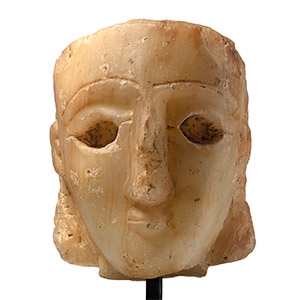
South Arabian Alabaster Head of a Female
3rd-1st century B.C.Sold for (Inc. bp): £1,170
Sculptured female head, angular nose with straight ridge, slightly rounded cheeks and triangular chin, large sockets for inlaid eyes, grooved eyebrows and high ears, long locks of hair visible below the ears; mounted on a custom-made display stand. 1.96 kg total, 18.5 cm including stand
UK collection, 1990s. Acquired on the UK art market, before 2000. Private collection, Mr M.V., a London-based businessman.
In the Arabian funerary sculptures of the period, the tops of the heads are usually cut off flat just above the hair line and left roughly tooled. The cut was due to the necessity of fitting them into niches of 'house shrines'. Large stelae with niches containing such heads were found in the Timna Cemetery. -
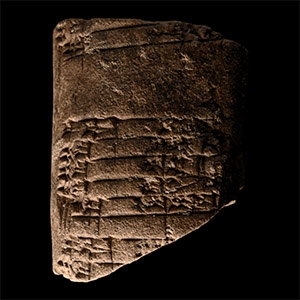
Mesopotamian Cuneiform Tablet Fragment
2nd millennium B.C.Sold for (Inc. bp): £208
With rounded edges, obverse with an incised grid and dense cuneiform text across about half the available surface; reverse with remains of two columns of text; both ends absent. 95 grams, 61 mm
Specialised collection of cuneiform texts, the property of a London gentleman and housed in London before 1992. Thence by descent to family members. Examined by Professor Wilfrid George Lambert FBA (1926-2011), historian, archaeologist, and specialist in Assyriology and Near Eastern archaeology, in the late 1980s and early 1990s. This small collection is exceptional for the variety of types, including some very rare and well preserved examples. -
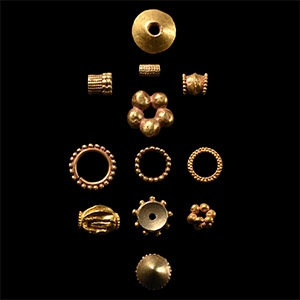
Western Asiatic Mixed Gold Bead Collection
1st millennium B.C.Sold for (Inc. bp): £845
Comprising beads of various shapes and sizes, including some granulated examples. 9.82 grams total, 7-13 mm
Ex property of a late Japanese collector, 1970s. Accompanied by a previous typed cataloguing card. This lot has been cleared against the Art Loss Register database, and is accompanied by an illustrated lot declaration signed by the Head of the Antiquities Department, Dr Raffaele D'Amato.
