Loading, please wait...
Details
LOT 0195
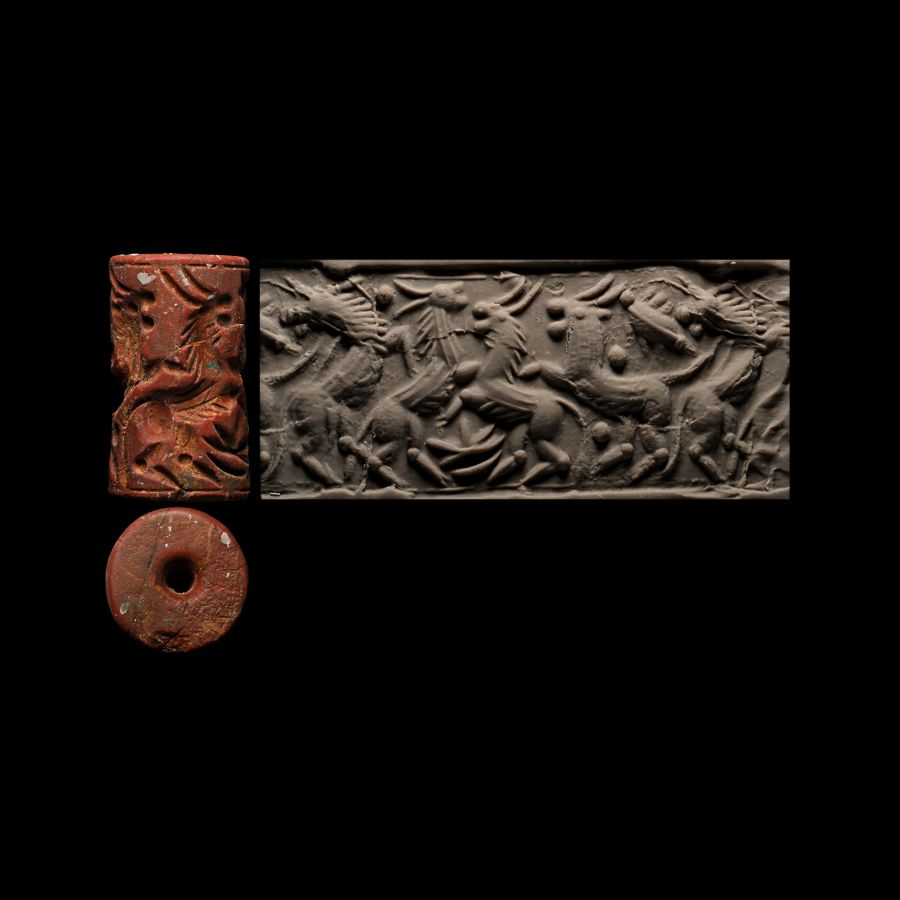
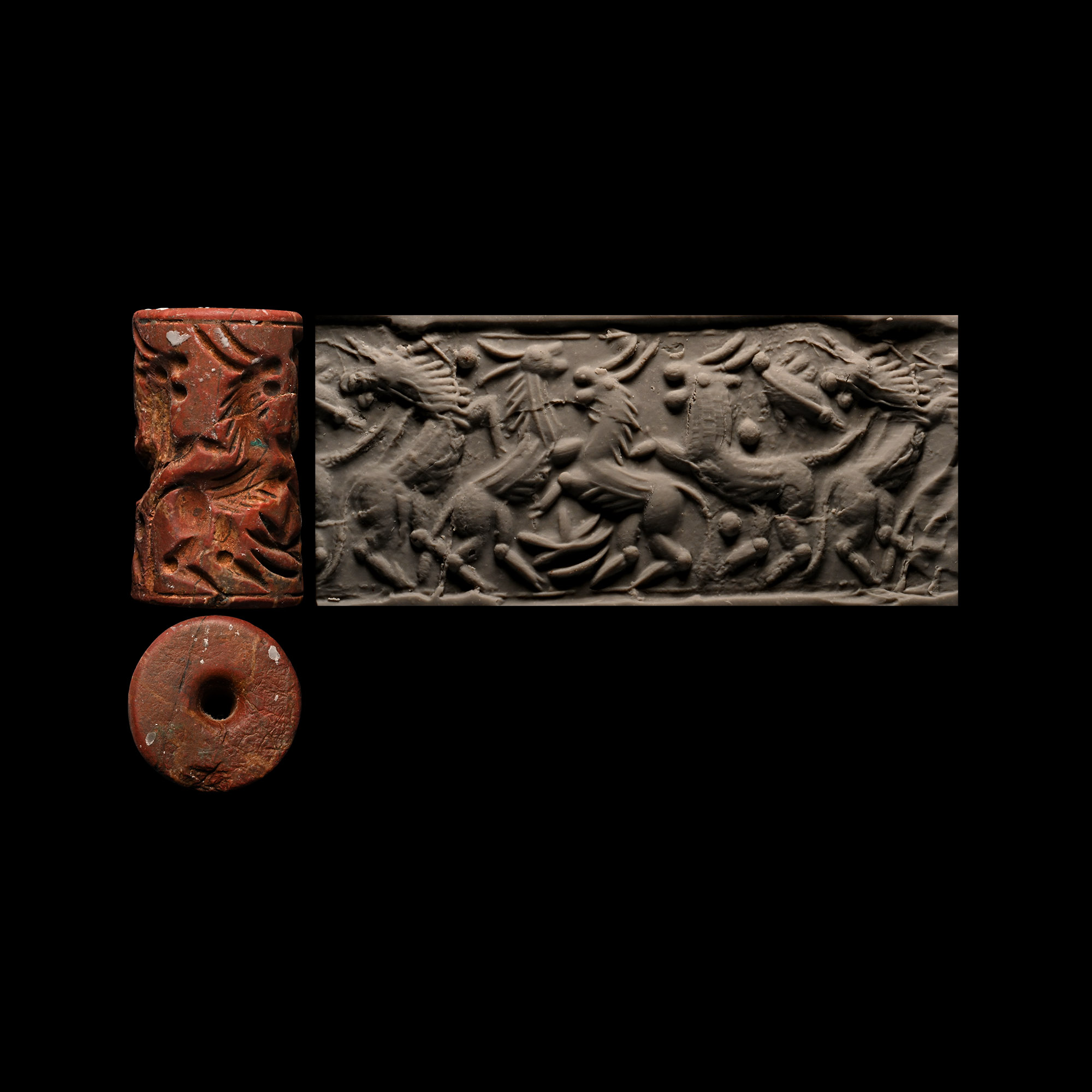
Large Western Asiatic Stone Cylinder Seal with Animals
2ND-1ST MILLENNIUM B.C.
1 3/4 in. (52.5 grams, 44 mm).
Densely carved scene with two types of rearing horned animals in combat, depicted with long tails and with fur detailing on the bodies, pellets and other motifs on the field; accompanied by a museum quality impression.
Provenance
From the collection of a gentleman, acquired on the London art market in the 1990s.
CONDITIONVETTING:
TimeLine Auctions follows a vetting process to ensure the authenticity and legality of all items, reinforcing our commitment to integrity and responsible trading. Each antiquity, antique, and coin lot undergoes thorough examination by a vetting committee of at least ten external specialists, professional trade association members, scientists, and archaeologists: Our Vetting Process
AUCTIONS:
TimeLine is a leading auction house specialising in antiquities, ancient art, collectables, natural history, coins, medals, and books. Our auctions offer museums, collectors, historians, and enthusiasts the opportunity to acquire unique and historically significant pieces.
RELATED LOTS
-
Anatolian White Marble Stamp Seal with Owner's Name
2nd millennium B.C.Sold for (Inc. bp): £1,820
Comprising a thick discoid body with a tapering handle above, accompanied by a copy of an old scholarly note, typed and signed by W.G. Lambert, late Professor of Assyriology, University of Birmingham, 1970-1993, which states: 'Stamp Seal of White Marble, 28 x 25 mm. The base of the stamp is round, with a flat bottom and slightly outcurving sides. The handle rises from the base with decreasing diameter, and eight sides, to the knob, which is roughly oval and pierced from side to side, with a raised band over the top. This shape is a typical Hittite stamp seal shape. The design consists of a band of design around the edge surrounding hieroglyphs in the middle. The band consists of four sections of pattern: three kinds of guilloche and one section of dots, interspersed with two opposite animal heads, and two opposite unidentified items. The hieroglyphs are no doubt the owner's name. This seal comes from Anatolia, and dates to the 17/16th century B.C. It is in good state of preservation.' 26.7 grams, 35 mm
UK private collection, acquired 1990-1993. Accompanied by a copy of a scholarly note, typed and signed by Professor Wilfrid George Lambert in 1991.
Seals were the working signatures of the ancient Near East. Pressed or rolled into wet clay, they secured jars, bags, doors and tablets, and left a distinct impression that identified the owner, authorised a transaction, and showed whether a container had been opened. Stamp seals (pressed once to leave a single emblem) appear from the 7th–4th millennia BC and continue throughout later periods; cylinder seals (rolled to create a repeating frieze) developed in Mesopotamia in the late 4th millennium BC and are used into the 1st millennium BC. Beyond administration, seals were miniature artworks and amulets. Their images—gods and worshippers, royal hunts, banquets, heroes and mythic beasts—broadcast rank, piety and profession, and were believed to protect the owner. Materials range from soft stones to hard chalcedonies, haematite and lapis, worked with drills and abrasives to achieve crisp intaglio cutting. Many were worn on cords or rings and followed their owners through life, sometimes into the grave. Seals matter because they underpin the earliest systems of record-keeping and trade. Impressions on tablets and bullae are primary documents for ancient law, economy and religion; the seals themselves preserve that imagery in the round. For collectors, well-cut examples with sharp impressions, good polish and honest ancient wear are especially desirable, and pieces with early collection histories are keenly sought. -
Western Asiatic Chalcedony Gaming Piece
3rd-5th century A.D.Estimate: £400 - 600 (+bp*)
Opening Bid: £222
Square in plan and plano-convex in section with tessellated triangles on the dome, horizontal grooves at the sides, incuse octofoil to the underside. 39.7 grams, 31 mm
Ex Mayfair, London, UK, collection, 1980s. -
Mesopotamian Stone Frog Amulet
2nd-1st millennium B.C.Sold for (Inc. bp): £234
Modelled as a crouching frog with anatomical detailing, pierced longitudinally. 5.56 grams, 26 mm
From the collection of a gentleman, acquired on the London art market in the 1990s.
Frog amulets in ancient Egypt symbolised fertility, rebirth, and regeneration. Associated with the goddess Heqet, who was linked to childbirth and life-giving forces, these amulets were particularly popular in contexts related to fertility and protection during pregnancy and childbirth. Their connection to the annual Nile flood, which brought new life to the land, further emphasised their symbolism of renewal and abundance.