
Loading, please wait...
LOT 1061
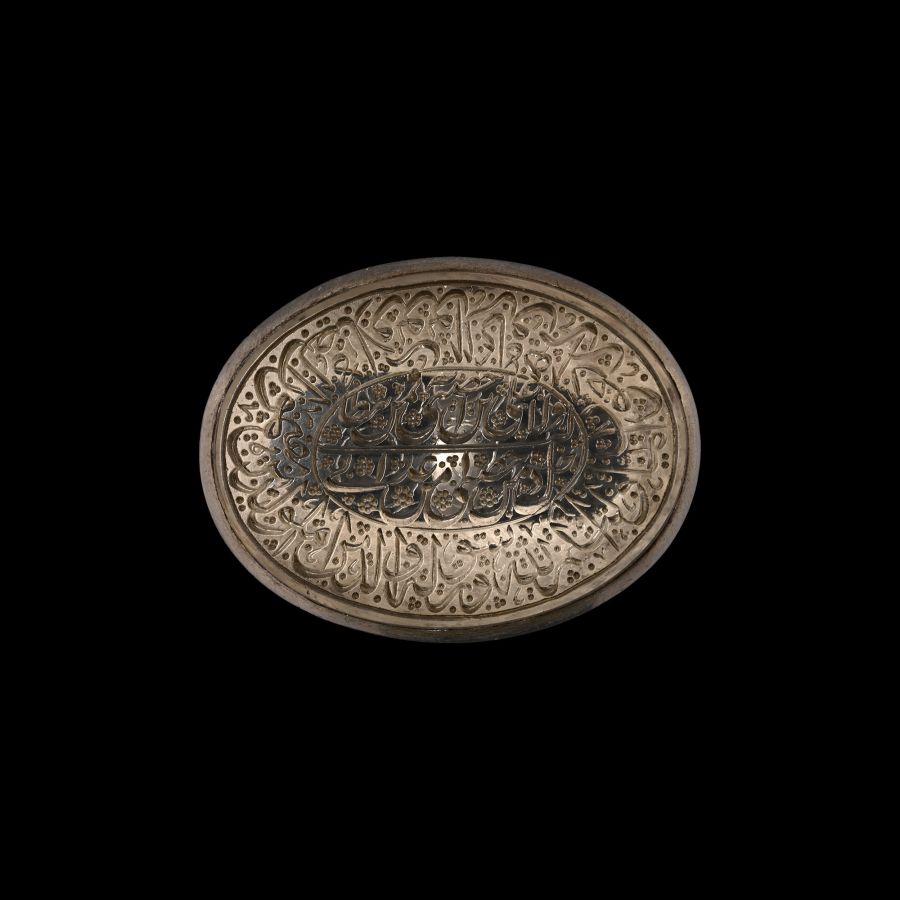
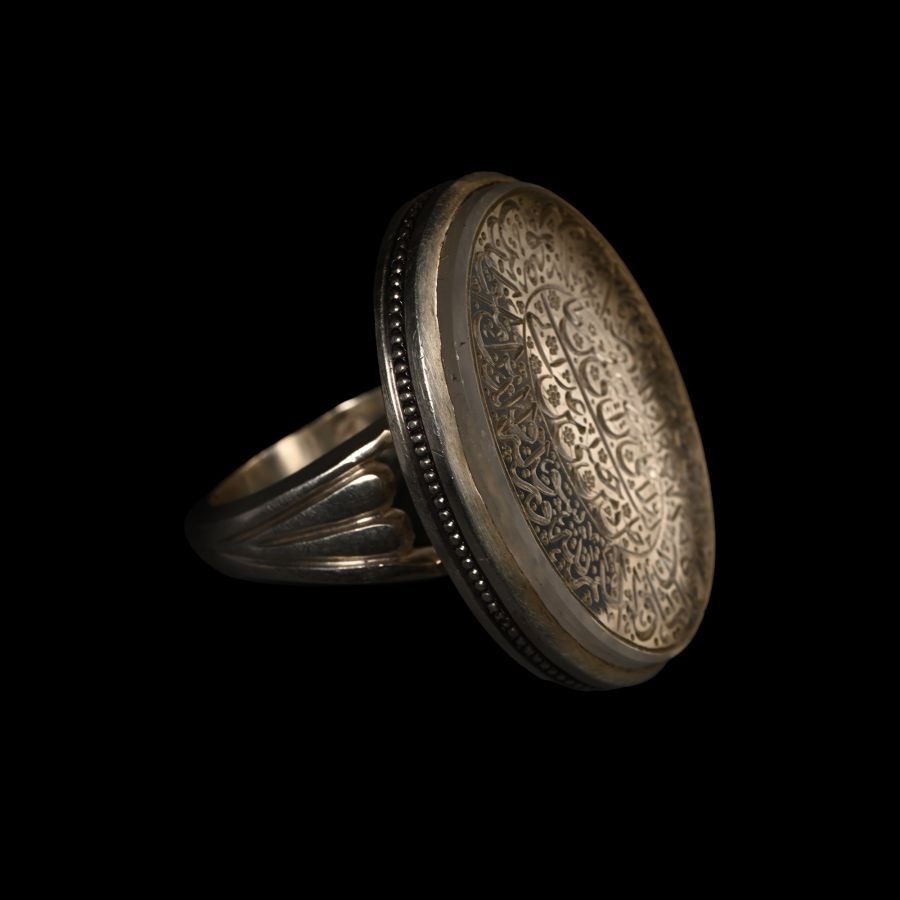
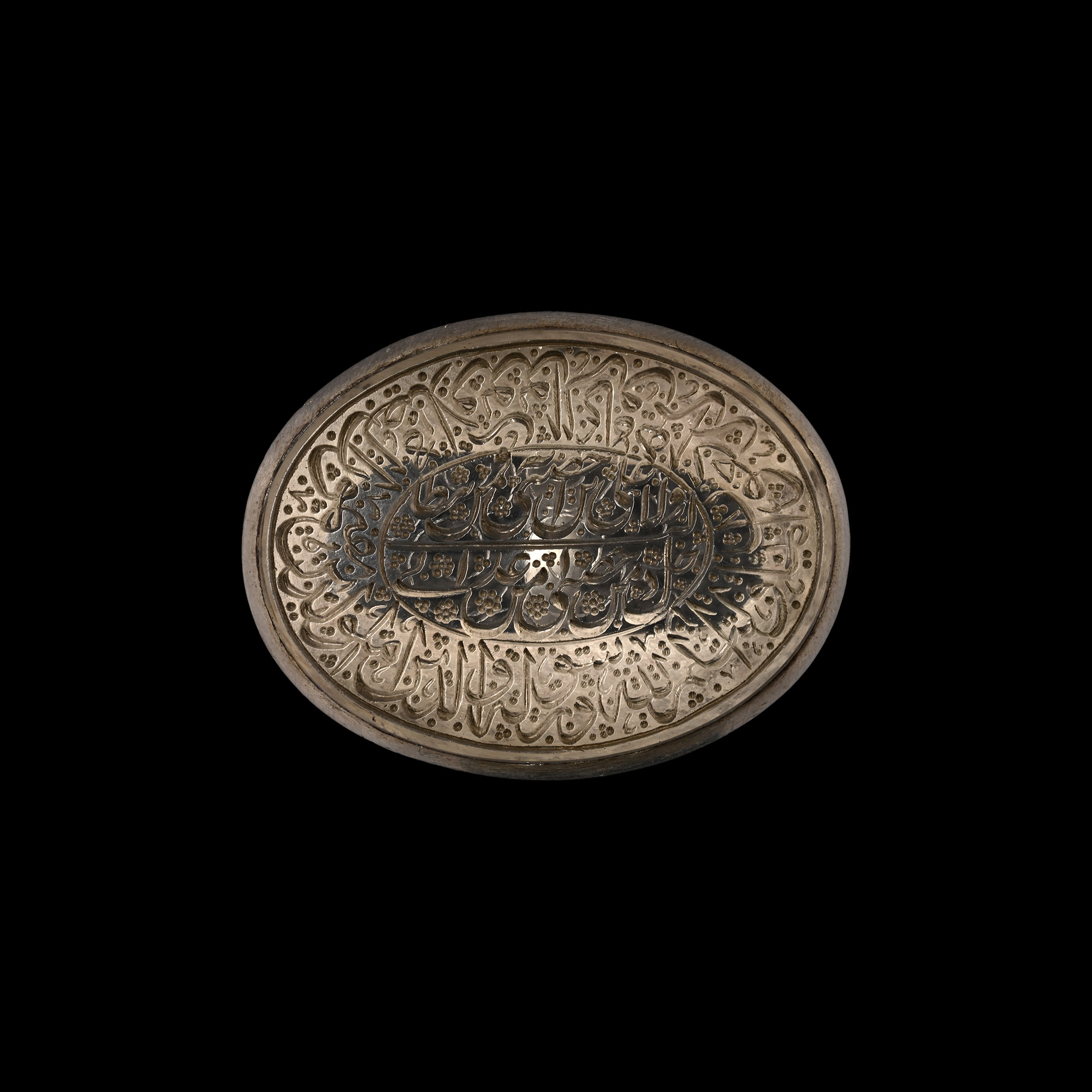
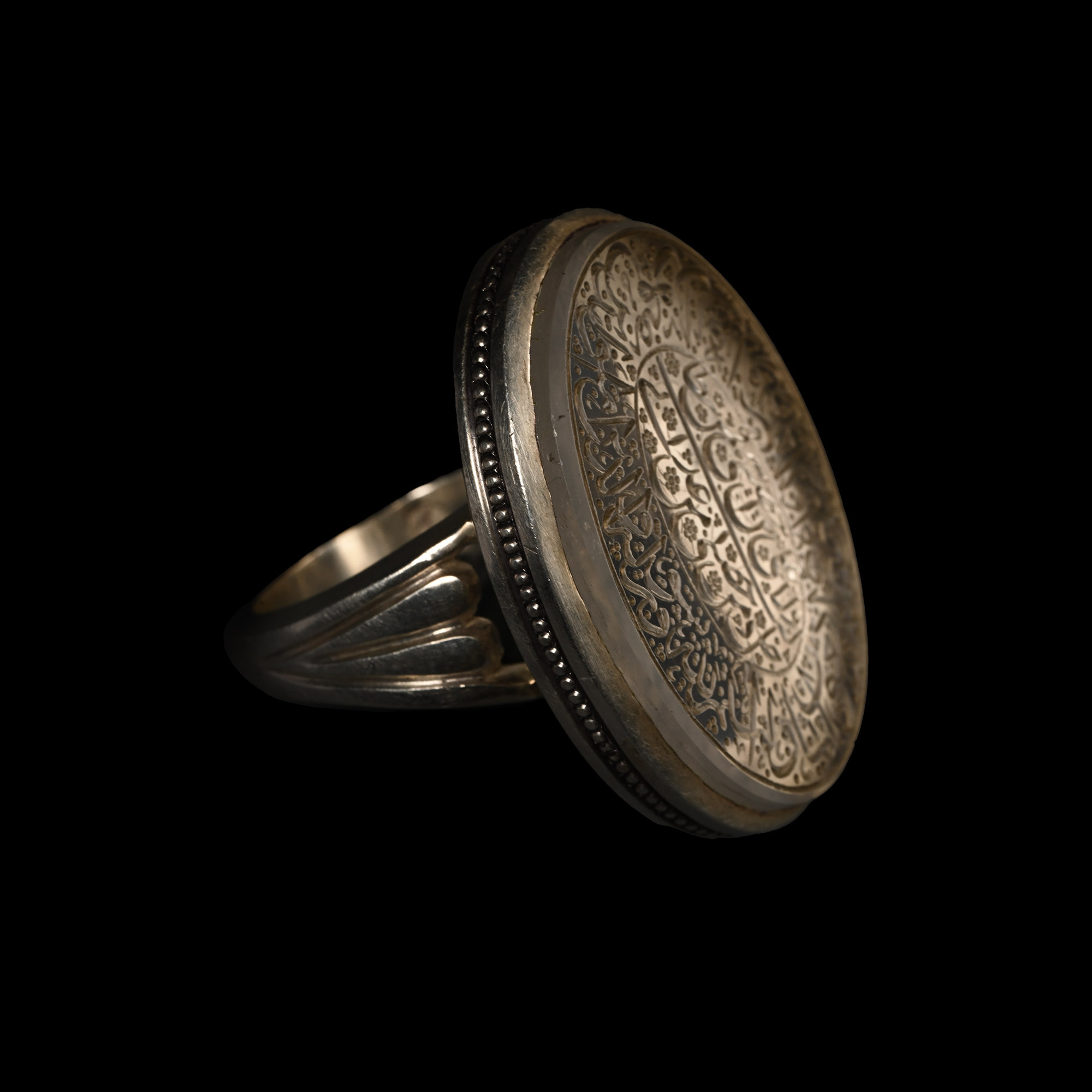
Large Western Asiatic Silver-Coloured Metal Ring with Calligraphic Intaglio
20TH CENTURY A.D.
1 3/8 in. (31.35 grams, 36.86 mm overall, 21.08 mm internal diameter (approximate size British X, USA 11 1/2, Europe 26.29, Japan 25)).
Comprising a rectangular-section hoop with fluted shoulders, supporting a large oval bezel with open base, set with a clear intaglio engraved with densely arranged calligraphic text. [No Reserve]
ProvenanceFrom the family collection of a Hampstead gentleman; formerly acquired in the 1980s.
This lot has been cleared against the Art Loss Register database, and is accompanied by an illustrated lot declaration signed by the Head of the Antiquities Department, Dr Raffaele D'Amato.
TimeLine Auctions follows a vetting process to ensure the authenticity and legality of all items, reinforcing our commitment to integrity and responsible trading. Each antiquity, antique, and coin lot undergoes thorough examination by a vetting committee of at least ten external specialists, professional trade association members, scientists, and archaeologists: Our Vetting Process
AUCTIONS:
TimeLine is a leading auction house specialising in antiquities, ancient art, collectables, natural history, coins, medals, and books. Our auctions offer museums, collectors, historians, and enthusiasts the opportunity to acquire unique and historically significant pieces.
LOT 1061
Large Western Asiatic Silver-Coloured Metal Ring with Calligraphic Intaglio
Sold for (Inc. bp): £195
-
.jpg)
Mesopotamian Bronze Standing Zoomorphic Torch Bearer
Early Dynastic II, mid 3rd millennium B.C.Estimate: £20,000 - 30,000 (+bp*)
Opening Bid: £10,000
Comprising a bulbous body with addorsed vulpine heads, standing on a rectangular base and with a circular cage supported on four curved arms above the back; each head with sockets to the eyes to accept inset cabochons. 2.28 kg, 17.5 cm
Acquired before 1983. Ex London gallery, 1990s. Accompanied by an academic report by Dr Raffaele D'Amato. This lot has been checked against the Interpol Database of stolen works of art and is accompanied by a search certificate number no.12695-236266. This lot has been cleared against the Art Loss Register database, and is accompanied by an illustrated lot declaration signed by the Head of the Antiquities Department, Dr Raffaele D'Amato.
The object belongs to a series of artefacts which attest the wide regional trade existing in the mid to late 3rd millennium B.C. in the Mesopotamian lands. Stands of this type were intended to hold offering bowls or lamps. -
Bactrian Style Lapis Lazuli Bead Necklace String
20th century A.D.Sold for (Inc. bp): £98
Composed mainly of cylindrical and tabular beads interspersed with small metal beads, the pendant a reclining lion. 43.2 grams, 43 cm
Ex London, UK, gentleman, 2000s. This lot has been cleared against the Art Loss Register database, and is accompanied by an illustrated lot declaration signed by the Head of the Antiquities Department, Dr Raffaele D'Amato. -
.jpg)
Western Asiatic Green Jasper Scaraboid with Combat Scene
1st millennium B.C.Sold for (Inc. bp): £3,380
With finely executed intaglio scene depicting a standing figure wielding an axe and holding a rearing lion beneath a solar disc; supplied with a museum quality impression. 5.38 grams, 20.66 mm
From the 'S' collection, acquired 1970-1990s. The collection was seen and studied by W.G. Lambert, late Professor of Assyriology at the University of Birmingham, 1970-1993. This lot has been checked against the Interpol Database of stolen works of art and is accompanied by a search certificate number no.12714-234416. This lot has been cleared against the Art Loss Register database, and is accompanied by an illustrated lot declaration signed by the Head of the Antiquities Department, Dr Raffaele D'Amato.
