
Loading, please wait...
LOT 1275
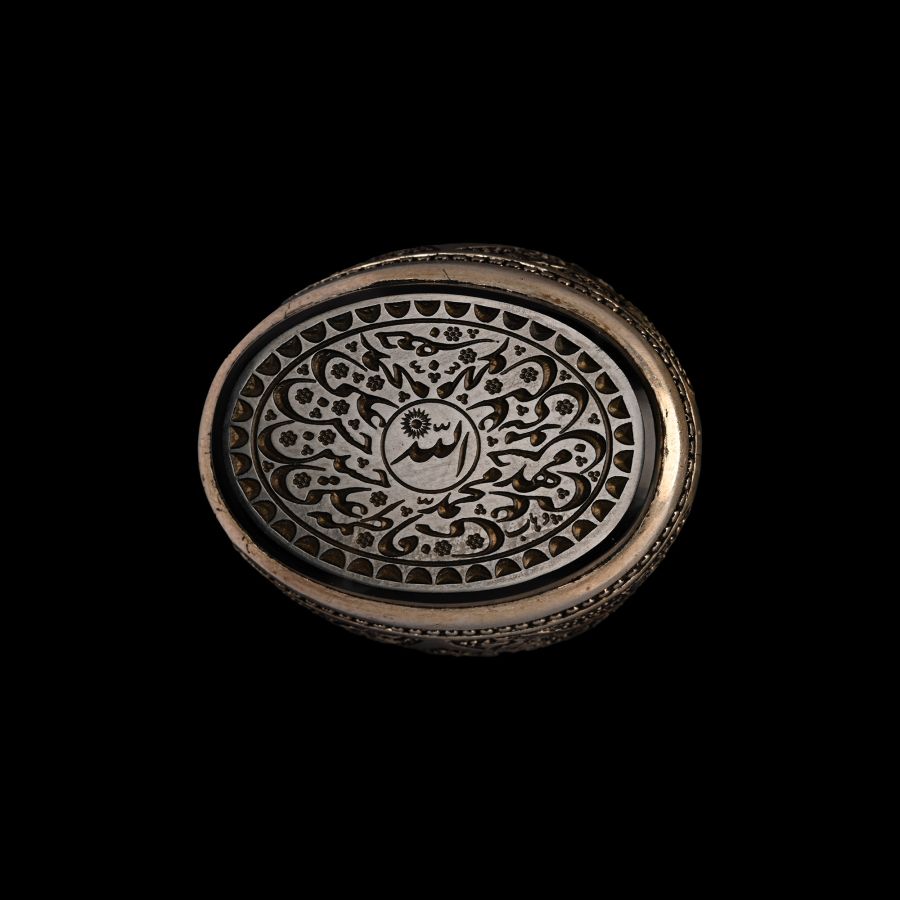
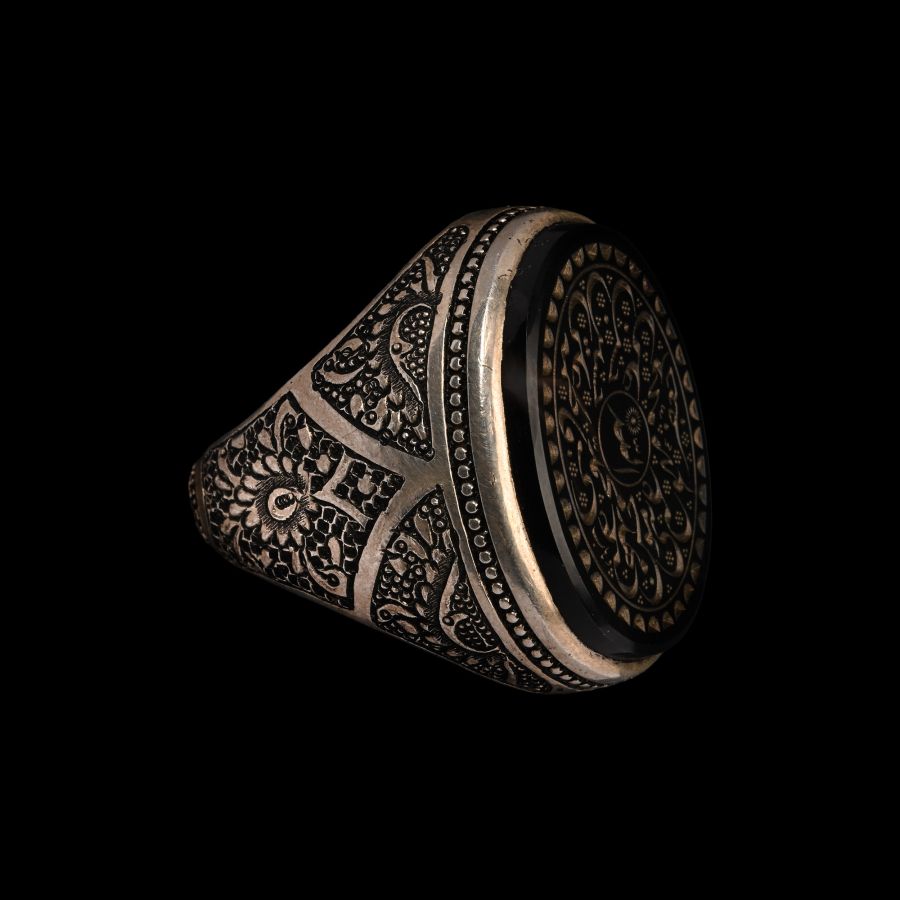
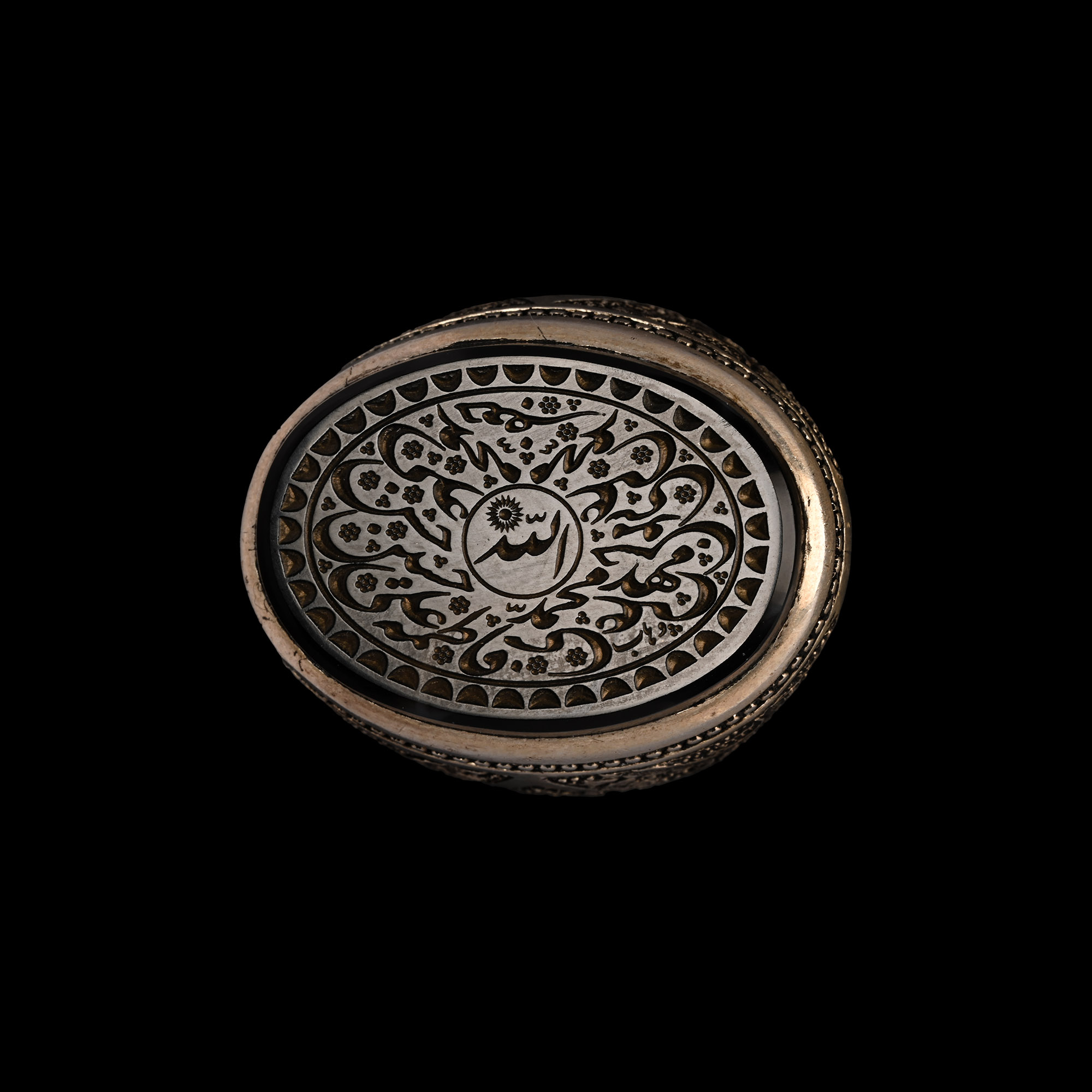
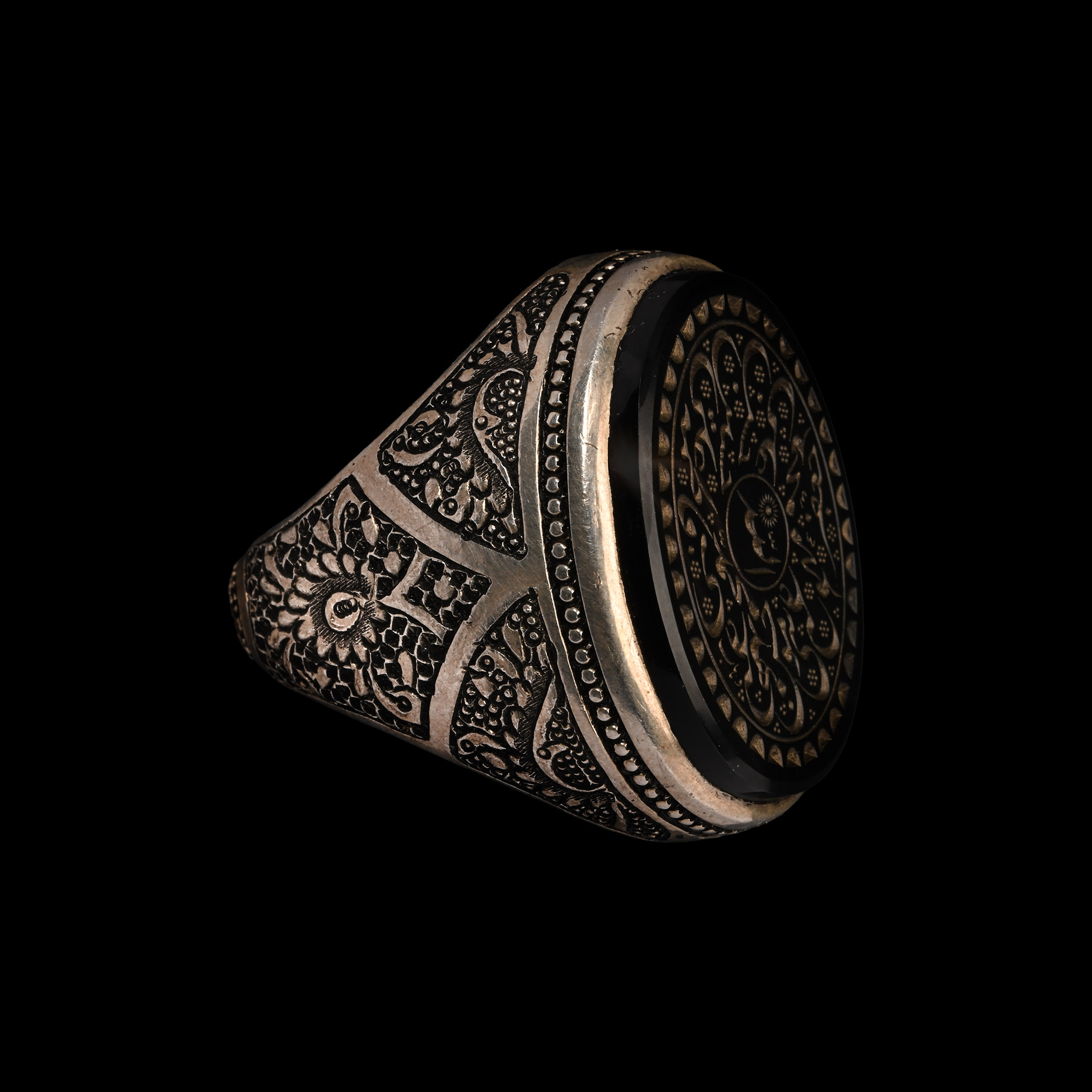
Large Western Asiatic Silver-Coloured Metal Ring with Agate Calligraphic Gemstone
20TH CENTURY A.D.
1 1/4 in. (27.52 grams, 32.26 mm overall, 20.10 mm internal diameter (approximate size British U 1/2, USA 10 1/4, Europe 23.15, Japan 22)).
The hoop decorated with elaborate floral motifs, two stamps to the inner face; oval bezel set with a dark brown agate intaglio engraved with densely arranged calligraphy arranged around a central medallion, notched border. [No Reserve]
ProvenanceFrom the family collection of a Hampstead gentleman; formerly acquired in the 1980s.
This lot has been cleared against the Art Loss Register database, and is accompanied by an illustrated lot declaration signed by the Head of the Antiquities Department, Dr Raffaele D'Amato.
TimeLine Auctions follows a vetting process to ensure the authenticity and legality of all items, reinforcing our commitment to integrity and responsible trading. Each antiquity, antique, and coin lot undergoes thorough examination by a vetting committee of at least ten external specialists, professional trade association members, scientists, and archaeologists: Our Vetting Process
AUCTIONS:
TimeLine is a leading auction house specialising in antiquities, ancient art, collectables, natural history, coins, medals, and books. Our auctions offer museums, collectors, historians, and enthusiasts the opportunity to acquire unique and historically significant pieces.
LOT 1275
Large Western Asiatic Silver-Coloured Metal Ring with Agate Calligraphic Gemstone
Sold for (Inc. bp): £85
-
Western Asiatic Bronze Arrowhead Collection
19th - 2nd century B.C.Sold for (Inc. bp): £130
Including triangular, leaf-shaped, barbed, paddle-shaped arrowheads with a flat, comparatively wide mid-rib, and others. 271 grams total, 5.8-10.7 cm
Ex London art market, 1980-1990s. This lot has been cleared against the Art Loss Register database, and is accompanied by an illustrated lot declaration signed by the Head of the Antiquities Department, Dr Raffaele D'Amato.
Some of the represented arrowheads (paddle-shaped) were typical of the Old Babylonian Empire. The shoulders were pronounced and the arrowhead had a rectangular-section tapering tang. This simple form was popular throughout and are comparatively common finds in the Holy Land. -
Painting of a Noble Lady
Early 20th century A.D.Sold for (Inc. bp): £546
Standing before a blue-and-white jar and holding a matching small cup in her right hand whilst lifting the hem of her dress with her left hand; colourful trouser cuffs showing from beneath the hem, densely painted vegetation surrounding; marbled borders. 46 grams, 30 x 23.5 cm
From the family collection of a Hampstead gentleman; formerly acquired in the 1980s. This lot has been cleared against the Art Loss Register database, and is accompanied by an illustrated lot declaration signed by the Head of the Antiquities Department, Dr Raffaele D'Amato. -
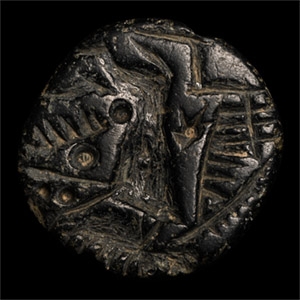
Anatolian Steatite Seal with Bird
3rd millennium B.C.Estimate: £300 - 400 (‡+bp*)
Opening Bid: £135
Plano-convex in profile with a lightly inscribed antique legend to domed face (including Arabic name and numeral '1298'); underside with reserved figure of a bird with wings spread. 28.7 grams, 36.5 mm
With Artemis Gallery, Munich, 1980s. Acquired from Artemis Gallery, November 1992. European private collection. This lot has been cleared against the Art Loss Register database, and is accompanied by an illustrated lot declaration signed by the Head of the Antiquities Department, Dr Raffaele D'Amato.
