
Loading, please wait...
LOT 1137
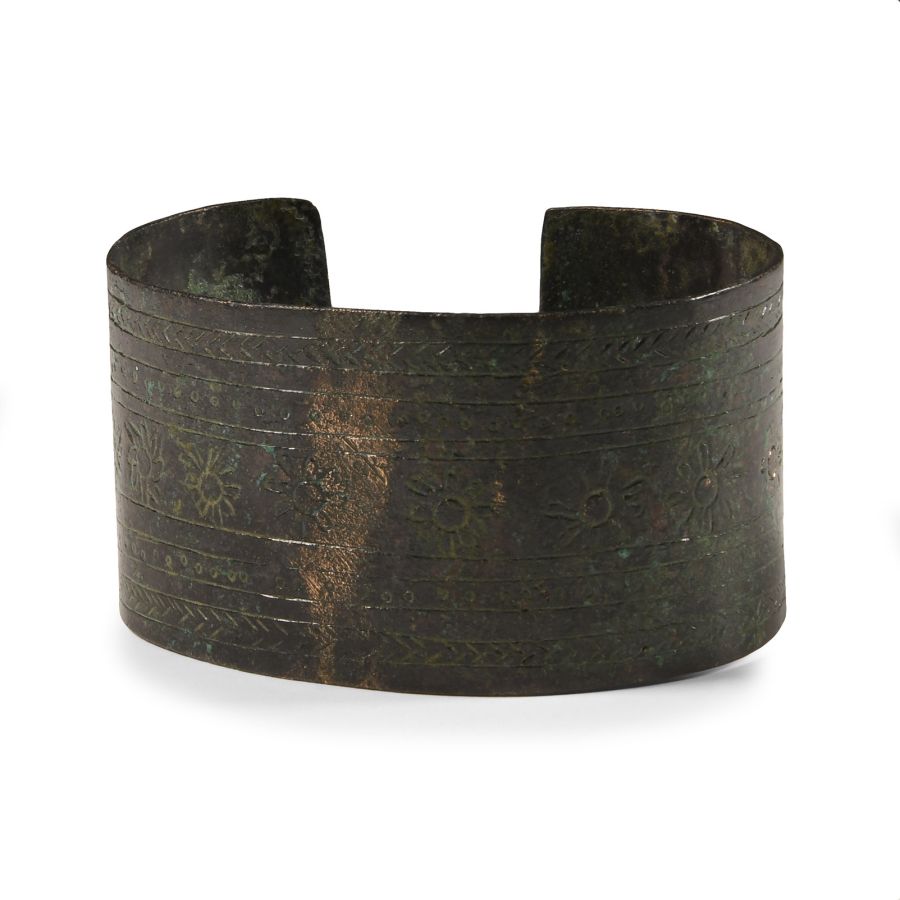
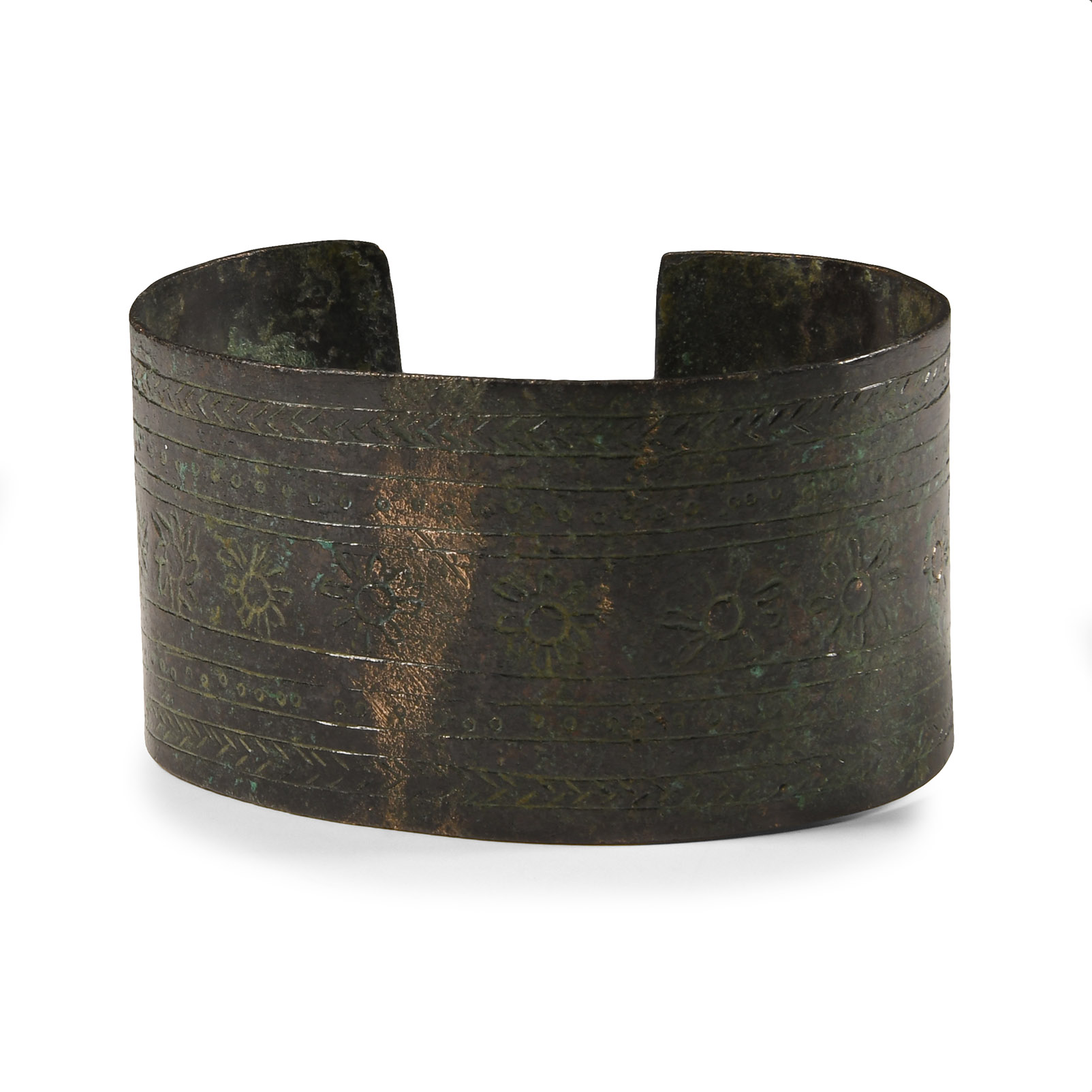
Large Western Asiatic Decorated Bronze Bracelet
1ST MILLENNIUM B.C.
2 3/4 in. (72.6 grams, 70 mm).
Broad flat-section penannular band with bands of punched pellets, solar discs, herringbone and other ornament. [No Reserve]
ProvenanceUK private collection before 2000.
Acquired on the UK art market.
Property of a London gentleman.
TimeLine Auctions follows a vetting process to ensure the authenticity and legality of all items, reinforcing our commitment to integrity and responsible trading. Each antiquity, antique, and coin lot undergoes thorough examination by a vetting committee of at least ten external specialists, professional trade association members, scientists, and archaeologists: Our Vetting Process
AUCTIONS:
TimeLine is a leading auction house specialising in antiquities, ancient art, collectables, natural history, coins, medals, and books. Our auctions offer museums, collectors, historians, and enthusiasts the opportunity to acquire unique and historically significant pieces.
-
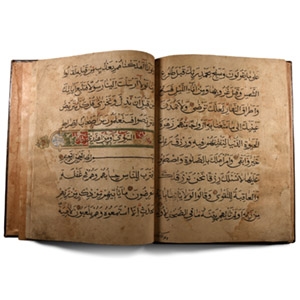
Islamic Leather-Bound Manuscript Juz' from the Qur'an by Turkan bin Ahmad
1153 A.H. (1740 A.D.)Estimate: £3,500 - 4,500 (+bp*)
Opening Bid: £1,750
Rebound as a hardback with full leather binding, gold block border to covers and central arabesque foliage panel; 56 laid-paper pages expertly conserved, usage wear to edges repaired and restored, with drypoint lineation; title page with header block of calligraphic thuluth script reserved against a polychrome field with decorative foliage scrolls and blocks of colour; four lines of black script below; second page with similar header block, six lines of text with black and red diacritics and floral embellishments; rest with typically nine lines of text with red and black diacritics, floral motifs with liquid gold pointing; marginal notes and concentric roundel motifs with rosette to the centre and tulip motif above; page 54 with two lines of footnotes. 954 grams, 30.4 x 38 cm
From an important family collection started in the late 1950s. Property of a West London, UK, gentleman. This lot has been checked against the Interpol Database of stolen works of art and is accompanied by a search certificate number no.12279-220401.
The text is a juz' (chapter or internal division) from the Qur'an, the Surah Maryam (of Mary) to the Surah Al-Anbya (of the Prophets), Books 19 to 21. -
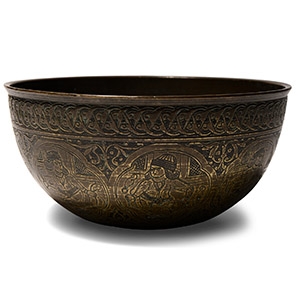
Qajar Period Decorated Bowl
19th century A.D.Estimate: £100 - 140 (+bp*)
Opening Bid: £50
Spun bronze bowl with everted rim, dense low-relief decoration of tendrils and interlace with quatrefoil panels each with a kneeling figure. 195 grams, 11.9 cm wide
Acquired by the vendor's father on the UK art market, before 1990. -
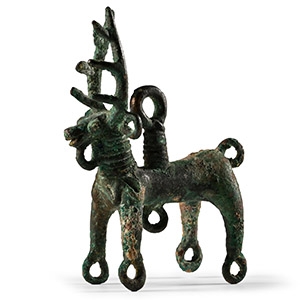
Caucasian Stag Figure with Attachment Loops
1st millennium B.C.Estimate: £2,000 - 3,000 (+bp*)
Opening Bid: £1,000
Modelled in the round with vertical antlers, loops to the hooves and tail, vertical bar to the midriff with loop finials and coiled shank, coils to the neck. 111 grams, 83 mm
From the collection of a former Israeli ambassador, Mr N.M., 1960s-1980s. Kept in the UK since 1992. Private collection, London. This lot has been checked against the Interpol Database of stolen works of art and is accompanied by a search certificate number no.12264-221463.
