
Loading, please wait...
LOT 1334
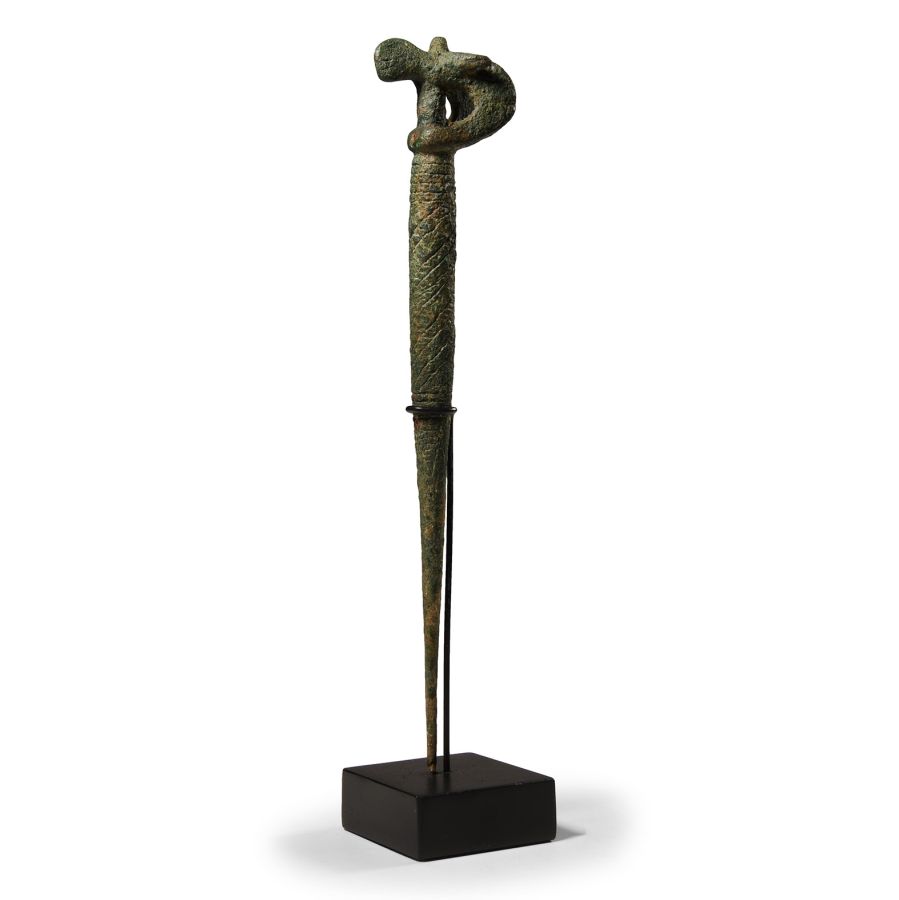
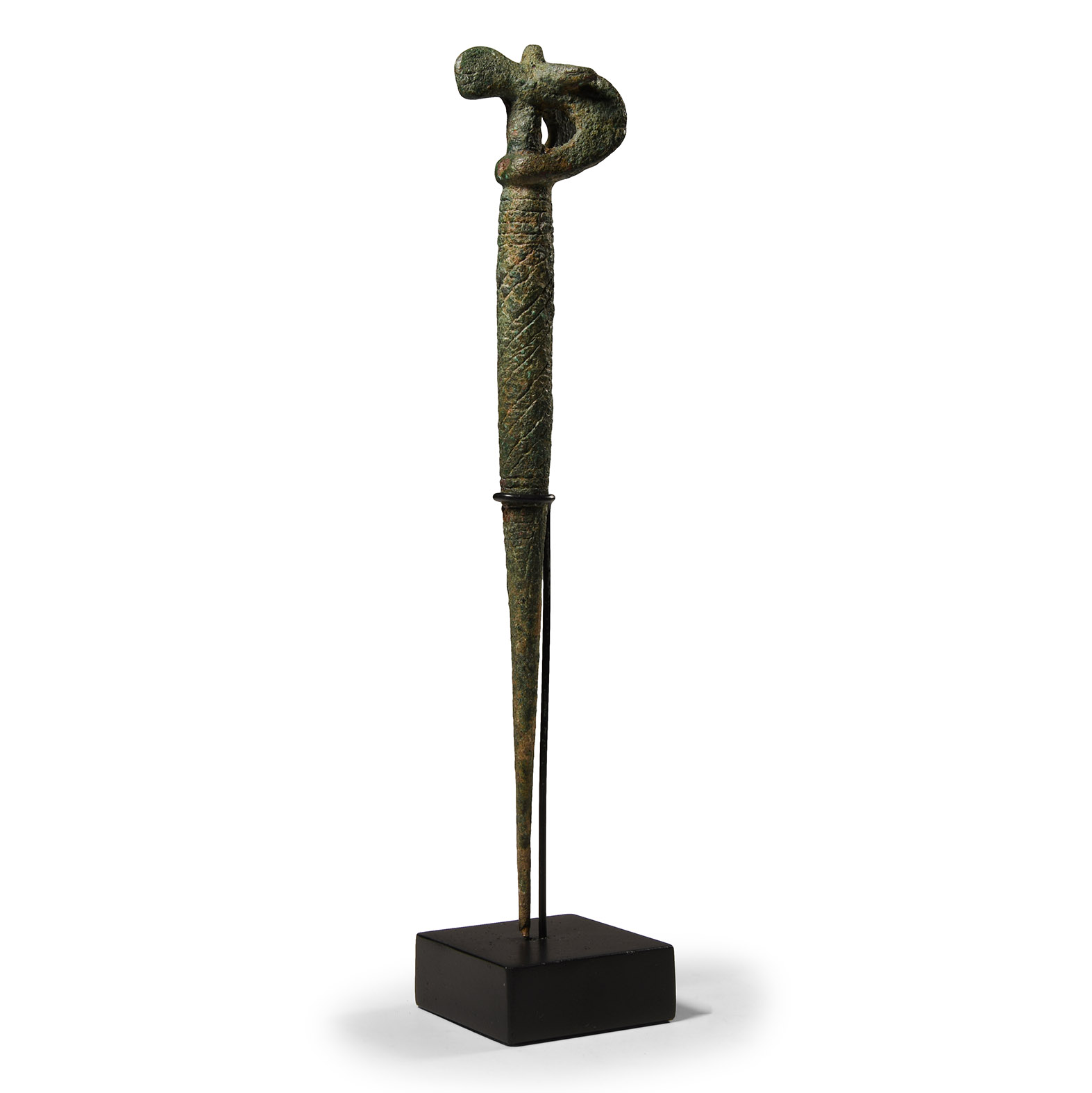
Large Western Asiatic Bronze Animal-Headed Cloak Pin
1ST MILLENNIUM B.C.
10 in. (347 grams total, 25.5 cm including stand).
With barrel-shaped upper and tapering body, modelled with coil detailing around the upper body, tiered rings above and finial of an ibex's head with horns returned to form a collar; mounted on a custom-made stand. [No Reserve]
ProvenanceFrom a collection acquired on the UK art market from various auction houses and collections mostly before 2000.
From an important Cambridgeshire estate; thence by descent.
Cf. similar, less elaborate item in the Metropolitan Museum of Art, New York, under accession no.22.1.977.
CONDITIONTimeLine Auctions follows a vetting process to ensure the authenticity and legality of all items, reinforcing our commitment to integrity and responsible trading. Each antiquity, antique, and coin lot undergoes thorough examination by a vetting committee of at least ten external specialists, professional trade association members, scientists, and archaeologists: Our Vetting Process
AUCTIONS:
TimeLine is a leading auction house specialising in antiquities, ancient art, collectables, natural history, coins, medals, and books. Our auctions offer museums, collectors, historians, and enthusiasts the opportunity to acquire unique and historically significant pieces.
-
.jpg)
Western Asiatic Rock Crystal and Other Necklace Bead Collection
1st millennium B.C. and laterSold for (Inc. bp): £182
Including polished types and including spherical, facetted, amorphous and other shapes. 43 grams total, 5-17 mm
UK gallery, early 2000s. -
.jpg)
Western Asiatic Stone Cylinder Seal
Circa 3rd millennium B.C.Sold for (Inc. bp): £124
With incised braided design forming diamond-shape hatching. 10.9 grams, 29 mm
Acquired 1970s-1996. Property of a North American collector, collection no.055. London collection, 2016. -
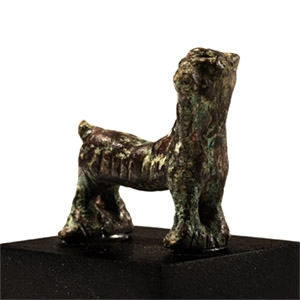
Western Asiatic Bronze Ram Statuette
1st millennium B.C.Sold for (Inc. bp): £20
Modelled in the round with the head turned to the right; incised hatching to flanks and neck representing fur; legs with voids between and hooves joined; mounted on a custom-made stand. 41.9 grams, 44 mm including stand
From a collection acquired on the UK art market from various auction houses and collections mostly before 2000. From an important Cambridgeshire estate; thence by descent.
