
Loading, please wait...
LOT 1228
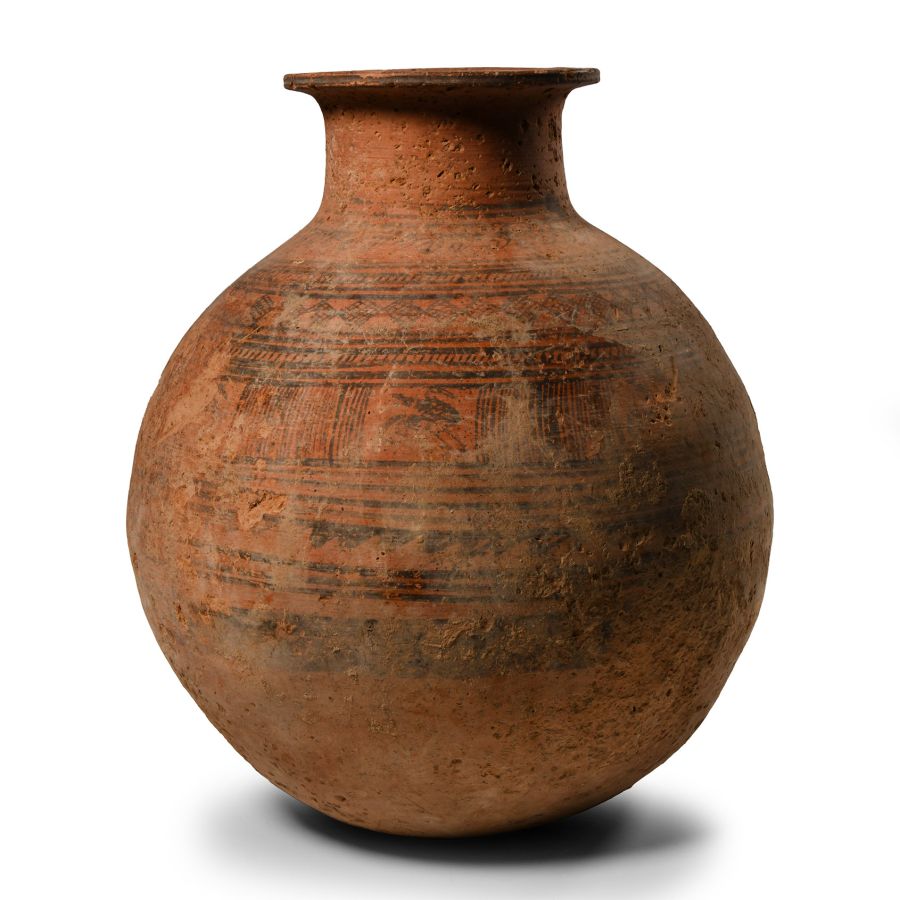
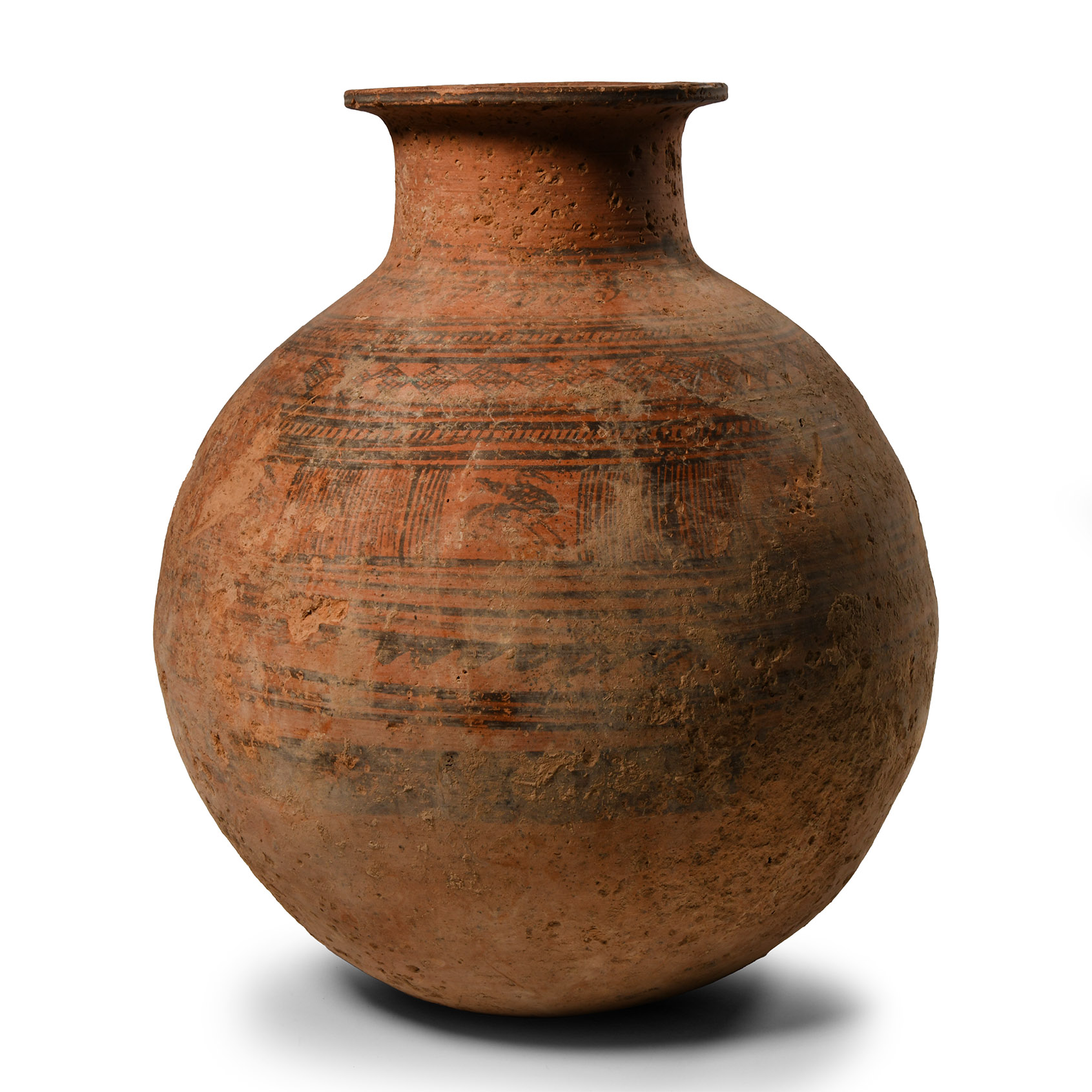
Large Western Asiatic Bichrome Terracotta Painted jar
2ND-1ST MILLENNIUM B.C.
11 1/4 in. (2.7 kg, 28.5 cm).
Bulbous in profile with low neck, circumferential painted bands, segmented and hatched lozenge motifs.
ProvenanceEx London, UK, gallery, 1980s.
From a UK private collection.
TimeLine Auctions follows a vetting process to ensure the authenticity and legality of all items, reinforcing our commitment to integrity and responsible trading. Each antiquity, antique, and coin lot undergoes thorough examination by a vetting committee of at least ten external specialists, professional trade association members, scientists, and archaeologists: Our Vetting Process
AUCTIONS:
TimeLine is a leading auction house specialising in antiquities, ancient art, collectables, natural history, coins, medals, and books. Our auctions offer museums, collectors, historians, and enthusiasts the opportunity to acquire unique and historically significant pieces.
-
.jpg)
Western Asiatic Silver Bracelet with Lion Head Terminals Holding a Menorah
Circa 2nd-3rd century A.D.Estimate: £700 - 900 (+bp*)
Opening Bid: £375
Uncleaned, composed of two decoratively twisted hoops, terminals formed as two facing lion (or lioness) heads supporting the bezel, a twisted roundel, in their mouths, central bifacial swivel plaque displaying a menorah flanked by letters 'W-T' on both faces; articulate join between hoops and animal heads. 40 grams, 73 mm wide
Acquired before 1988. From the collection of a deceased collector. -
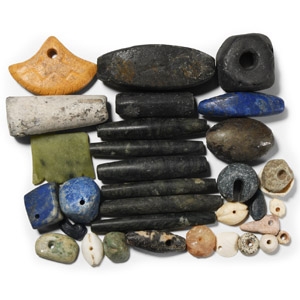
Western Asiatic Mixed Necklace Bead and Pendant Group
1st millennium B.C. and laterSold for (Inc. bp): £104
Including fusiform, tubular, oblate and other types in various materials. 172 grams total, 5-53 mm
From a collection acquired on the UK art market from various auction houses and collections mostly before 2000. From an important Cambridgeshire estate; thence by descent. -
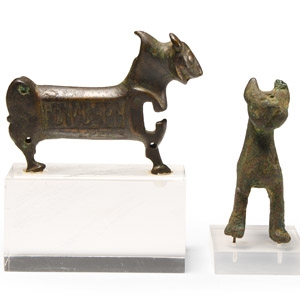
Western Asiatic Bronze Attachment Group
Circa 12th-14th century A.D.Sold for (Inc. bp): £65
Comprising: one side of a feline padlock with Kufic inscription to the flank; foreparts of a feline figurine with ledge to rear; each mounted on a display frame. 152 grams total, 63-79 mm including stand
Ex European collection since 1970. with Hermann Historica, Munich, Germany, Auction 95, no.6031 (Part). Property of a French collector.
