
Loading, please wait...
LOT 1679
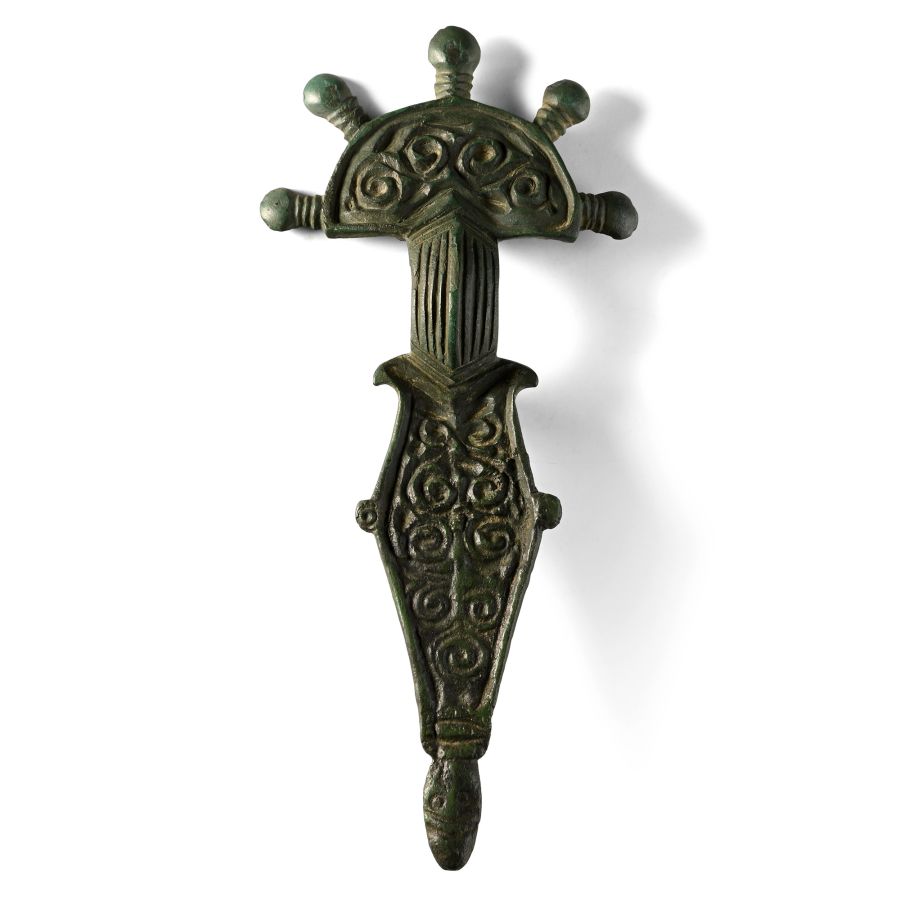
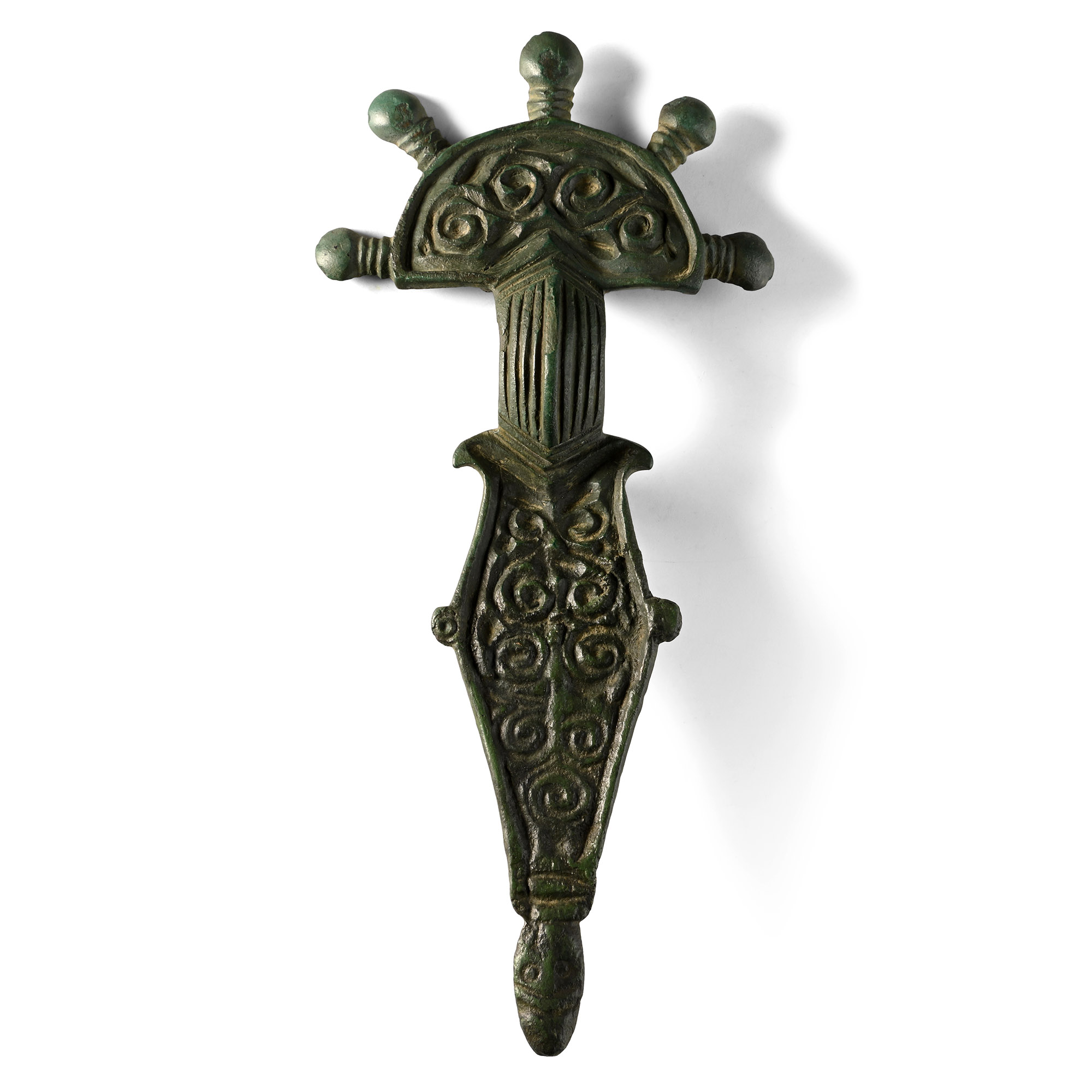
Large Visigothic Bronze Radiate Brooch
6TH-8TH CENTURY A.D.
5 7/8 in. (63 grams, 15 cm).
Comprising: D-shaped headplate with five radiating collared knops, running scroll to the plaque; carinated bow with vertical ribbing; lozengiform foot with lateral spurs and running scroll design, beast-head finial; pin-lugs and pierced catch to reverse. [No Reserve]
ProvenanceEx European collection, 1990s.
Ex Cambridgeshire, UK, collection.
Cf. Menghin, W., The Merovingian Period. Europe Without Borders, Berlin, 2007, item IX.6.4, for type.
CONDITIONTimeLine Auctions follows a vetting process to ensure the authenticity and legality of all items, reinforcing our commitment to integrity and responsible trading. Each antiquity, antique, and coin lot undergoes thorough examination by a vetting committee of at least ten external specialists, professional trade association members, scientists, and archaeologists: Our Vetting Process
AUCTIONS:
TimeLine is a leading auction house specialising in antiquities, ancient art, collectables, natural history, coins, medals, and books. Our auctions offer museums, collectors, historians, and enthusiasts the opportunity to acquire unique and historically significant pieces.
-
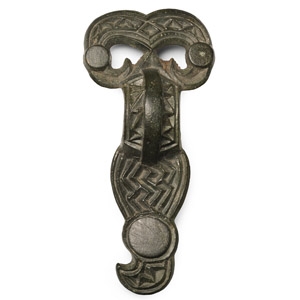
Visigothic Bronze Bird Brooch
6th-8th century A.D.Sold for (Inc. bp): £260
Comprising: headplate formed as two addorsed bird-heads on arched necks, each with a discoid eye and hooked beak beneath; vrow bow with median band and chip-carved edges; bow-sided foot with chip-carved ornament, bird-head finial with eye and hooked beak; remains of ferrous pin to reverse, catchplate. 10 grams, 55 mm
Ex European collection, 1990s. Ex Cambridgeshire, UK, collection. -
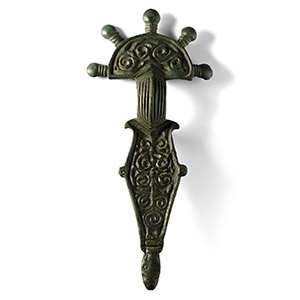
Large Visigothic Bronze Radiate Brooch
6th-8th century A.D.Sold for (Inc. bp): £234
Comprising: D-shaped headplate with five radiating collared knops, running scroll to the plaque; carinated bow with vertical ribbing; lozengiform foot with lateral spurs and running scroll design, beast-head finial; pin-lugs and pierced catch to reverse. 63 grams, 15 cm
Ex European collection, 1990s. Ex Cambridgeshire, UK, collection. -
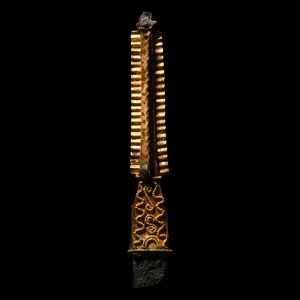
Dark Age Gold Filigree Decorated Element
7th century A.D. or laterSold for (Inc. bp): £293
Comprising: bronze blade fixed into a sheet-gold sleeve with applied beaded wire scrolls to obverse, impressed saltire to reverse; four radiating longitudinal bars with corrugated ornament; bronze granule cluster as a finial. 5.55 grams, 57 mm
Private English collection, formed between the late 1970s and early 1990s. Private collection, UK.
The delicate nature of the piece and its decoration in the round make is likely that it is an element of jewellery or perhaps the shank of a key.
