
Loading, please wait...
LOT 0342
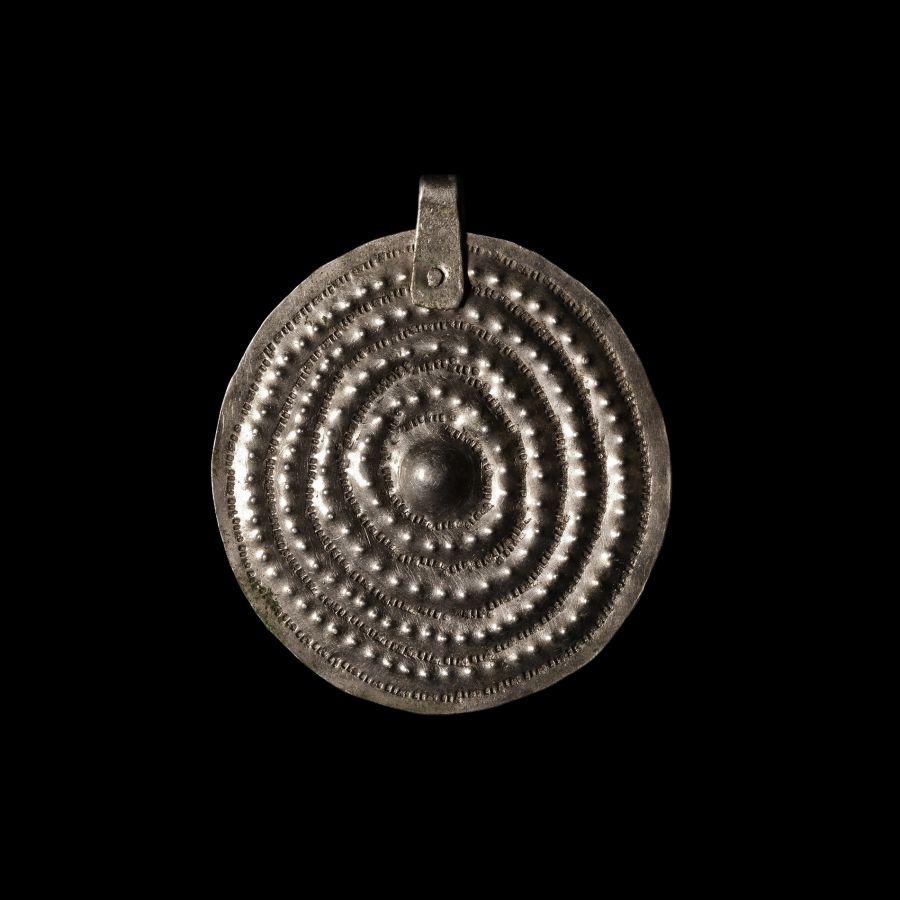
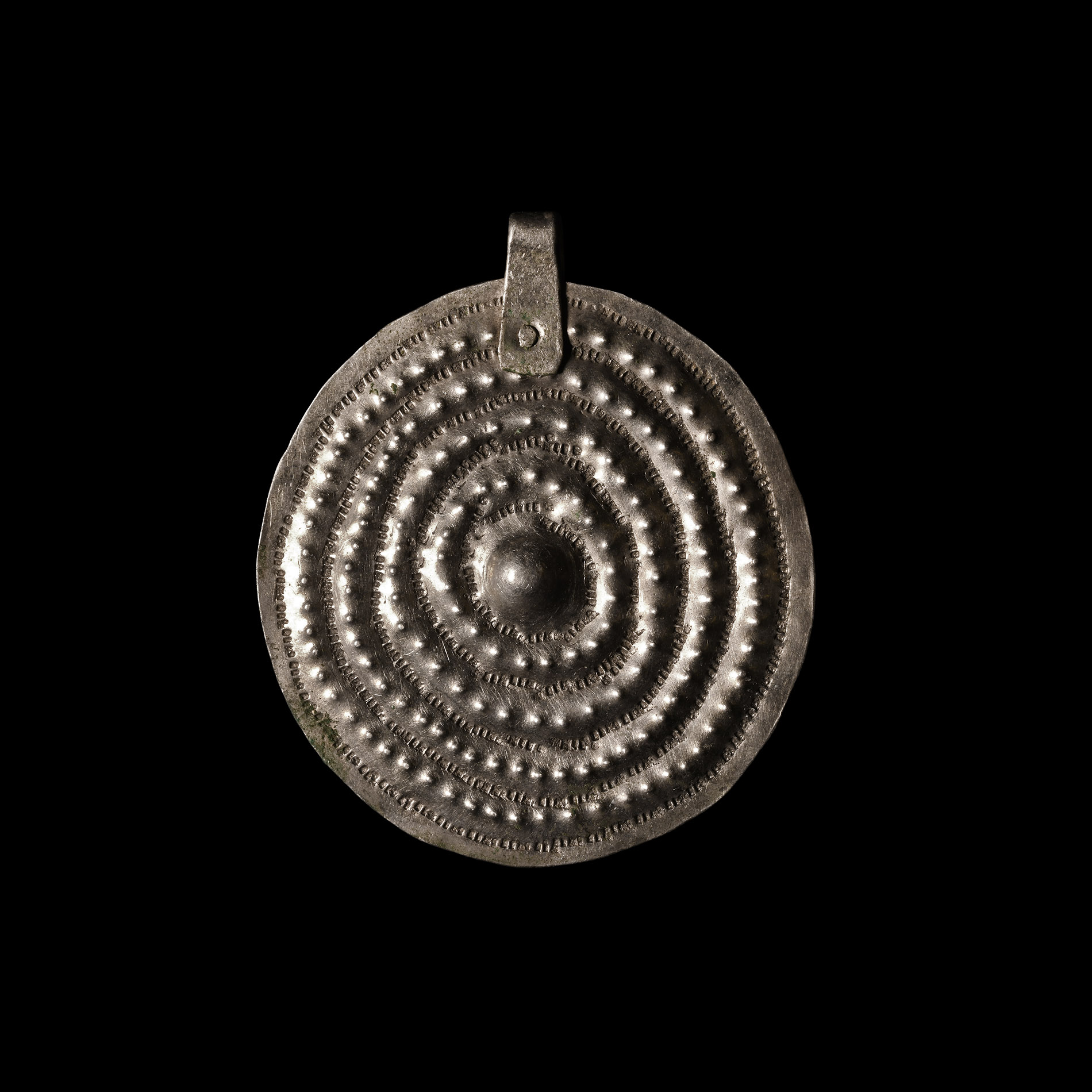
Large Viking Silver Pendant with Concentric Circle Design
9TH-11TH CENTURY A.D.
2 1/8 in. (7.46 grams, 53 mm).
Repoussé complete with an applied suspension loop, central dome.
ProvenanceFrom the collection of a North American gentleman, formed in the 1990s.
LiteratureCf. The British Museum's Portable Antiquities Scheme, record id. BERK-97605A, for similar.
CONDITIONTimeLine Auctions follows a vetting process to ensure the authenticity and legality of all items, reinforcing our commitment to integrity and responsible trading. Each antiquity, antique, and coin lot undergoes thorough examination by a vetting committee of at least ten external specialists, professional trade association members, scientists, and archaeologists: Our Vetting Process
AUCTIONS:
TimeLine is a leading auction house specialising in antiquities, ancient art, collectables, natural history, coins, medals, and books. Our auctions offer museums, collectors, historians, and enthusiasts the opportunity to acquire unique and historically significant pieces.
LOT 0342
Large Viking Silver Pendant with Concentric Circle Design
Estimate £500 - 700€580 - 810 (for guidance only)$680 - 950 (for guidance only)
-
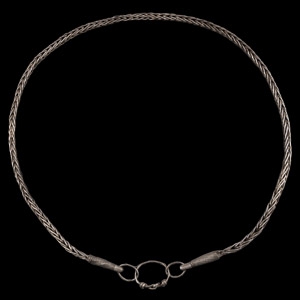
Viking Age Silver Chain Necklace
10th-11th century A.D.Sold for (Inc. bp): £1,430
Composed of openwork links, coiled filigree collars and a central hoop with intertwined bezel and coiled sleeves. 134 grams, 80 cm long
From the collection of a North American gentleman, formed in the 1990s. -
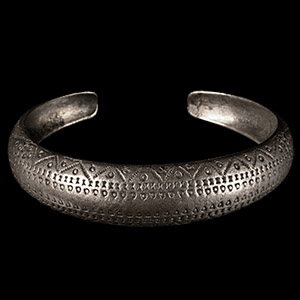
Viking Age Silver Stamp-Decorated Bracelet
9th-10th century A.D.Sold for (Inc. bp): £338
Comprising a C-section penannular hoop with convex outer face and stamp-decorated decoration in zones including pellets, opposed triangles, segmented bars. 24.4 grams, 67 mm
From the collection of a North American gentleman, formed in the 1990s. -
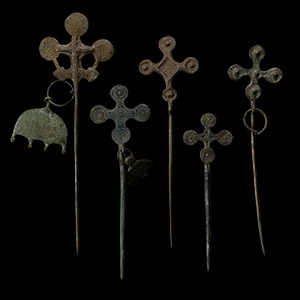
Viking Period Bronze Pin Collection with Lobed Cross Finials
10th-11th century A.D.Sold for (Inc. bp): £312
Together with suspension loops and including examples with pendants. 196 grams total, 14-22 cm
From the collection of a North American gentleman, formed in the 1990s.
