
Loading, please wait...
LOT 1161
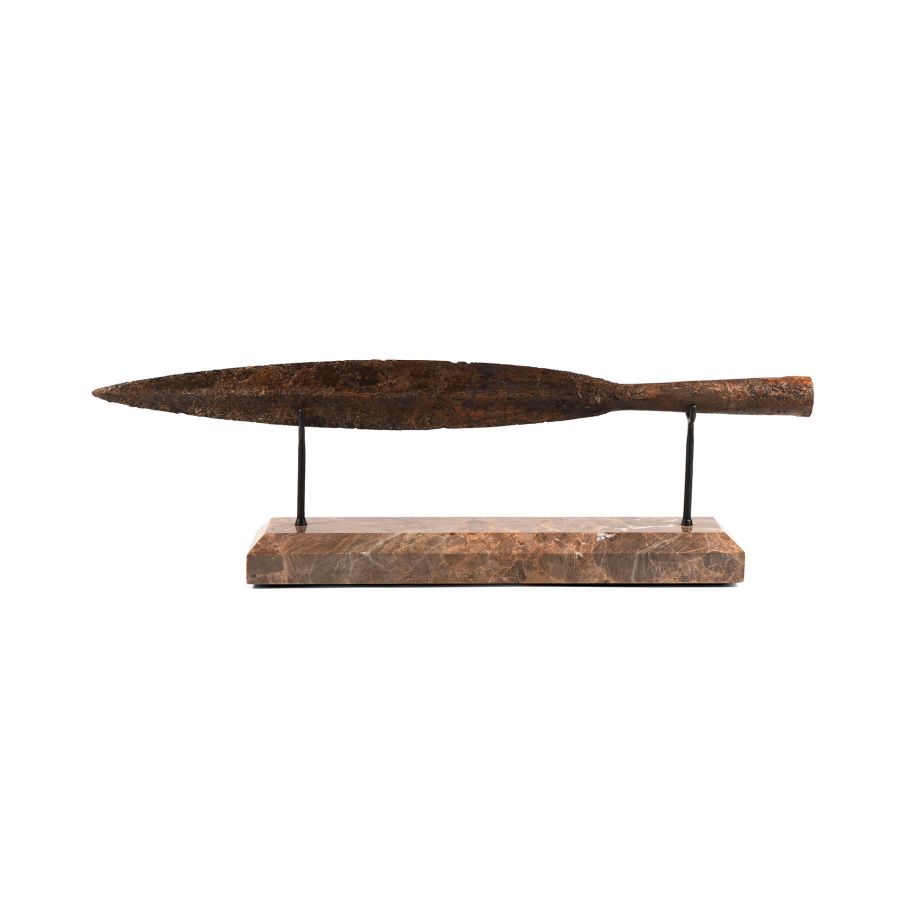
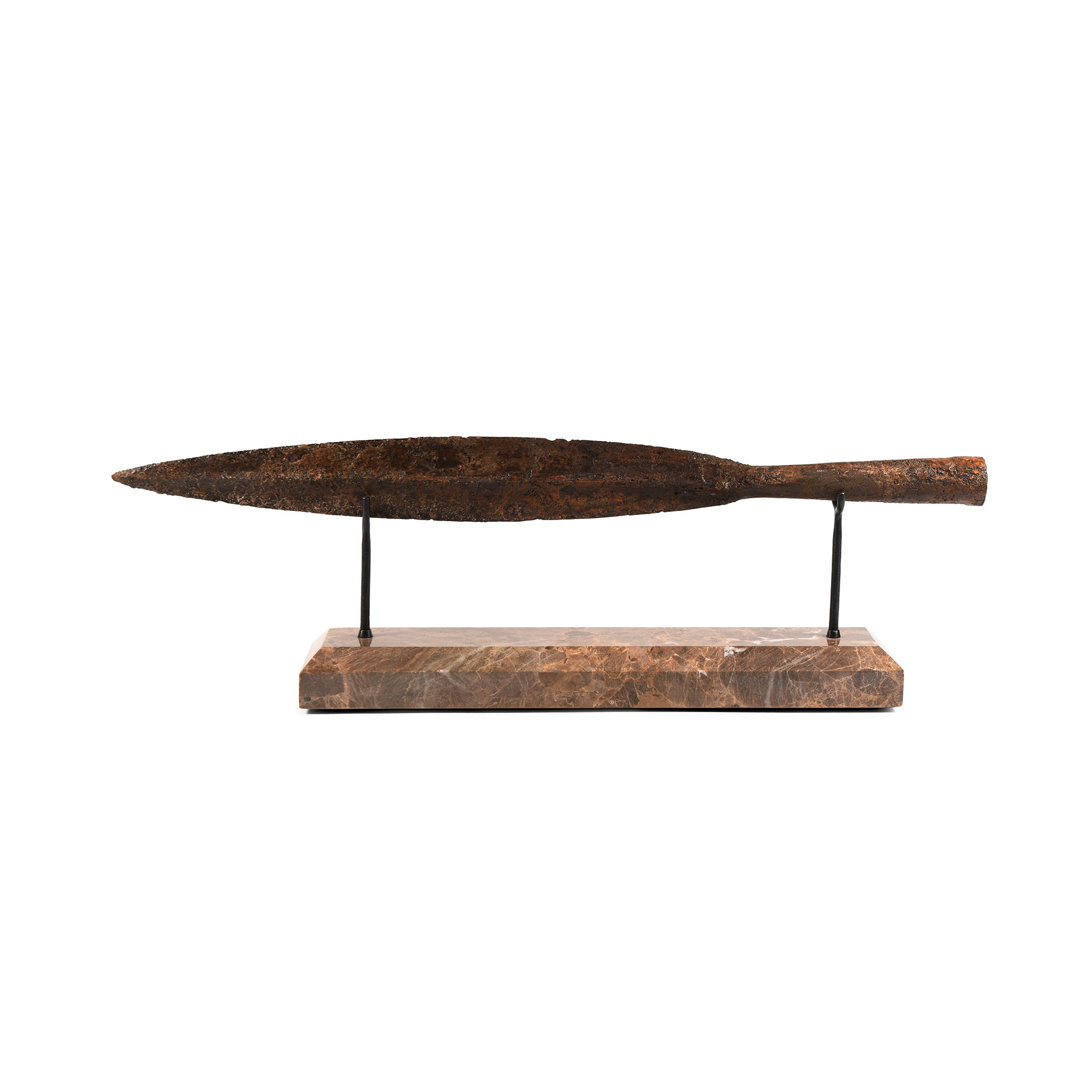
Large Viking Iron Socketted Spearhead
9TH-11TH CENTURY A.D.
17 1/8 in. (1.76 kg total, 43.5 cm including stand).
Comprising a leaf-shaped blade with lozenge cross-section, raised midrib, closed tubular socket; accompanied by a custom-made display stand. [No Reserve]
ProvenanceAcquired 1971-1972.
From the collection of the vendor's father.
Property of a London, UK, collector.
Cf. similar specimen in the British Museum, London, from Norway, inventory no.1875,0716.3.
FootnotesThe spear belongs to the type A of the first main group of Viking spears, the so-called Frankish spearheads, which occur between 750 and 950 A.D., but mainly in the 8th and 9th centuries. The Mediterranean influence is still evident on the foliate shape of the blade.
CONDITIONTimeLine Auctions follows a vetting process to ensure the authenticity and legality of all items, reinforcing our commitment to integrity and responsible trading. Each antiquity, antique, and coin lot undergoes thorough examination by a vetting committee of at least ten external specialists, professional trade association members, scientists, and archaeologists: Our Vetting Process
AUCTIONS:
TimeLine is a leading auction house specialising in antiquities, ancient art, collectables, natural history, coins, medals, and books. Our auctions offer museums, collectors, historians, and enthusiasts the opportunity to acquire unique and historically significant pieces.
-
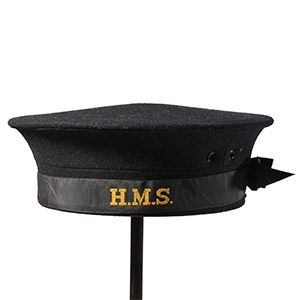
Royal Navy Rating's Cap
Dated 1942 A.D.Sold for (Inc. bp): £20
Standard British naval issue dark blue rating's cap with Toronto maker's ink stamp and date inside, fitted with black fabric 'H.M.S.' ribbon and chin-strap. 196 grams, 25 cm
Acquired from The Historic Flying Clothing Company, 2014. The Kusmirek Collection, UK. Accompanied by a copy of a previous invoice. -
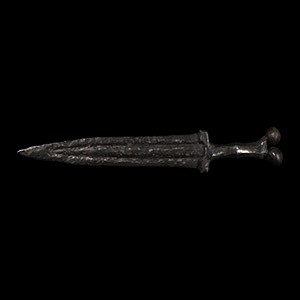
Iron Age Celtiberian Dagger
Circa 6th-5th century B.C. or laterSold for (Inc. bp): £1,235
Featuring a leaf-shaped double-edged iron blade, shallow fullers tapering to a point, short straight quillons, a soldered two-part grip with ridged middle bulge, the flat pommel surmounted with two spherical finials. 255 grams, 31 cm
Acquired 1990s-early 2000s. East Anglian private collection.
This type of dagger presents a plate handle system, very similar to that of the Fronton sword and bilobular types, but unlike these, it develops to an antenna terminal on the pommel. It is a type of dagger that is documented in peninsular necropoleis of Hispania from the Iron Age II, such as La Mercadera, Requijana de Gormaz or Uxama. It is type V of short antennae daggers according the classification of F. Quesada Sanz, a possible ancestor of the Roman pugio. -
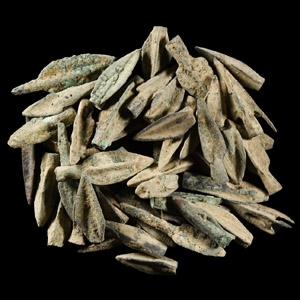
Greek Bronze Arrowhead Group
5th-3rd century B.C.Sold for (Inc. bp): £104
Mainly comprising socketted arrowheads of triangular type, including at least one barbed and one tanged example. 213 grams total, 32-56 mm
Ex private collection, 1980s. Acquired on the UK art market in the 1990s.
