
Loading, please wait...
LOT 1755
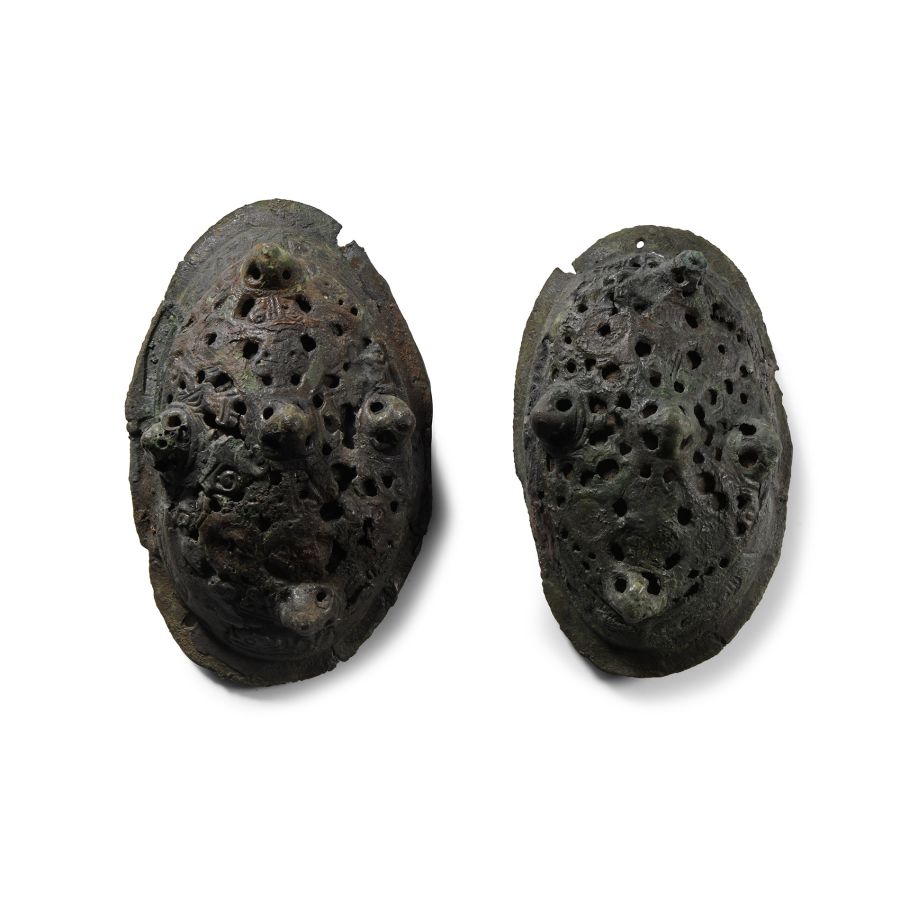
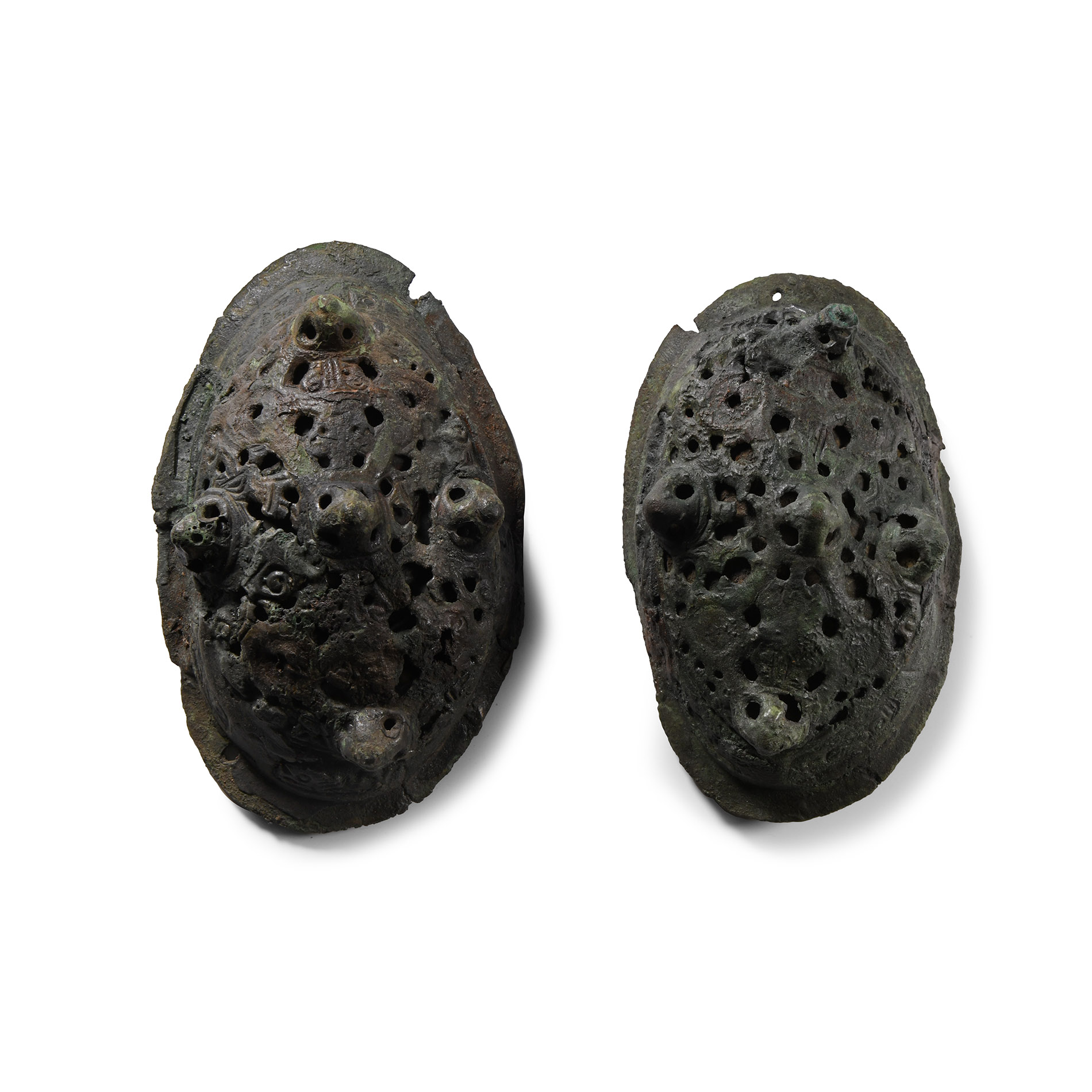
Large Viking Age Bronze Tortoise Brooch Pair
9TH-10TH CENTURY A.D.
4 1/4 - 4 1/2 in. (218 grams total, 10.8-11.5 cm).
Comprising: two elliptical tortoise brooches, each a domed openwork shell with raised ornament of five bell-shaped studs and four Borre Style beasts; frieze of profile beasts to the lower edge and flange rim; catchplate, pin-hinge and pendant attachment bar to the reverse with mineralised remains of textile backing; repaired. [2]
ProvenanceFrom the private collection of a London gentleman, from his grandfather's collection formed before the early 1970s.
CONDITIONTimeLine Auctions follows a vetting process to ensure the authenticity and legality of all items, reinforcing our commitment to integrity and responsible trading. Each antiquity, antique, and coin lot undergoes thorough examination by a vetting committee of at least ten external specialists, professional trade association members, scientists, and archaeologists: Our Vetting Process
AUCTIONS:
TimeLine is a leading auction house specialising in antiquities, ancient art, collectables, natural history, coins, medals, and books. Our auctions offer museums, collectors, historians, and enthusiasts the opportunity to acquire unique and historically significant pieces.
-
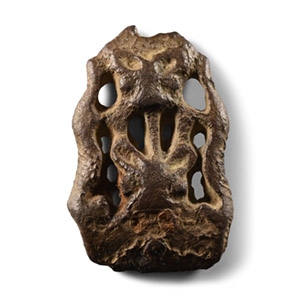
Anglo-Scandinavian Viking Bronze Stirrup Mount with Bear's Heads
11th century A.D.Sold for (Inc. bp): £130
Openwork mount of Williams's Class A Type 16, tongue-shaped with tendrils and two facing bears' heads, vestigial ledge to rear and ferrous stud. 27.1 grams, 47 mm
Found Norfolk, UK. From an old private collection of Norfolk, UK, gentleman, formed since 1998.
The form with two stacked facing masks is unusual, although mounts of Class B regularly feature multiple heads. -
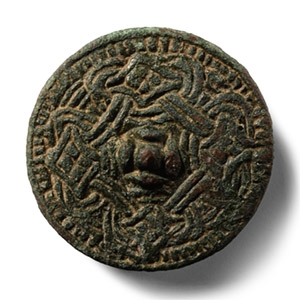
'The Holt' Anglo-Scandinavian Viking Bronze Borre Brooch
11th century A.D.Sold for (Inc. bp): £910
With low-relief Borre style looped tendrils motif, lug and catch to the reverse. 10.4 grams, 29 mm
Found near Holt, Norfolk, UK. From an old private collection of Norfolk, UK, gentleman, formed since 1998. -
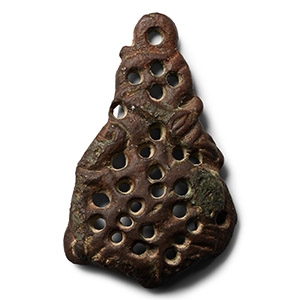
Anglo-Scandinavian Viking Bronze Urnes Pendant
11th century A.D.Estimate: £2,000 - 3,000 (+bp*)
Opening Bid: £400
Triangular in profile with openwork Urnes Style interlace, attachment pins to lower corners (one absent). 11.2 grams, 41 mm
Found near York, UK. From an old private collection of Norfolk, UK, gentleman, formed since 1998.
The design is clearly based on the contemporary stirrup mount style with dense openwork interlace and attachment points; the item lacks the rear ledge and attachment stud of the true mounts.
