
Loading, please wait...
LOT 1483
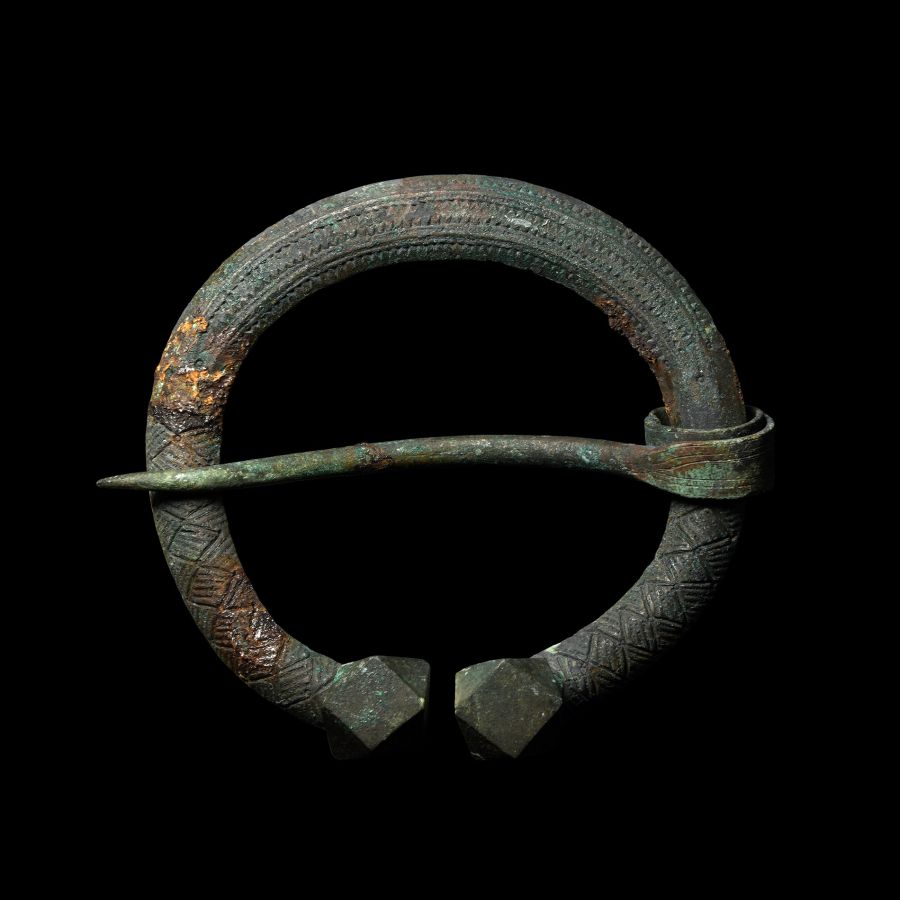
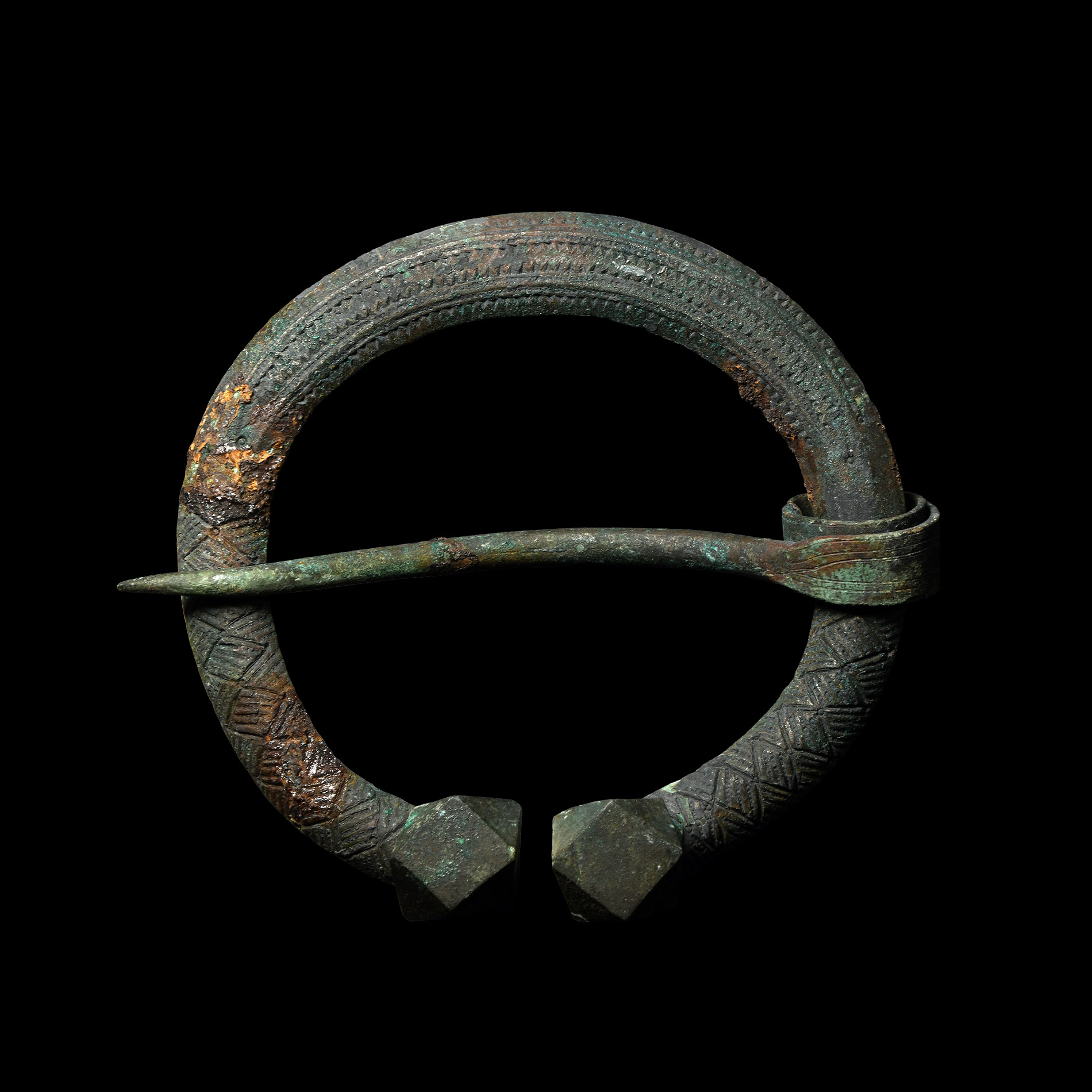
Large Viking Age Bronze Decorated Penannular Brooch
9TH-11TH CENTURY A.D.
4 in. (160 grams, 10.2 cm wide).
Comprising facetted terminals and free-running tongue, decorated with three zones of geometric motifs, incised bands to the pin head. [No Reserve]
ProvenanceFrom the collection of a North American gentleman, formed in the 1990s.
LiteratureCf. The British Museum, museum number 1921,1101.200, for a comparable brooch.
CONDITIONTimeLine Auctions follows a vetting process to ensure the authenticity and legality of all items, reinforcing our commitment to integrity and responsible trading. Each antiquity, antique, and coin lot undergoes thorough examination by a vetting committee of at least ten external specialists, professional trade association members, scientists, and archaeologists: Our Vetting Process
AUCTIONS:
TimeLine is a leading auction house specialising in antiquities, ancient art, collectables, natural history, coins, medals, and books. Our auctions offer museums, collectors, historians, and enthusiasts the opportunity to acquire unique and historically significant pieces.
-
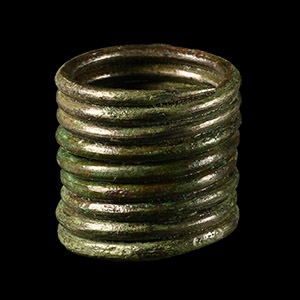
Viking Coiled Bronze Ring
9th-11th century A.D.Sold for (Inc. bp): £52
Composed of nine tiers of round cross-section coils, the terminals tapering to points. 17.88 grams, 22.14 mm overall, 17.42 mm internal diameter (approximate size British P, USA 7 1/2, Europe 16.23, Japan 15)
From the collection of a North American gentleman, formed in the 1990s. -
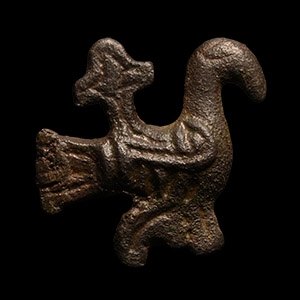
Viking Bronze Bird Brooch with Cross
10th century A.D.Estimate: £200 - 300 (‡+bp*)
Opening Bid: £100
The bird in profile with equal-arm cross on its back, linear detail to the wing and tail, lentoid eye, loop below the chest; loop to the reverse. 10.06 grams, 31 mm
Found near Winteringham, Humberside, UK. -
.jpg)
Viking Bronze Faux Twisted Ring
9th-11th century A.D.Sold for (Inc. bp): £33
The hoop formed from overlapping arms. 7.54 grams, 26.22 mm overall, 17.82 mm internal diameter (approximate size British M 1/2, USA 6 1/4, Europe 13.09, Japan 12)
From the collection of a North American gentleman, formed in the 1990s.
