
Loading, please wait...
LOT 0341
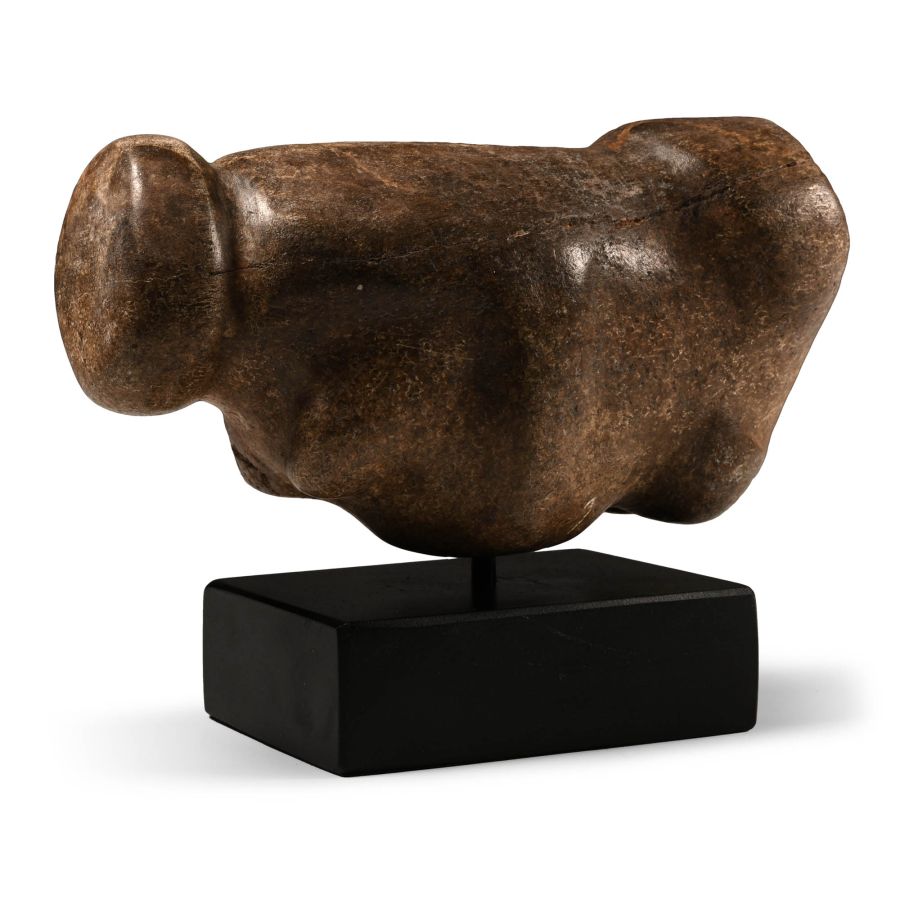
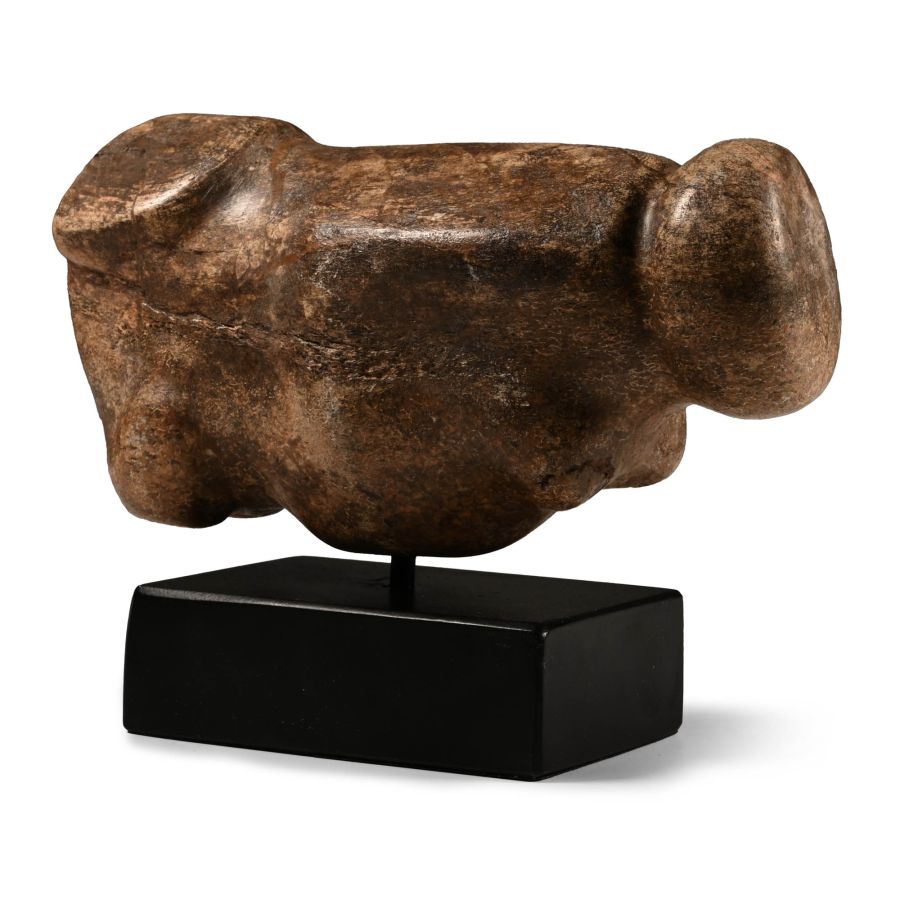
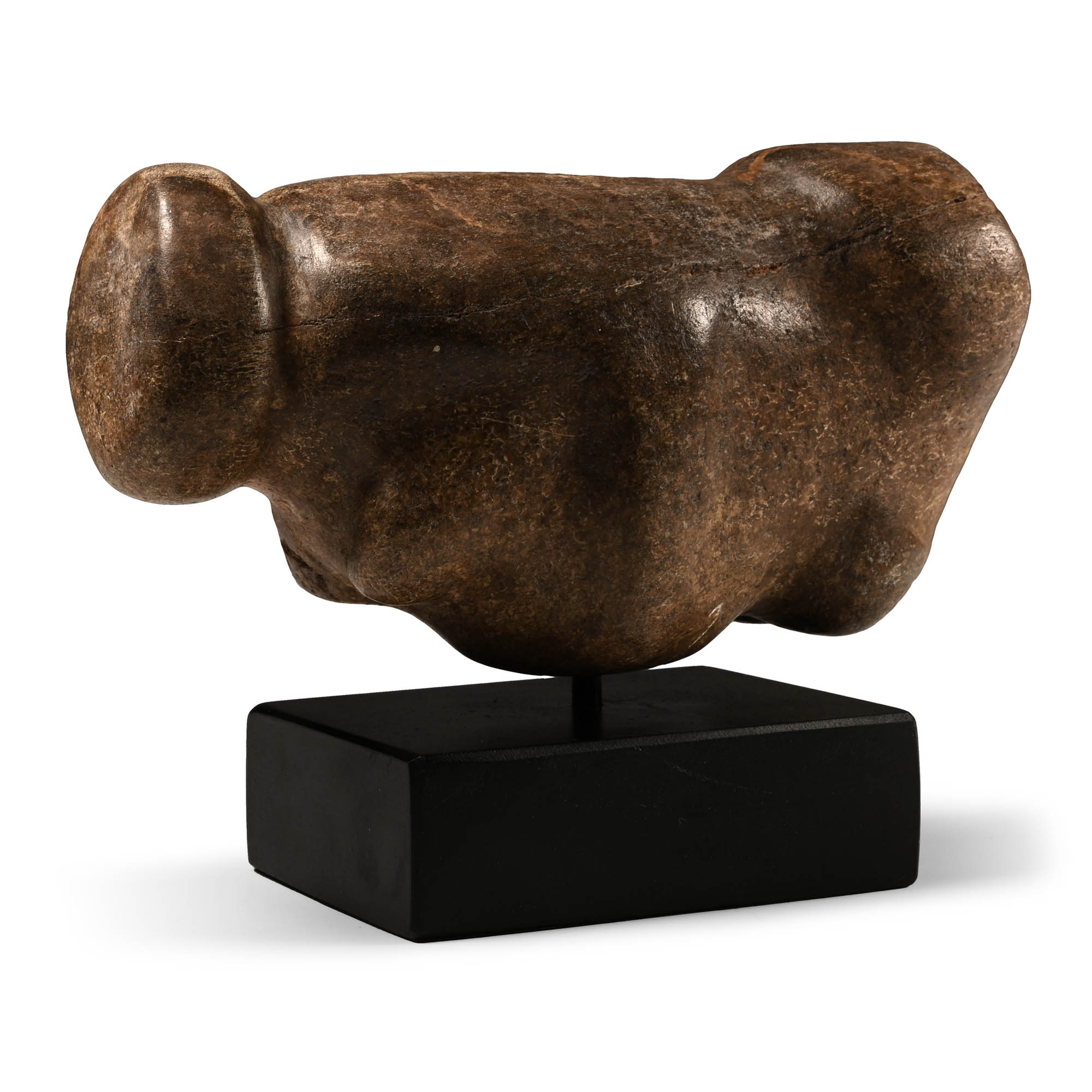
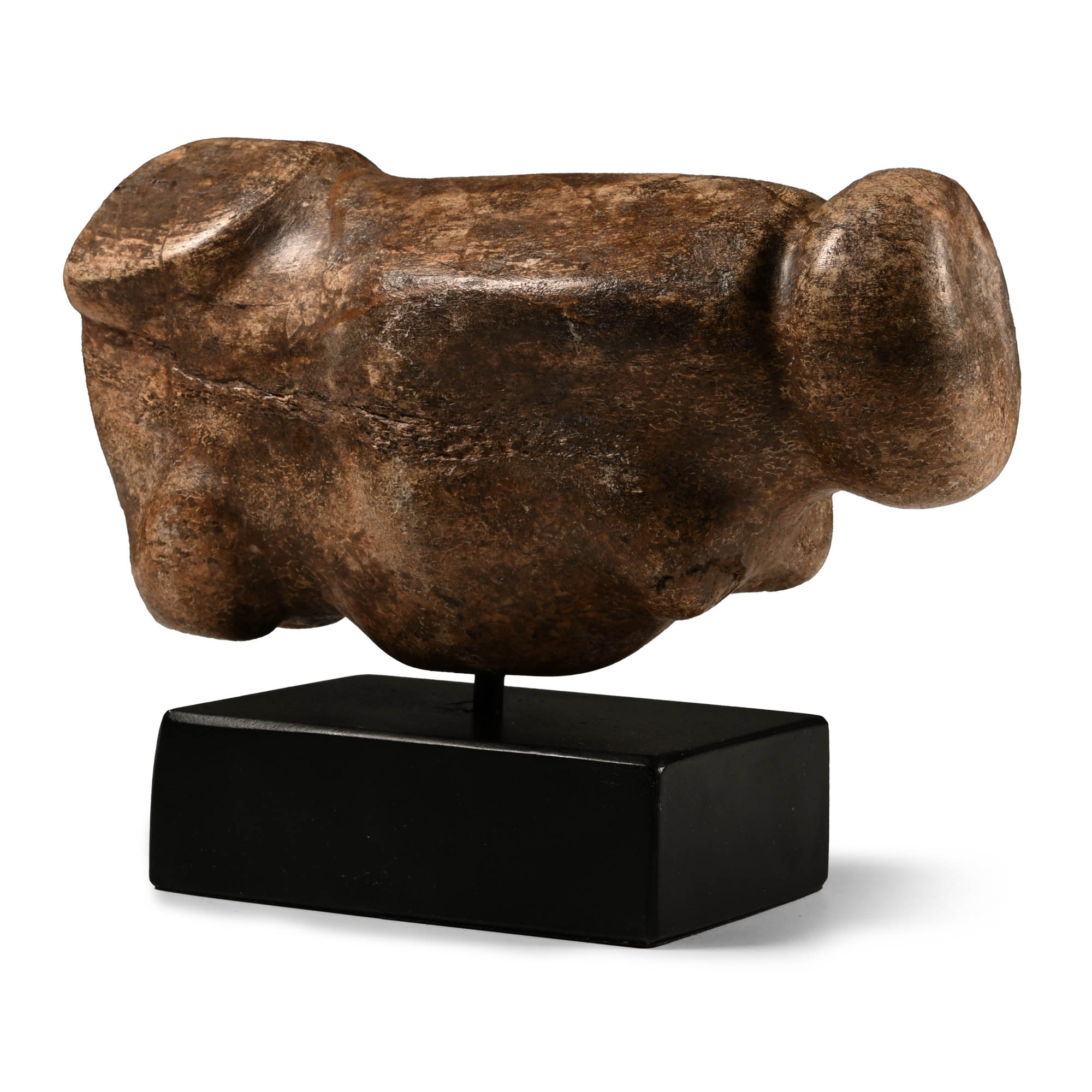
Large Stone Age Pregnant Animal Idol
NEOLITHIC PERIOD, CIRCA 6TH-4TH MILLENNIUM B.C. OR LATER
6 1/8 in. (1.66 kg total, 15.5 cm including stand).
Carved in the round with sturdy body, swollen belly and ovoid-section head; mounted on a custom-made stand. [No Reserve]
ProvenanceFrom a collection acquired on the UK art market from various auction houses and collections mostly before 2000.
From an important Cambridgeshire estate; thence by descent.
Accompanied by an academic report by Dr Raffaele D’Amato.
This lot has been checked against the Interpol Database of stolen works of art and is accompanied by search certificate number no.12337-224209.
This lot is accompanied by an illustrated lot declaration signed by the Head of the Antiquities Department, Dr Raffaele D'Amato.
Cf. Morris, D., The Art of Ancient Cyprus, Oxford, 1985, figs.108-109, p.119, for similar idols; Various, Idoles, Au commencement etait l’image, A la Reine Margot, 22 Novembre 1990-28 Fevrier 1991, Paris, 1990, figs.10-11, for similar; also see Caldwell, Duncan, The Use of Animals in Birth Protection Rituals and Possible Uses of Stone Figurines from the Central Sahel, 2015 winter issue, vol.48, no.4, Nov., pp.14-25.
FootnotesMost scholars consider these as symbols of the fertility cult and as evidence of the existence of a matriarchal society as a form of organisation of the earliest human society. The people of the Stone Age may have considered figures such as this to represent women and mothers with their life-giving powers, or as depictions of the ancestors.
CONDITIONTimeLine Auctions follows a vetting process to ensure the authenticity and legality of all items, reinforcing our commitment to integrity and responsible trading. Each antiquity, antique, and coin lot undergoes thorough examination by a vetting committee of at least ten external specialists, professional trade association members, scientists, and archaeologists: Our Vetting Process
AUCTIONS:
TimeLine is a leading auction house specialising in antiquities, ancient art, collectables, natural history, coins, medals, and books. Our auctions offer museums, collectors, historians, and enthusiasts the opportunity to acquire unique and historically significant pieces.
-
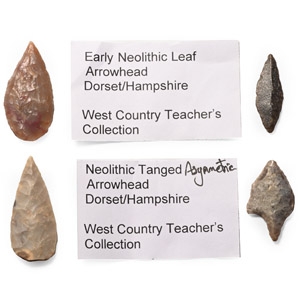
British Stone Age Arrowhead Collection
Neolithic Period, 6000-4500 B.C.Sold for (Inc. bp): £78
Comprising two leaf-shaped, one lentoid, and one tanged. 7.4 grams total, 26-34 mm
Found in Dorset & Hampshire. Ex N. Thomas collection, 1980s. This lot is accompanied by an illustrated lot declaration signed by the Head of the Antiquities Department, Dr Raffaele D'Amato. -
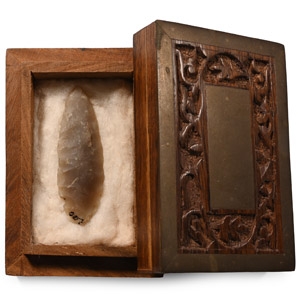
British Stone Age Knapped Arrowhead
Neolithic Period, 6000-4500 B.C.Sold for (Inc. bp): £195
Scaphoid in plan and lentoid in section with inked collector's number '2.00'. 110 grams, 87 x 59 x 33 mm
Found Kent, UK. Ex P. Watson collection, UK, 1990s. This lot is accompanied by an illustrated lot declaration signed by the Head of the Antiquities Department, Dr Raffaele D'Amato. -
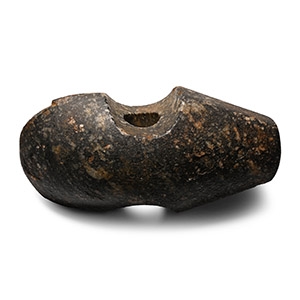
Stone Age Scandinavian Pierced Battle Axehead
Neolithic Period, 6th-4th millennium B.C.Sold for (Inc. bp): £780
Finely formed axehead in a dark diorite with asymmetric convex cutting edge, with pronounced 'seam' to upper surface; rounded 'hammer' butt, pierced to receive handle with projecting socket to underside. 814 grams, 15 cm
From the private collection of a London gentleman, from his grandfather's collection formed before the early 1970s. This lot is accompanied by an illustrated lot declaration signed by the Head of the Antiquities Department, Dr Raffaele D'Amato.
