
Loading, please wait...
LOT 0237
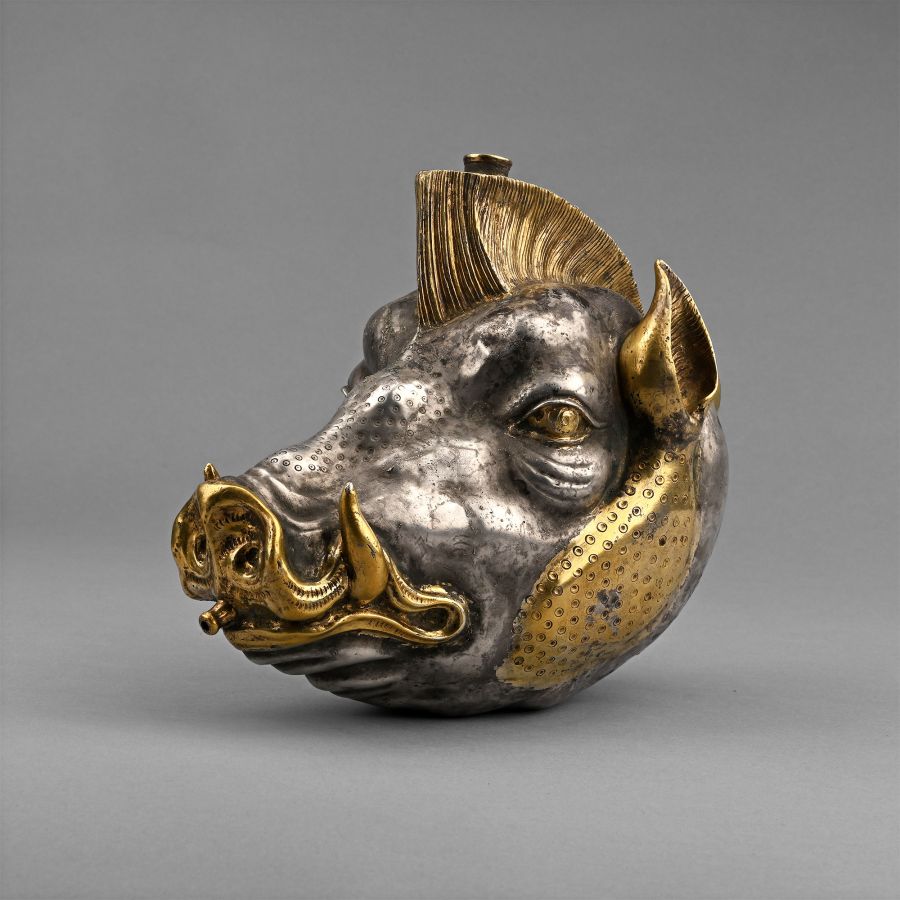
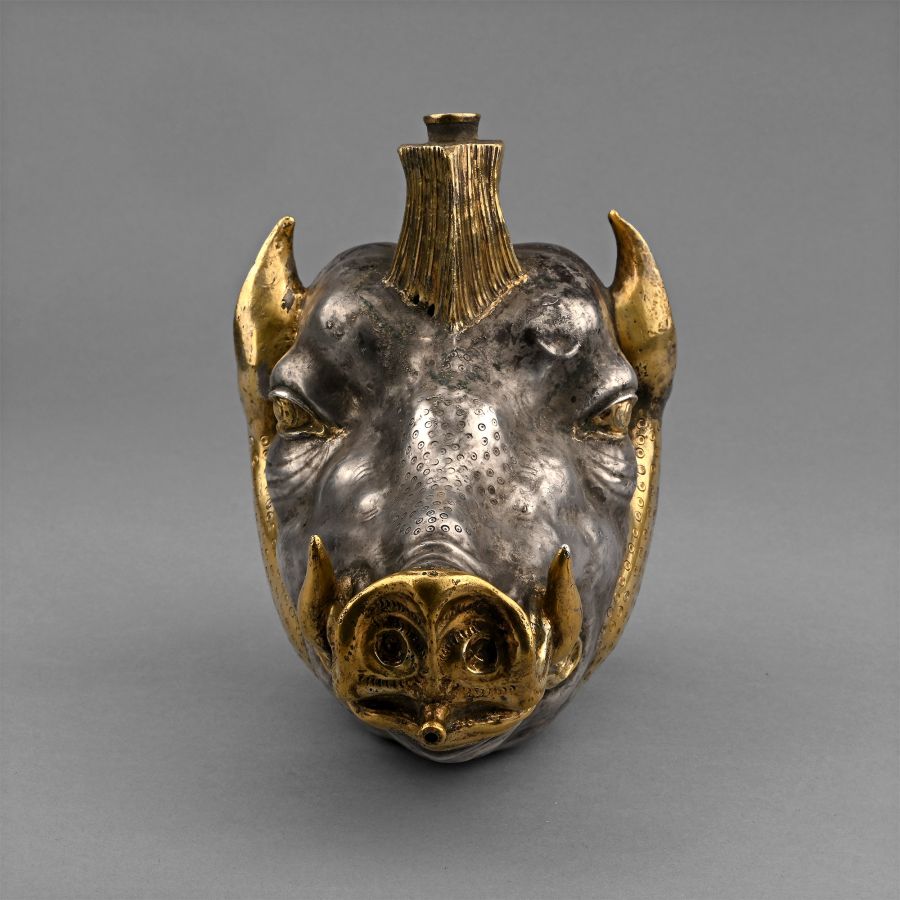
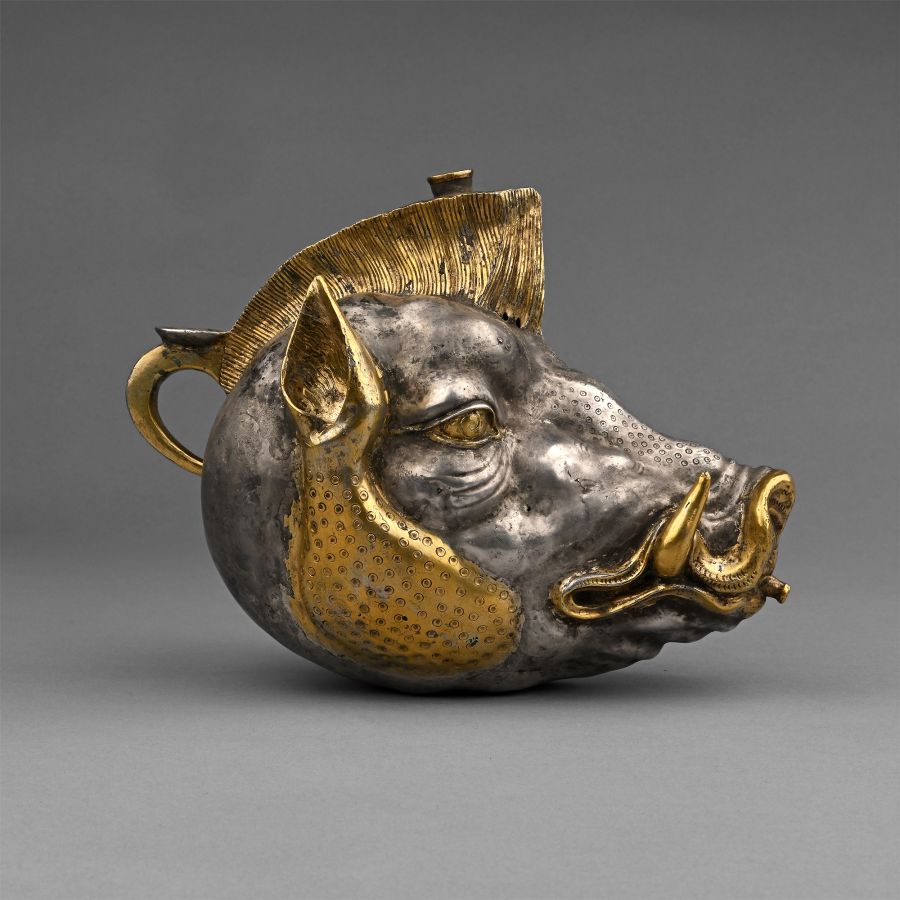
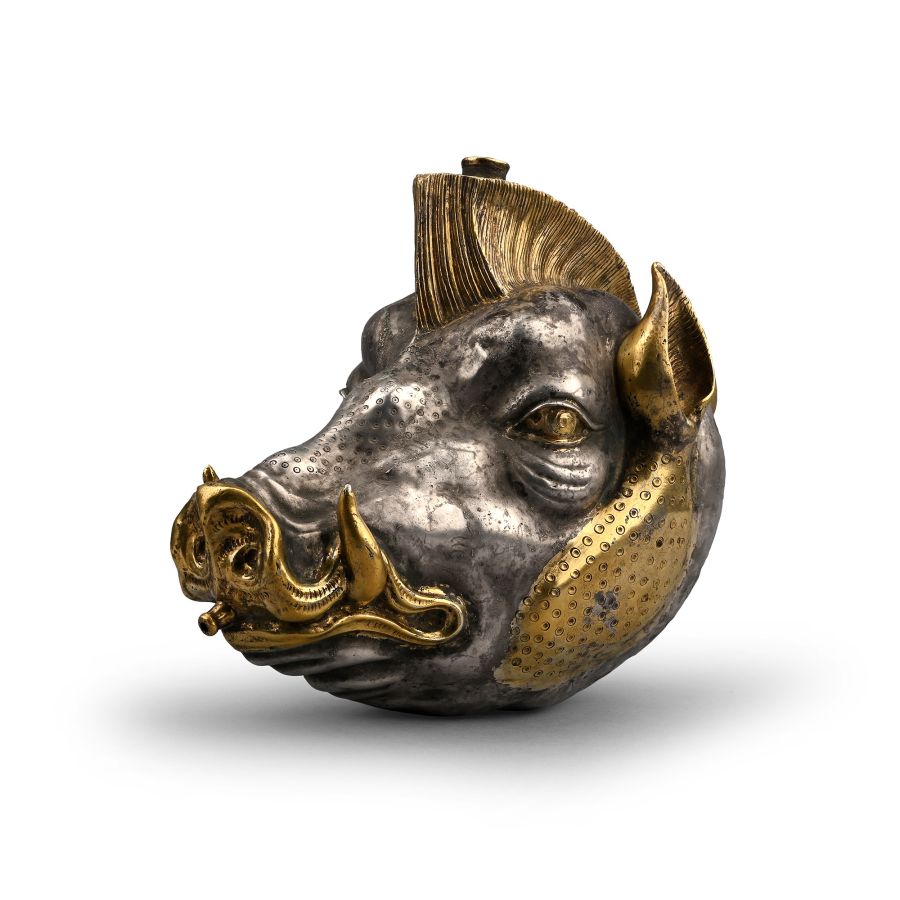
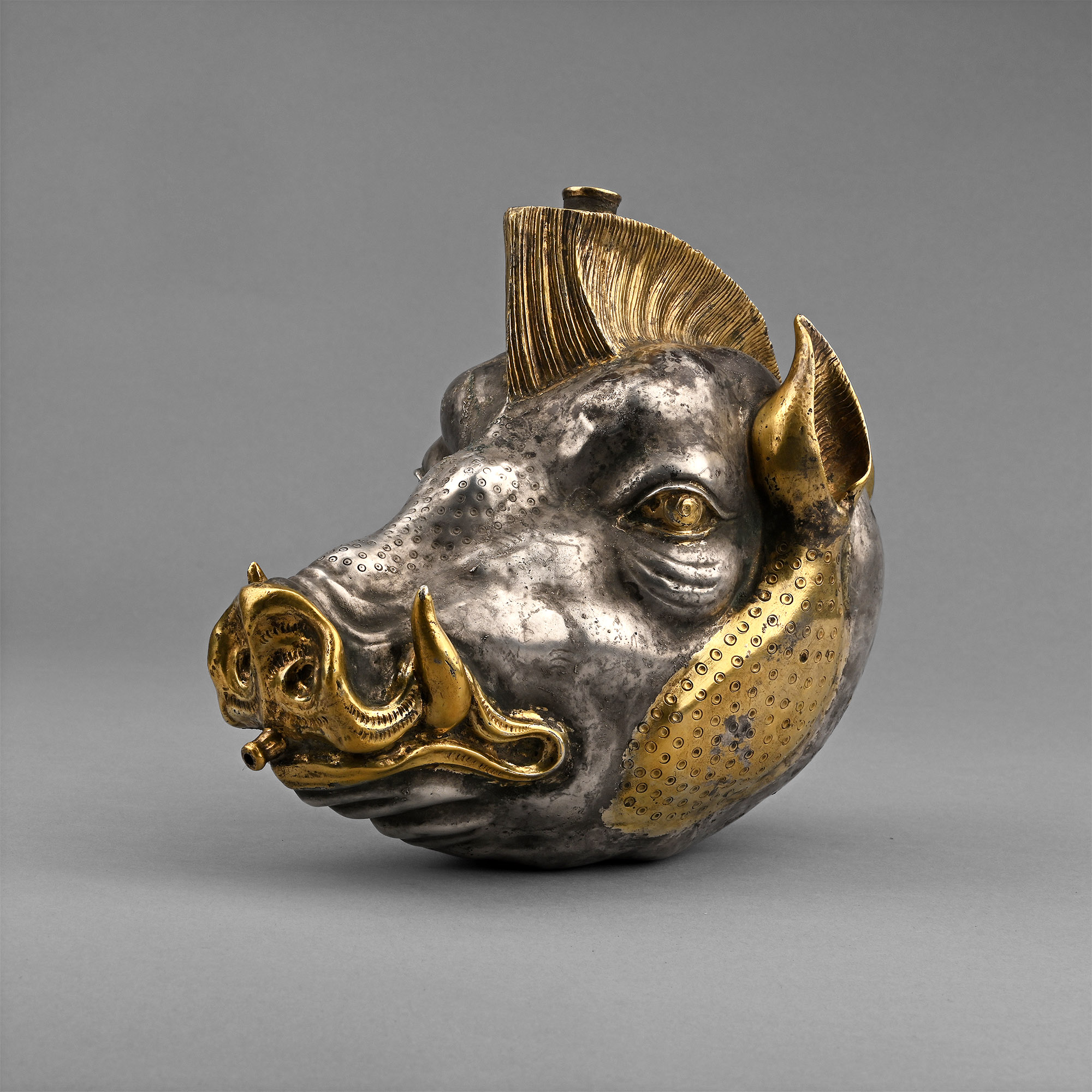
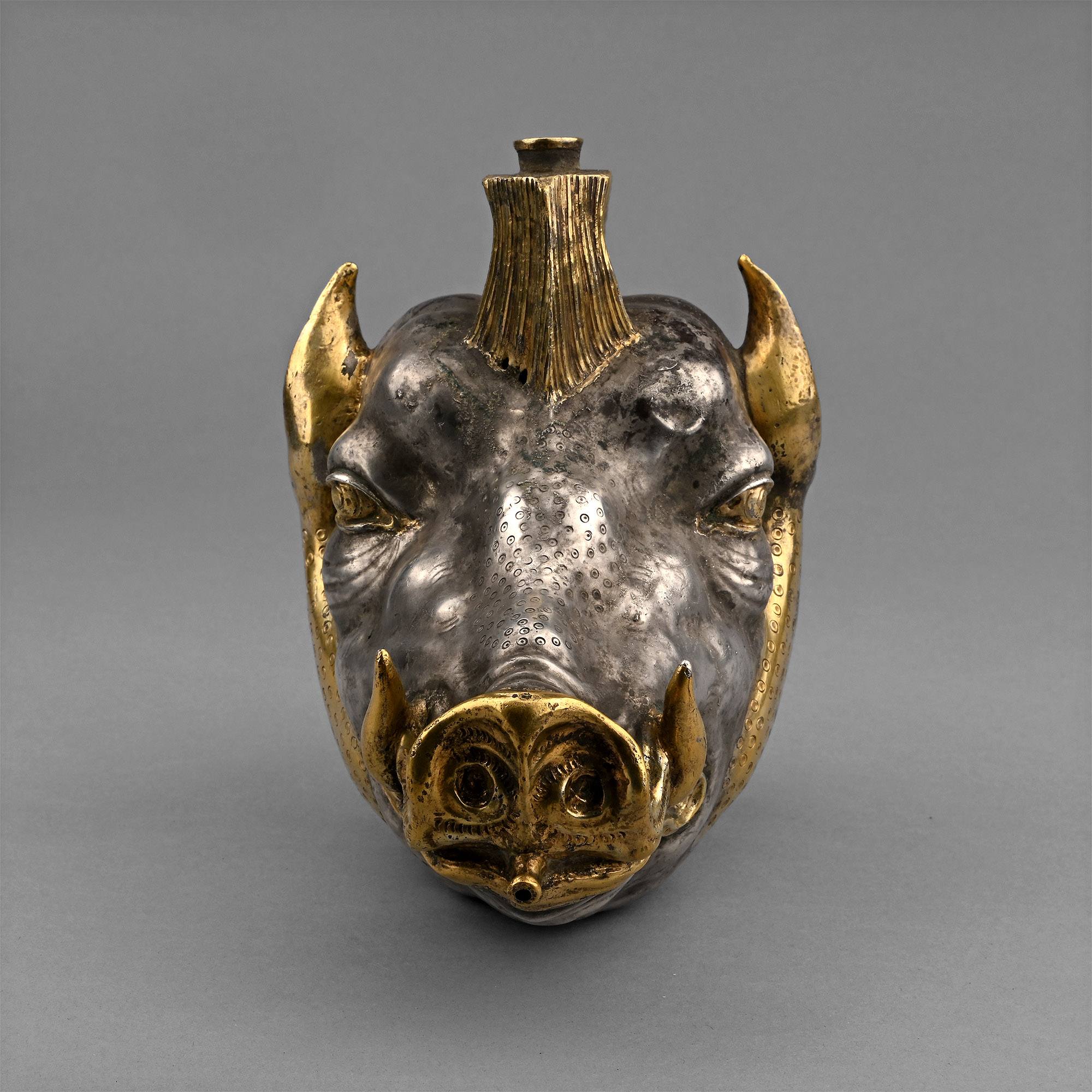
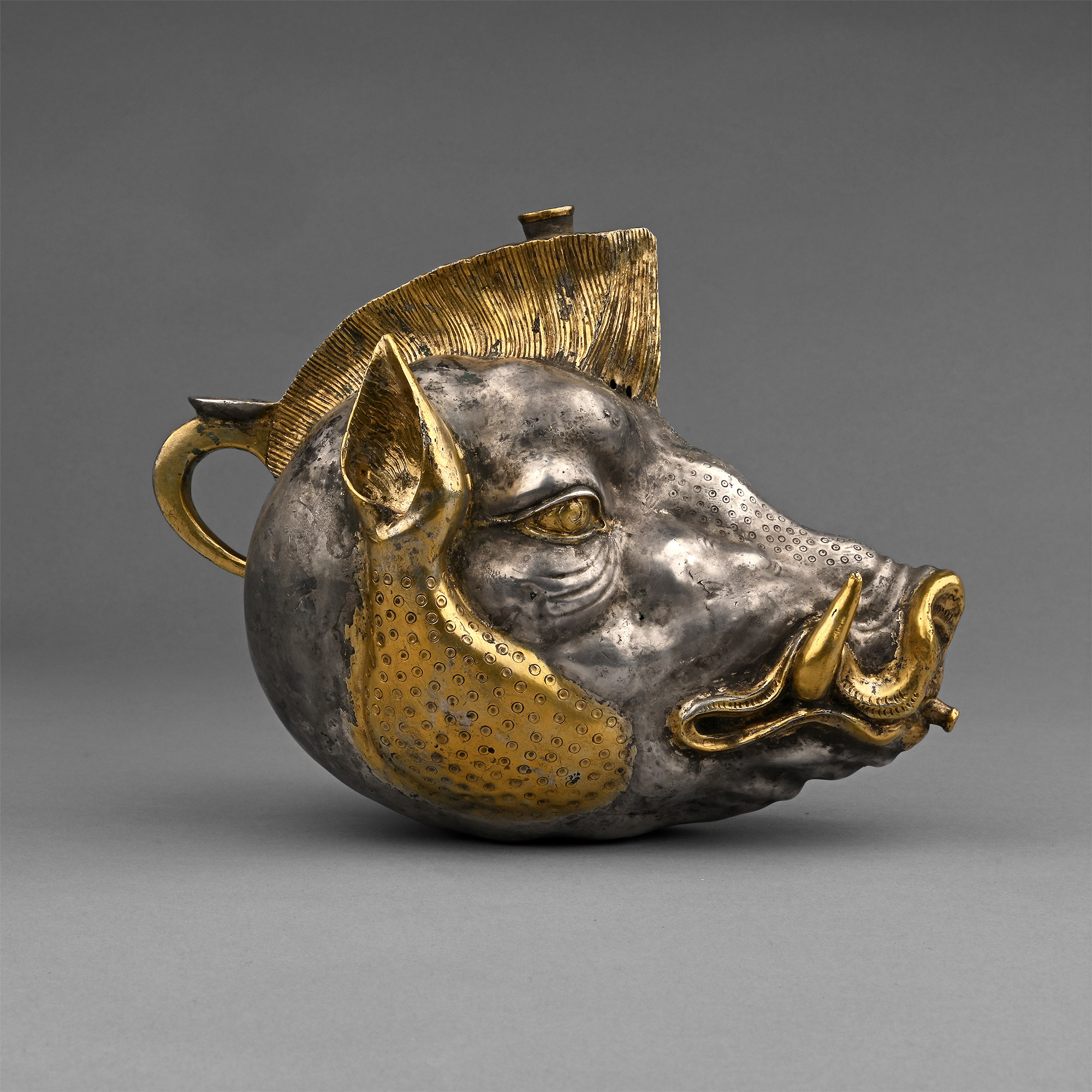
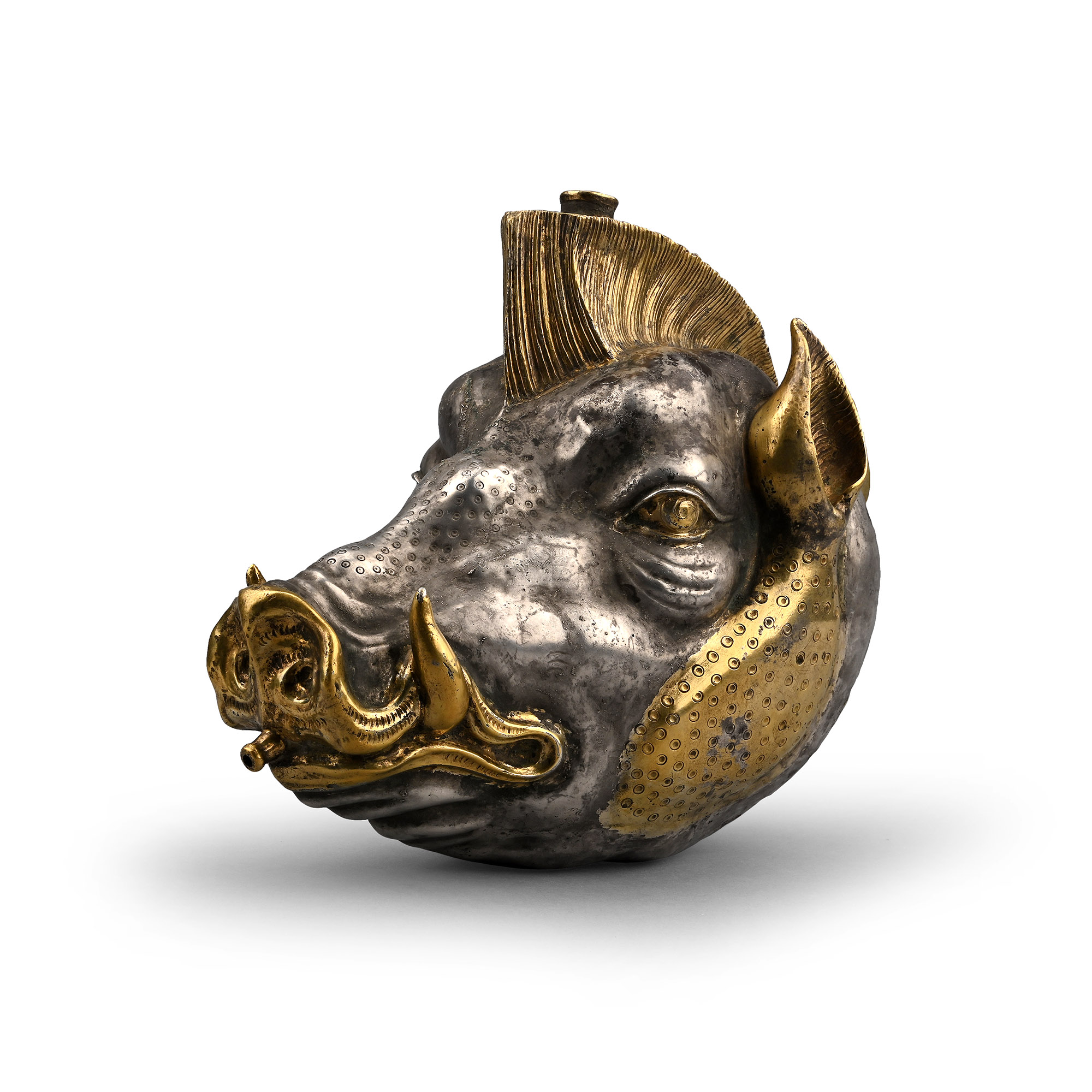
Large Sogdian Silver-Gilt Wild Boar Rhyton
5TH-6TH CENTURY A.D.
8 1/2 in. (1.3 kg, 21.5 cm long).
A Sogdian or Sasanian head of a wild boar with detailed facial features including large snout, curled tusks, alert eyes with heavy eyelids, erect ears, the animal's mane framing the head and back; a series of small circles decorating the cheeks; an oval vessel mouth emerging from the mane and the spout formed as a pierced stud at the centre of the boar's chest.
Provenancewith a New York gallery, 1970s.
Private collection, London.
Accompanied by three black-and-white photographs taken prior to cleaning, believed to date from the 1970s.
Accompanied by an academic report by Dr Raffaele D’Amato.
This lot has been checked against the Interpol Database of stolen works of art and is accompanied by search certificate number no.12979-246395.
See Harper, P. O. and Meyers, P., Silver Vessels of the Sassanian Period, Volume I, New York, 1981, for discussion and examples of wild boar on other vessels; Carter, M.L., Goldstein, S., Harper, P.O., Kawami, T.S., Meyers P., Splendors of the Ancient East, Antiquities from the al-Sabah collection, London, 2013; Ebbinghaus, S., Feasting with gods, heroes, and kings, Cambridge, 2019; the style of the animal's head, the mouth, the ears and the body suggest that the object was manufactured in an Eastern Sasanian workshop. The image of the boar was diffused in the Persian iconography and royal imagery. A roughly horn-shaped rhyton found at Kish in Mesopotamia features a boar head (Ebbinghaus, 2019, p.328) while various hunting scenes represent the Sasanian Shahanshah (King of the Kings) and local rulers hunting the wild boar (Harper, Meyers, 1981, pls.X,XIV,15,20; Carter, Goldstein, Harper, Kawami, Meyers, 2013, pp.172-173). The most famous is the boar hunting scene on the Taq-e-Bostan reliefs.
FootnotesThe production of silver vessels and dinner objects for the court was highly centralised within the Sasanian Empire. In the 5th and 6th century AD, the production of silver vessels expanded, creating new shapes, such as pitchers, elliptical bowls and high-footed bowls. If the iconography included both Dionysian and Christian imagery, the subjects linked with royal power were the favourites, and among them, the boar. The boar was, in fact, the animal associated with the Zoroastrian Izad Vahram, the epitome of victory. It was not a coincidence that one of the usurpers of the Persian throne, the general Farrukhān, took the title of Shahrbaraz (reigning in 630 AD), whose name means ‘The Boar of the Empire’, attesting to his dexterity in military command and warlike personality. Shahrwarāz derived in fact from the middle-Persian word shahr (country) and warāz (boar).
CONDITIONTimeLine Auctions follows a vetting process to ensure the authenticity and legality of all items, reinforcing our commitment to integrity and responsible trading. Each antiquity, antique, and coin lot undergoes thorough examination by a vetting committee of at least ten external specialists, professional trade association members, scientists, and archaeologists: Our Vetting Process
AUCTIONS:
TimeLine is a leading auction house specialising in antiquities, ancient art, collectables, natural history, coins, medals, and books. Our auctions offer museums, collectors, historians, and enthusiasts the opportunity to acquire unique and historically significant pieces.
-
.jpg)
Sasanian Chalcedony Stamp Seal with an Ibex
5th century A.D.Sold for (Inc. bp): £117
Domed body with a large suspension hole to the centre, underside with a reclining ibex, long curving horns extending to the rump. 14.9 grams, 26 mm
UK private collection before 2000. Acquired on the UK art market. Ex property of a London gentleman. -
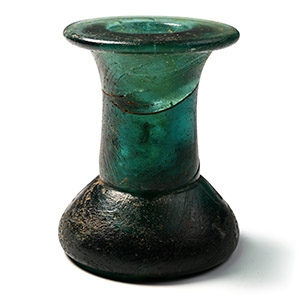
Western Asiatic Emerald Green Glass Cotton-Reel Vase
6th-8th century A.D.Sold for (Inc. bp): £65
With broad plano-convex base, sturdy tubular body, everted rim; repaired. 201 grams, 73 mm
Ex Norri collection, Milton Keynes, UK, 1980s-1990s. -
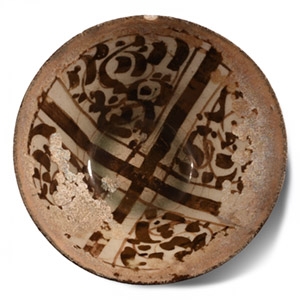
Syrian Lustre Pottery Bowl
13th century A.D.Estimate: £600 - 800 (+bp*)
Opening Bid: £232
Conical in profile with ring foot; glazed inner face with reserved cross and panels of calligraphic text; text to underside inside foot; old collectors' labels to sidewall. 142 grams, 13.8 cm
with Christie's, London, Islamic Manuscripts, Miniatures, and Works of Art, 10 October 1989, no.485. Private collection, London.
