
Loading, please wait...
LOT 0772
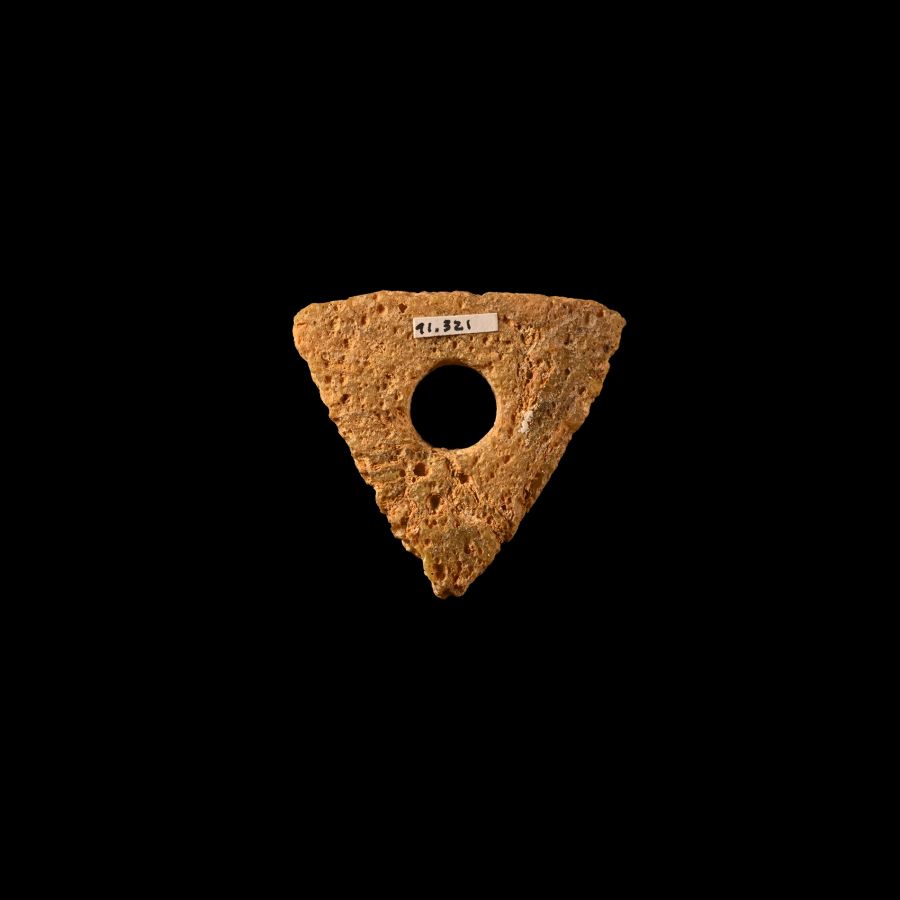
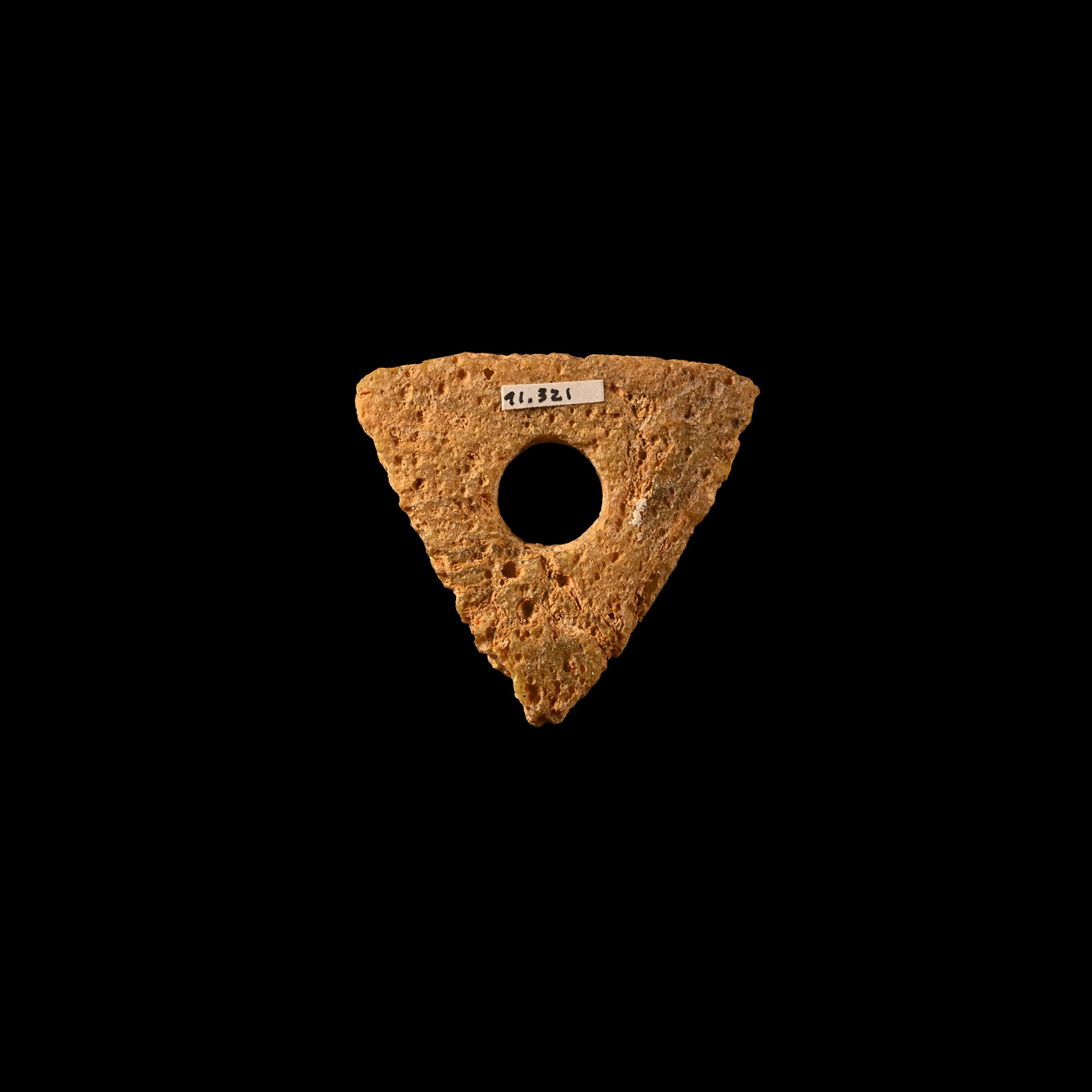
Large Romano-Celtic Yellow Glass Triangular Mount
1ST CENTURY B.C.-1ST CENTURY A.D.
1 1/4 in. (9.1 grams, 33 mm).
In the form of an equilateral triangle, pierced through the centre for mounting. [No Reserve]
ProvenanceFrom the Robin Symes Gallery, stock number 91-321 on label, inventory number 185.
CONDITIONTimeLine Auctions follows a vetting process to ensure the authenticity and legality of all items, reinforcing our commitment to integrity and responsible trading. Each antiquity, antique, and coin lot undergoes thorough examination by a vetting committee of at least ten external specialists, professional trade association members, scientists, and archaeologists: Our Vetting Process
AUCTIONS:
TimeLine is a leading auction house specialising in antiquities, ancient art, collectables, natural history, coins, medals, and books. Our auctions offer museums, collectors, historians, and enthusiasts the opportunity to acquire unique and historically significant pieces.
-
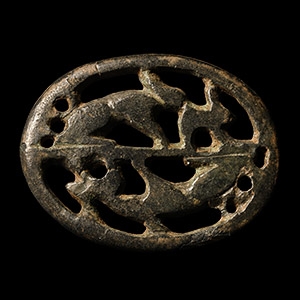
Roman Bronze Hare and Hound Brooch
1st-2nd century A.D.Sold for (Inc. bp): £98
Composed of an openwork plaque with two inverted panels each depicting a hound with a hare in its mouth; remains of pin lug and catchplate to reverse. 14.9 grams, 42 mm
Acquired prior to 1980. From the UK art market. -
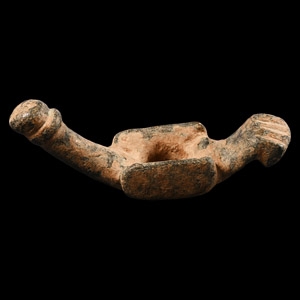
Roman Bronze Phallic Amulet
3rd-4th century A.D. or laterEstimate: £100 - 140 (+bp*)
Opening Bid: £50
Composed of a hollowed truncated conical socket, with a curved arm to each side, one ending in a phallic shape, the other ending with a closed fist. 26.1 grams, 55 mm
Acquire in the 1990s. Ex Cambridgeshire, UK, collection.
Roman phallic amulets are represented by many examples preserved in museums and private collections, with a vast variety of types. This specimen belongs to category of double phallus, even if one of the male attributes is here represented as a fist. These amulets were worn as a wish for fertility and virile power, often hung on horses as harness pendants. -
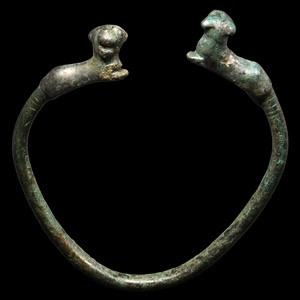
Roman Bronze Bracelet with Panthers
2nd-4th century A.D.Sold for (Inc. bp): £85
The penannular round-section hoop terminating in opposed couchant pantheresses, their heads turned in opposite directions. 30.8 grams, 75 mm
UK collection, early 1990s and before. Acquired on the UK art market since the early 2000s. From a private collection, Lancashire, UK.
