
Loading, please wait...
LOT 0663
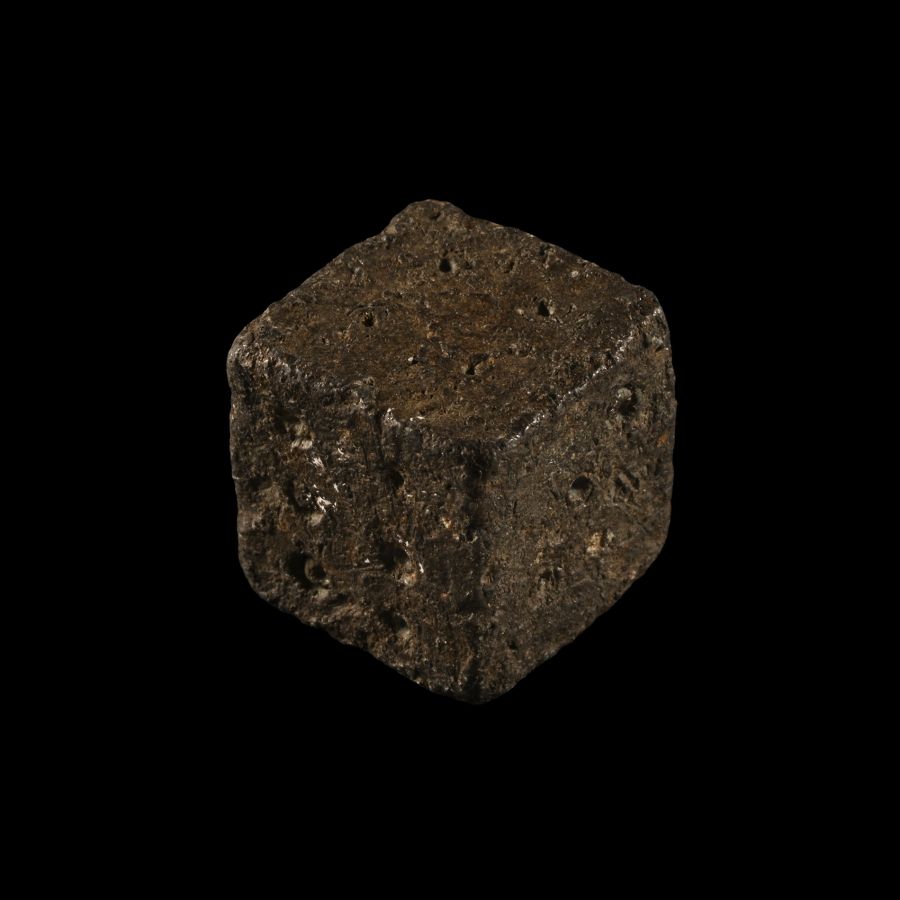
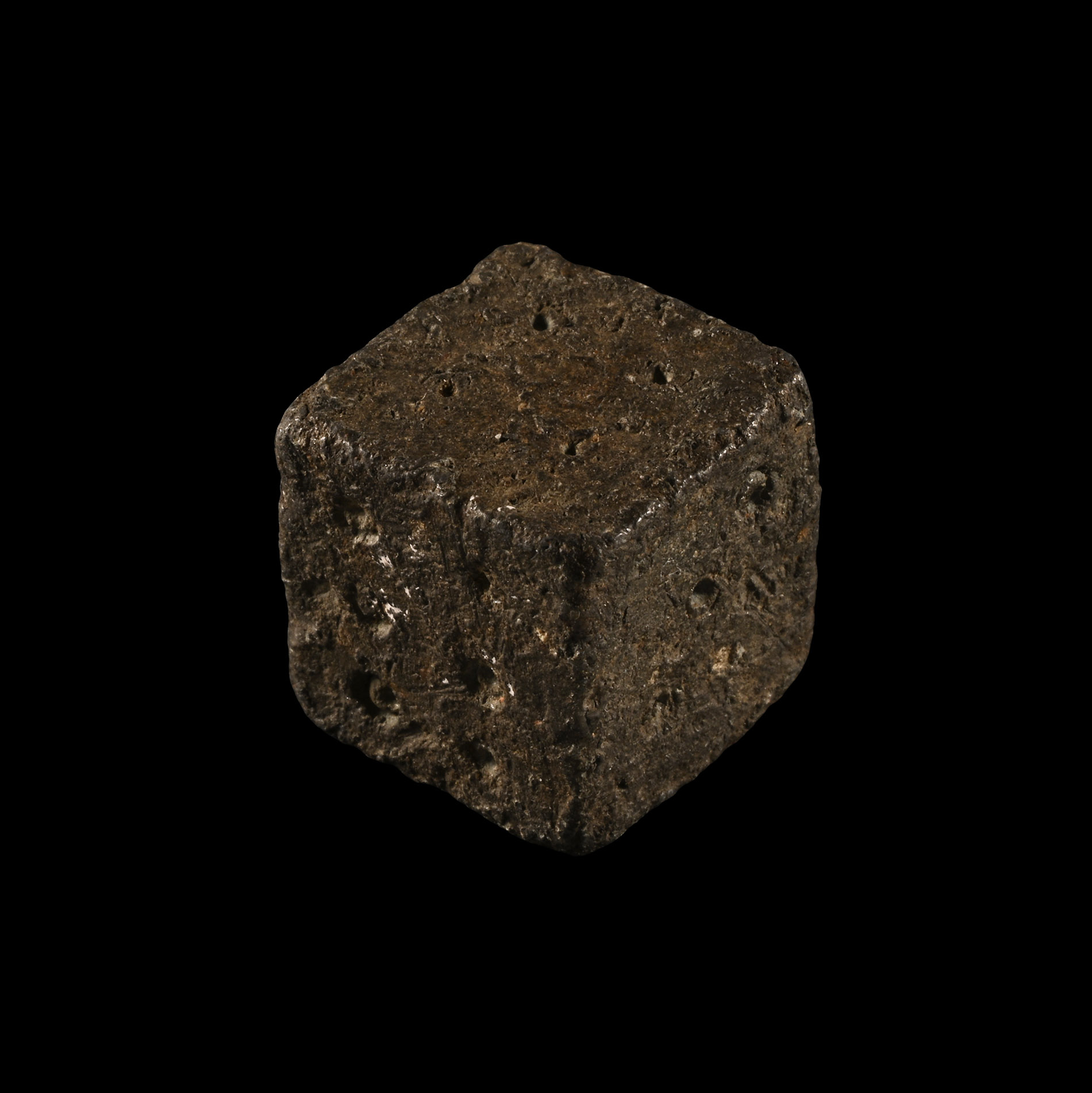
Large Romano-British 'Published' Lead Gaming Dice
CIRCA 1ST-4TH CENTURY A.D.
5/8 in. (35 grams, 15 mm).
Cuboid with impressed ring-and-dot motifs disposed 6:5, 4:2, 3:1. [No Reserve]
ProvenanceFound UK prior to 2000.
From the important private collection of dice and gaming pieces of Colin Narbeth, London, collection no.61.
Accompanied by a copy of the relevant Celtic & Roman Artefacts book pages where this object is published.
Mills, Nigel, Celtic & Roman Artefacts, Witham, 2000, p.113, item no.RB356.
LiteratureCf. Spasić Durić, D., Град Виминацијум-The city of Viminacium, (in Serbian), Pozarevac, 2015, fig.166, for similar.
FootnotesThe conventional Roman dice were made in bone or lead, with dots representing numbers from 1 to 6. Roman dice from the Romano-British settlements are often poorly made and often had opposite sides that do not add up to 7.
CONDITIONTimeLine Auctions follows a vetting process to ensure the authenticity and legality of all items, reinforcing our commitment to integrity and responsible trading. Each antiquity, antique, and coin lot undergoes thorough examination by a vetting committee of at least ten external specialists, professional trade association members, scientists, and archaeologists: Our Vetting Process
AUCTIONS:
TimeLine is a leading auction house specialising in antiquities, ancient art, collectables, natural history, coins, medals, and books. Our auctions offer museums, collectors, historians, and enthusiasts the opportunity to acquire unique and historically significant pieces.
-
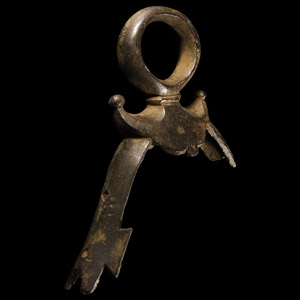
Large Romano-British Bronze Chariot Terret
1st century A.D.Sold for (Inc. bp): £130
From the yoke of a chariot comprising a D-section ring, collar and knop-ended crescents, broad pierced lateral flanges. 365 grams, 16.5 cm
Reputed to have been excavated near Viables in Hampshire at the end of the 19th century. From the estate of the late Jennifer Simmonds. Acquired from Jacobs & Hunt auctioneers, Petersfield, Hampshire, UK. -
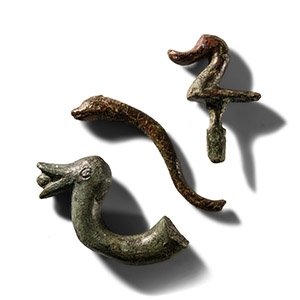
Roman Bronze Animal Mount Group
3rd century A.D.Sold for (Inc. bp): £78
Comprising: a sinuous serpent with lattice detailing; a duck with tab-handle to the underside; a goose with head thrown back, pellet in the beak. 160 grams total, 54-74 mm
From a collection acquired on the UK art market from various auction houses and collections mostly before 2000. From an important Cambridgeshire estate; thence by descent. -
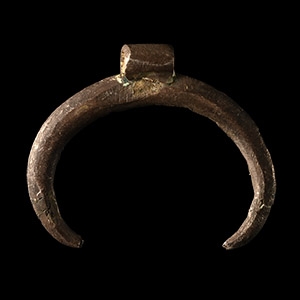
Roman Silver Lunar Pendant
Circa 2nd-3rd century A.D.Sold for (Inc. bp): £111
Comprising a crescentic pendant with keeled arms, applied suspension loop. 2.42 grams, 29 mm
Acquired before 1980. Ex property of a South London collector.
