
Loading, please wait...
LOT 1423
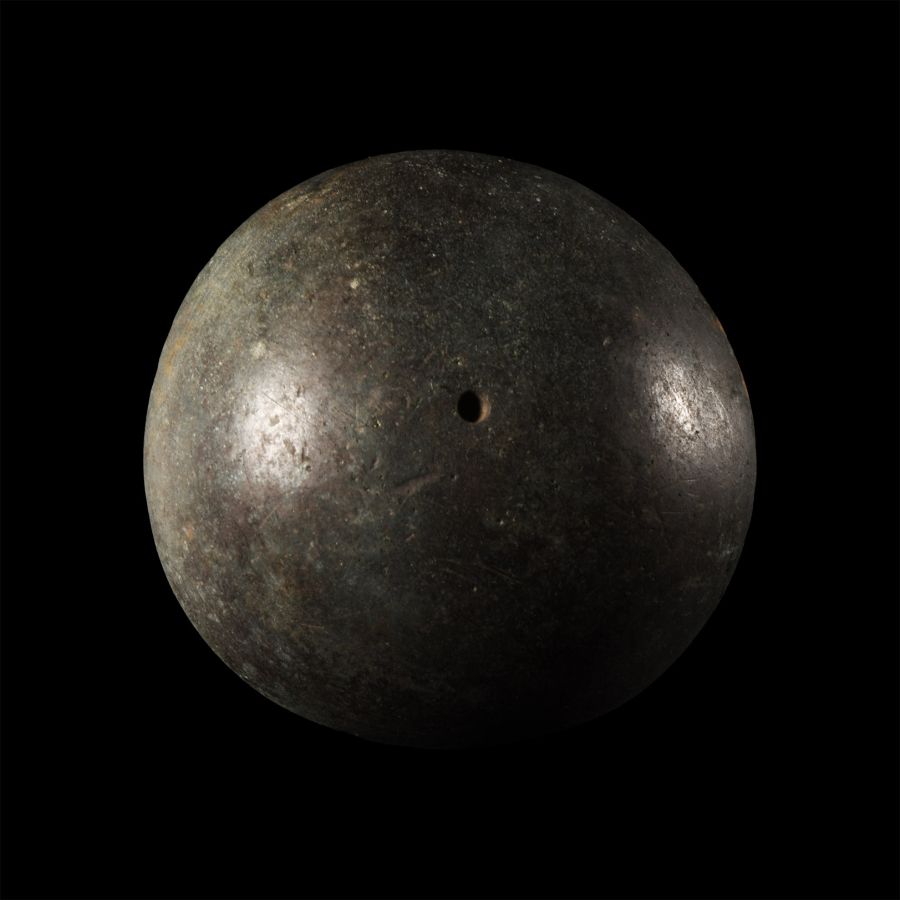
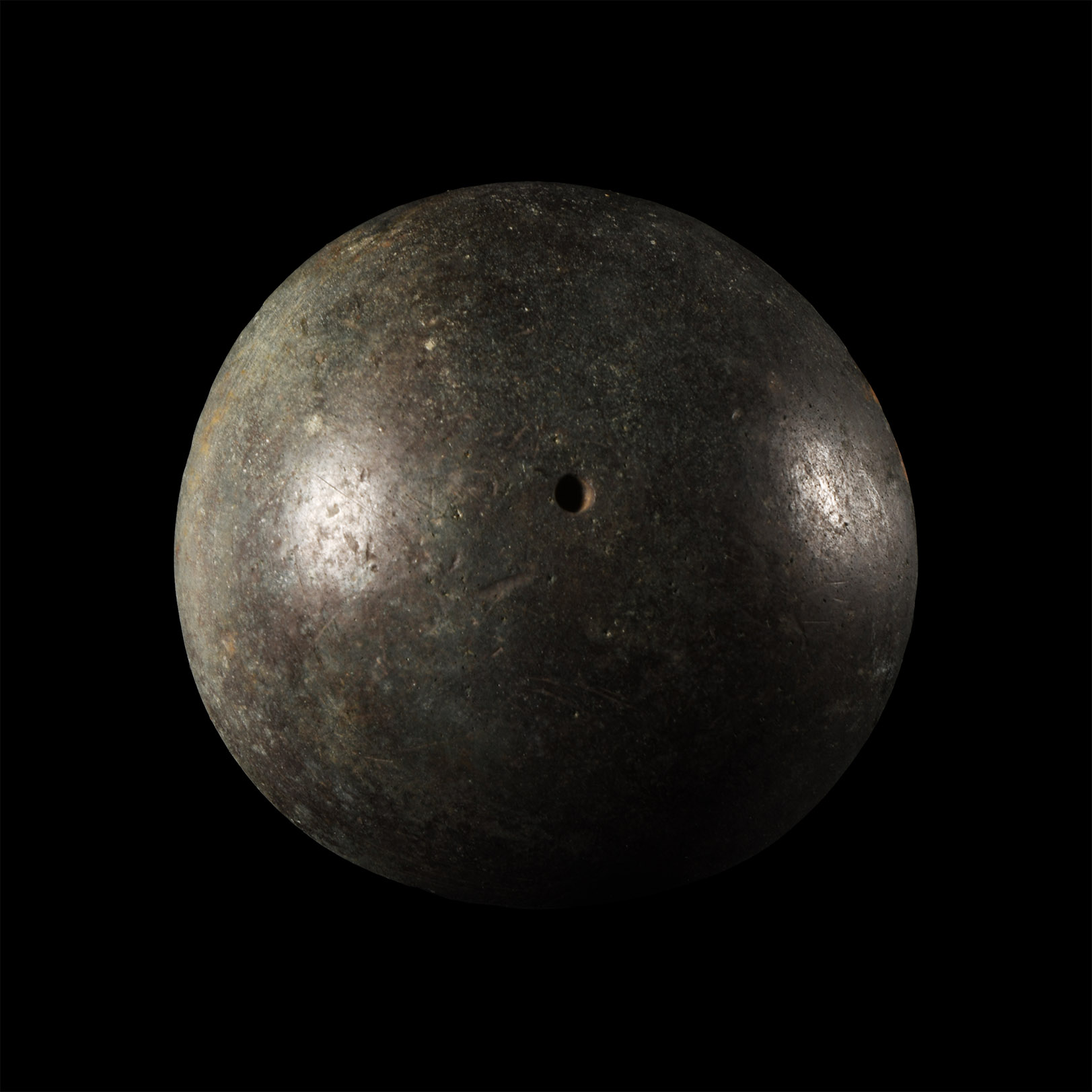
Large Romano-British Bronze Military Boss
1ST CENTURY A.D.
3 in. (174 grams total, 74 mm wide).
Substantial cast cupola with dimple to the apex, reverse with two ferrous attachment spikes; possibly from a field artillery piece. [No Reserve]
ProvenanceReputed to have been excavated near Viables in Hampshire at the end of the 19th century.
From the estate of the late Jennifer Simmonds.
Acquired from Jacobs & Hunt auctioneers, Petersfield, Hampshire, UK.
See Marsden, E.A., Greek and Roman Artillery. Historical Development, Oxford, 1969, for discussion.
CONDITIONTimeLine Auctions follows a vetting process to ensure the authenticity and legality of all items, reinforcing our commitment to integrity and responsible trading. Each antiquity, antique, and coin lot undergoes thorough examination by a vetting committee of at least ten external specialists, professional trade association members, scientists, and archaeologists: Our Vetting Process
AUCTIONS:
TimeLine is a leading auction house specialising in antiquities, ancient art, collectables, natural history, coins, medals, and books. Our auctions offer museums, collectors, historians, and enthusiasts the opportunity to acquire unique and historically significant pieces.
-
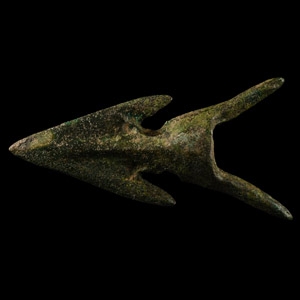
Western Asiatic Bronze Barbed Arrowhead
2nd millennium B.C.Sold for (Inc. bp): £78
Triangular in plan with raised central midrib and tapering lugs below, square socket and circular horizontal piercing through the body above. 24.7 grams, 63 mm
On the European art market before 2000. Ex collection of a Surrey, UK, gentleman; acquired on the UK art market. -
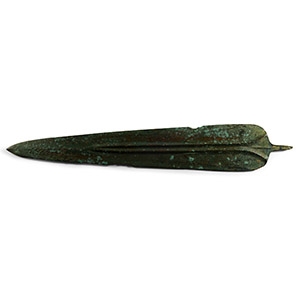
North West Persian Short Sword with Blood Channels
2nd-1st millennium B.C.Sold for (Inc. bp): £260
Broad leaf-shaped blade with rounded shoulders and short tang, grooved spine with curved ends extending to the shoulders. 288 grams, 38cm
Ex Abelita family collection, 1970s-2000s. -
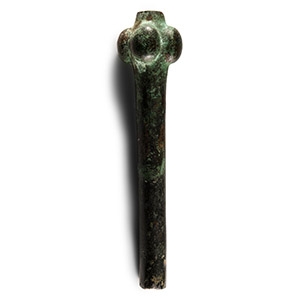
Luristan Sara-Gorz Bronze Macehead
Circa 2000-1300 B.C.Sold for (Inc. bp): £338
With long tubular shank and four hefty bulbs surrounding the shaft. 456 grams, 22.5 cm
Acquired 1980-2015. Ex Abelita family collection. Accompanied by an earlier catalogue identification card.
This rare and unusual mace finds parallels with similar pieces published by Slotta, Vatandust, and Moorey. The dating varies between 21st and 14th century B.C. Western Iranian maces, especially the Luristan ones, were notable for the variety of different forms. According to Dr D. Nicolle the gorz or mace was primarily used as an armour breaking weapon since ancient times, and was very common on the Iranian plateau.
