
Loading, please wait...
LOT 0651
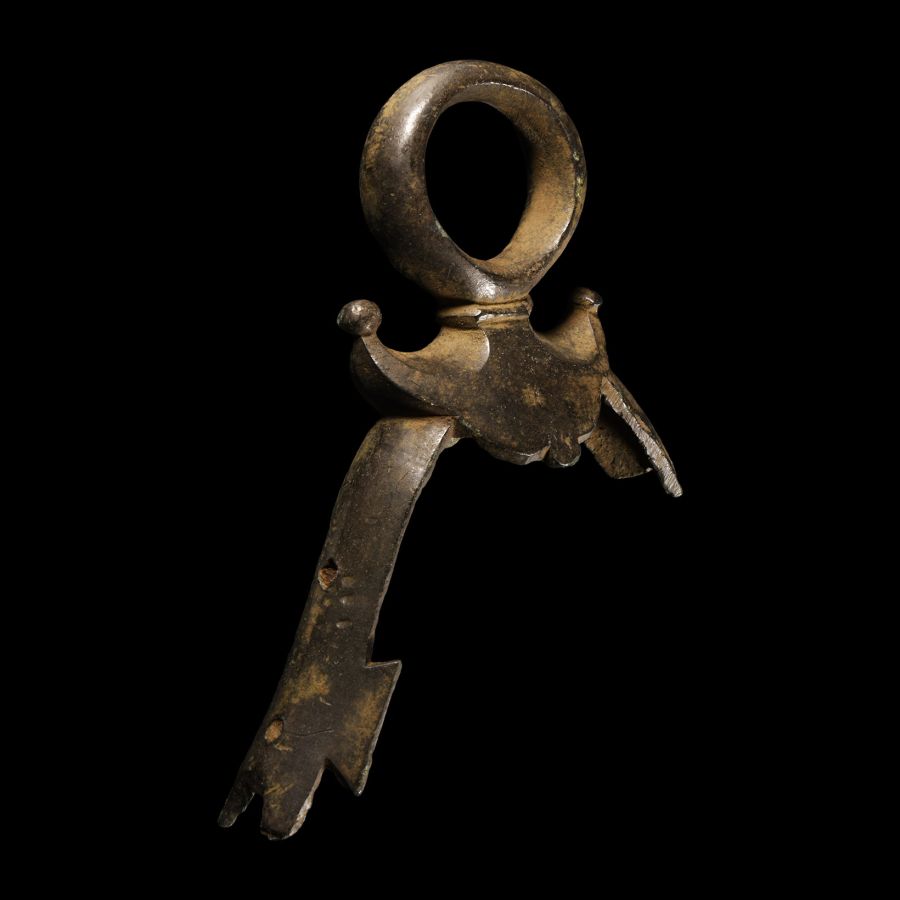
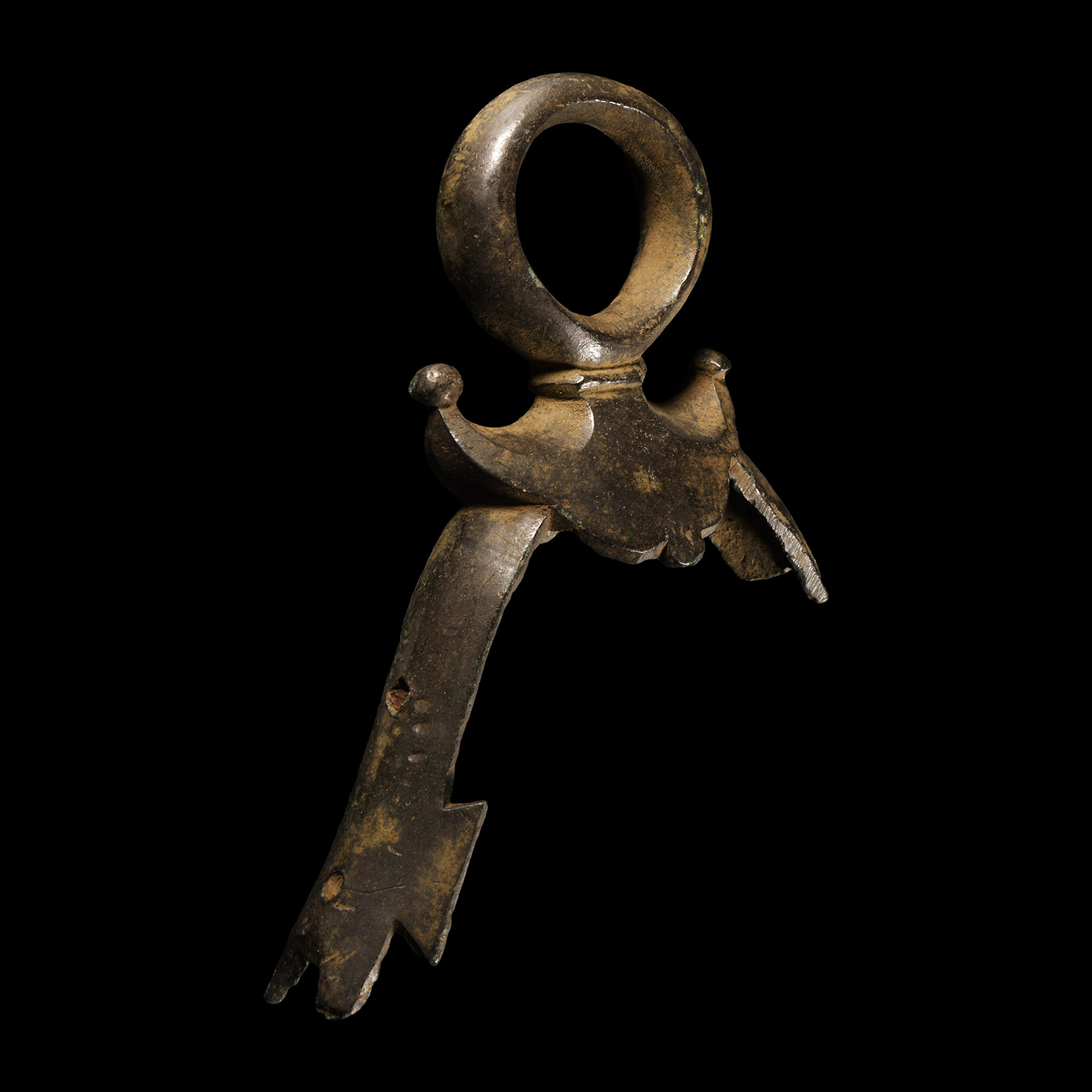
Large Romano-British Bronze Chariot Terret
1ST CENTURY A.D.
6 1/2 in. (365 grams, 16.5 cm).
From the yoke of a chariot comprising a D-section ring, collar and knop-ended crescents, broad pierced lateral flanges. [No Reserve]
ProvenanceReputed to have been excavated near Viables in Hampshire at the end of the 19th century.
From the estate of the late Jennifer Simmonds.
Acquired from Jacobs & Hunt auctioneers, Petersfield, Hampshire, UK.
See discussion in Spratling, M.G., Southern British Decorated Bronzes of the Late Pre-Roman Iron Age, Institute of Archaeology, 1972.
CONDITIONTimeLine Auctions follows a vetting process to ensure the authenticity and legality of all items, reinforcing our commitment to integrity and responsible trading. Each antiquity, antique, and coin lot undergoes thorough examination by a vetting committee of at least ten external specialists, professional trade association members, scientists, and archaeologists: Our Vetting Process
AUCTIONS:
TimeLine is a leading auction house specialising in antiquities, ancient art, collectables, natural history, coins, medals, and books. Our auctions offer museums, collectors, historians, and enthusiasts the opportunity to acquire unique and historically significant pieces.
-
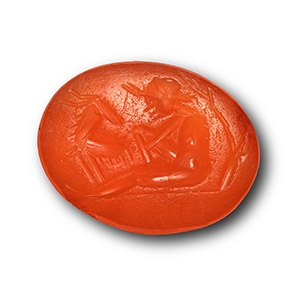
Roman Gemstone with a Shepherd Milking a Goat
1st-3rd century A.D.Sold for (Inc. bp): £156
With intaglio scene of a man milking a goat with one leg extended, his back resting on a tree-trunk; supplied with a museum-quality impression. 0.79 grams, 12 mm
Collected from 1970-1999. From the collection of the late Mr S.M., London, UK. Accompanied by a previous catafalque information slip. -
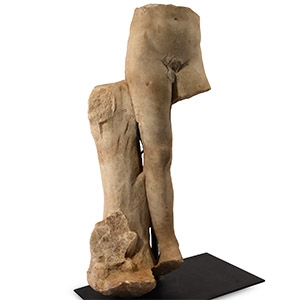
Life-Size Roman Marble Lower Torso
Circa 2nd century A.D.Estimate: £20,000 - 30,000 (+bp*)
Opening Bid: £9,850
Modelled in the round in cream-coloured marble; the hips and right leg of a slender male standing beside a column with the lower part of an animal at the base; the figure modelled with narrow hips and waist in contrapposto stance, genitals removed, muscular leg with slender ankle; adjacent column with remains of a branch or spur at the top, developing to a flared base with a crouching hare or rabbit; mounted on a custom-made stand. 101.4 kg total, 99 cm including stand
Ex Paris collection. French gallery, Paris, 1990-2000s. Accompanied by an academic report by Dr Raffaele D’Amato. This lot has been checked against the Interpol Database of stolen works of art and is accompanied by search certificate number no.12088-213904.
Despite the loss, the semi-circular rise that separated the ribcage from the abdomen highlights the muscles of a young athlete or a hero. The statue could represent many male heroes or deities (Reinach, 1897, p.210 no.2, 817 no.4), but, by comparison with a similar sculpture in the Brussels Museum, it could refer to a rare image of the handsome and ferocious hunter Hippolytus, son of Theseus and the Amazon Antiope, killed by the curse of his father due to Phaedra’s deception. The presence of the small hare or rabbit at the base of the column could confirm the hypothesis of a hunter hero, and finds its parallel with the small animals (gecko and panther) visible on the Brussels sculpture. -
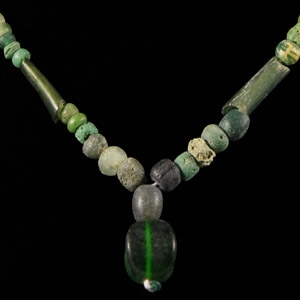
Roman Green Glass Bead Necklace String
1st century A.D. and laterSold for (Inc. bp): £91
Graduated group of tubular, annular and other beads with later lampwork bead centrepiece. 16.8 grams, 38 cm long
Acquired 1980-2015. Ex Abelita family collection.
