
Loading, please wait...
LOT 0195
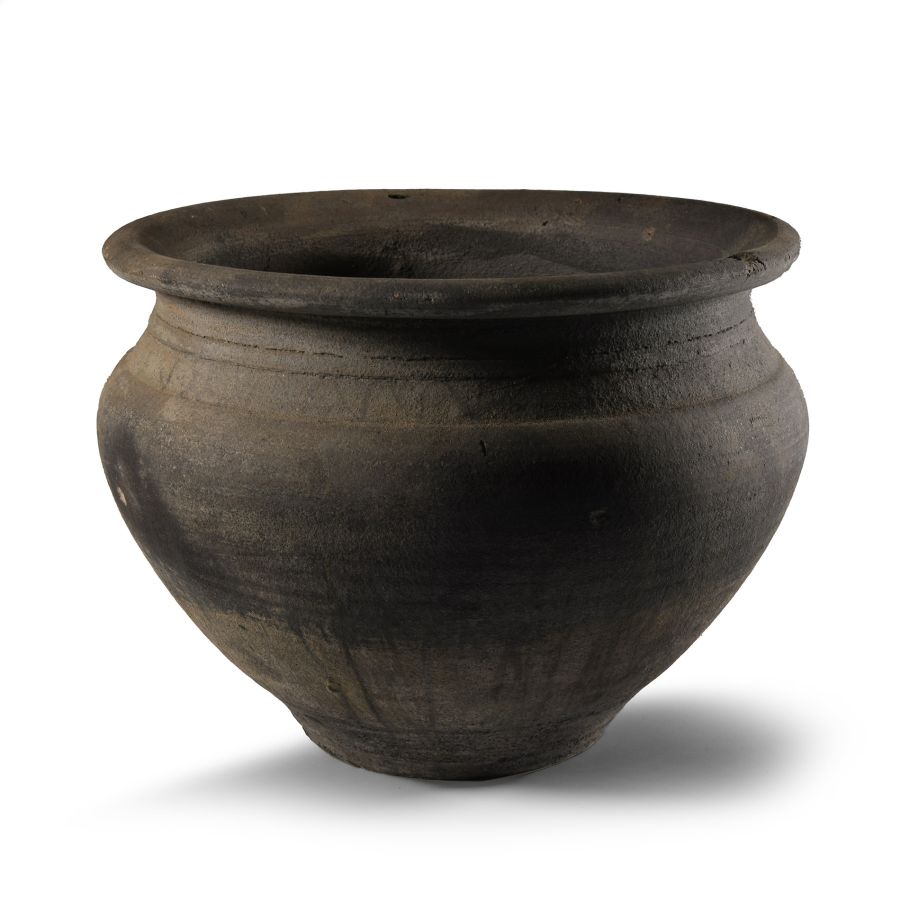
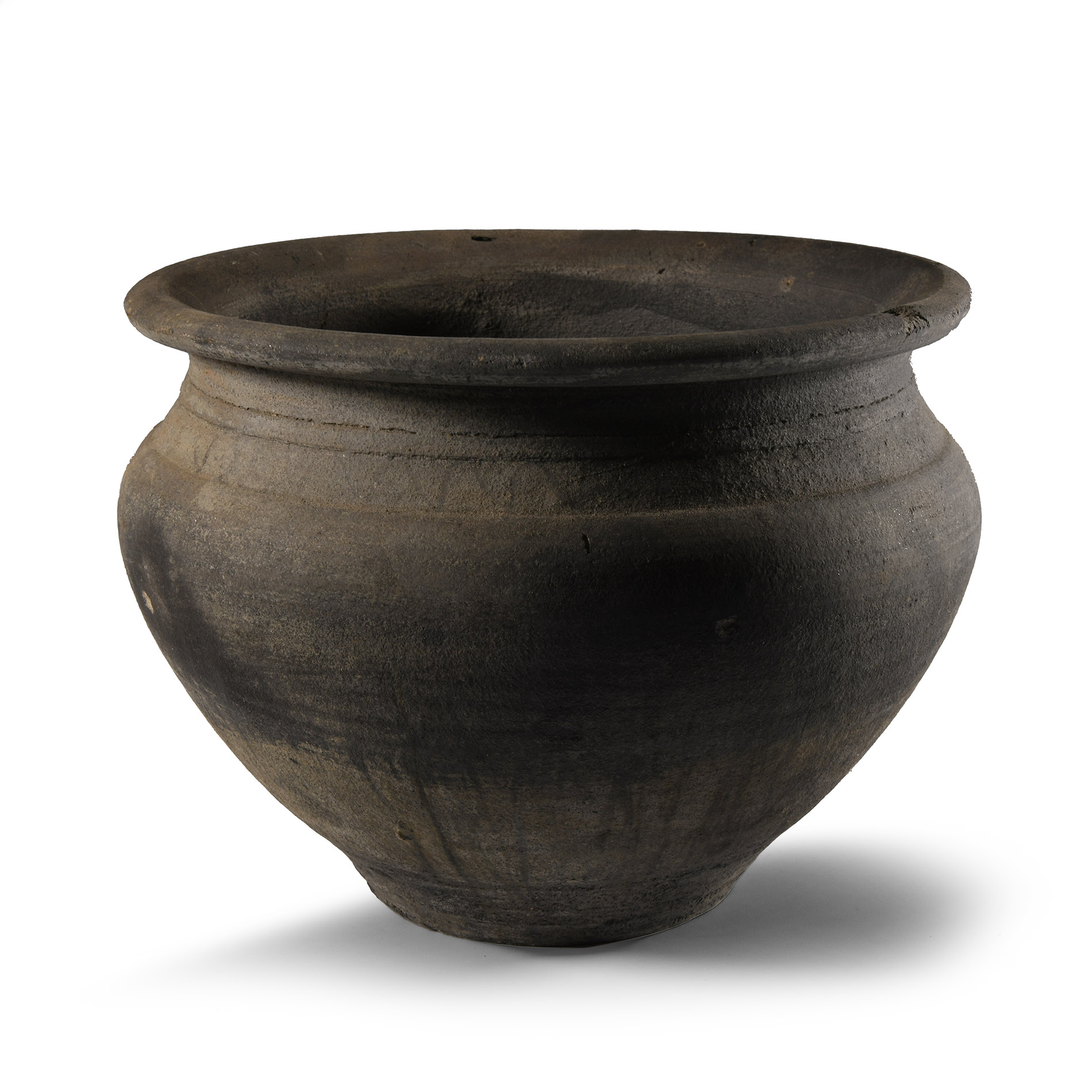
Large Roman 'Upchurch' Greyware Storage Jar
2ND CENTURY A.D.
11 in. (1.98 kg, 28 cm wide).
With everted rim and decorative geometric band to the shoulder. [No Reserve]
ProvenanceFound Upchurch Marshes, Kent, UK, in the 1980s.
Ex Winter Collection, Kent, UK.
See Pollard, R. J., The Roman Pottery of Kent, 1988.
FootnotesThe Roman pottery kilns on what are now the tidal marshes at Upchurch, Kent, are justly famed as a thriving pottery production area with many kiln and related sites. The London clay in this area is of fine quality and was thus suitable for pottery making. With the rise in the sea level, the area is now mostly inundated and, as tidal forces erode the silts, pottery (often 'seconds'), is sometimes exposed. The soft muds and general inaccessibility of the area make collection difficult.
CONDITIONTimeLine Auctions follows a vetting process to ensure the authenticity and legality of all items, reinforcing our commitment to integrity and responsible trading. Each antiquity, antique, and coin lot undergoes thorough examination by a vetting committee of at least ten external specialists, professional trade association members, scientists, and archaeologists: Our Vetting Process
AUCTIONS:
TimeLine is a leading auction house specialising in antiquities, ancient art, collectables, natural history, coins, medals, and books. Our auctions offer museums, collectors, historians, and enthusiasts the opportunity to acquire unique and historically significant pieces.
-
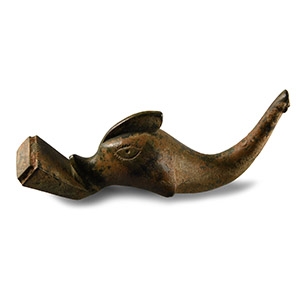
Roman Bronze Dolphin Figure
1st-3rd century A.D.Sold for (Inc. bp): £338
Hollow to the underside with rectangular-section tapering panel, S-curved dolphin with prominent dorsal fin, low-relief eyes; probably a furniture fitting. 129 grams, 96 mm
Private collection of Mr S.A., Switzerland, 1990s, thence by descent. -
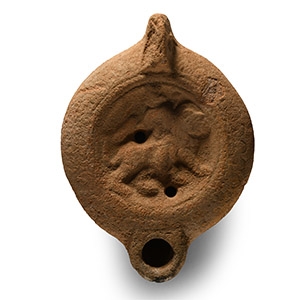
Roman Terracotta Oil Lamp with Cybele Riding a Lion
2nd-3rd century A.D.Sold for (Inc. bp): £312
Lug handle to the rear, shallow discus with filling holes and a low-relief image of goddess Cybele riding on her frequent companion, a lion. 172 grams, 12 cm
Acquired on the European art market, 1980s. English private collection.
This lamp belongs to the group of Provincial African lamps with a plain shoulder and a heart-shaped nozzle. The shoulder form of the lamps (irrespective of African, Italic, or eastern place of manufacture or origin) varies widely. Some of them had undecorated shoulders, like our example. Discus decors include mythology, amphitheatre, daily life, animals (our example), geometric patterns and plain discus. -

Roman Mosaic and Other Glass Necklace Bead Group
Circa 1st-4th century A.D.Sold for (Inc. bp): £117
Comprising thirty glass beads of various sizes, including mosaic beads and some with drawn decoration. 49 grams total, 7-13 mm
UK gallery, early 2000s.
The mass production of glass in Ancient Rome prompted the development of glass jewellery of unique qualities. The ancient Romans considered jewellery to be an essential accessory, being a public display of the wealth of high social classes. Recent excavations have provided better information on the use of glass beads for necklaces and bracelets, and in some case has been possible to understand the exact arrangement of a necklace or other jewellery made of glass. Many of the examples here presented belongs to the so-called category of ‘eye-beads’.
