
Loading, please wait...

LOT 0953
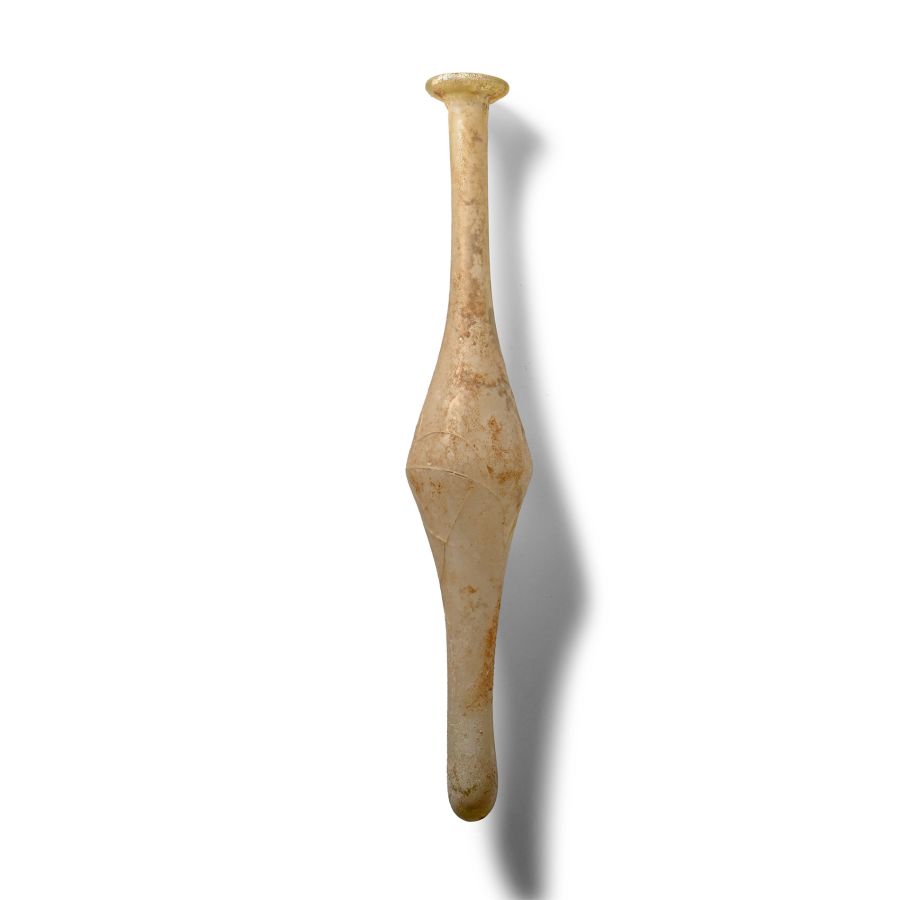
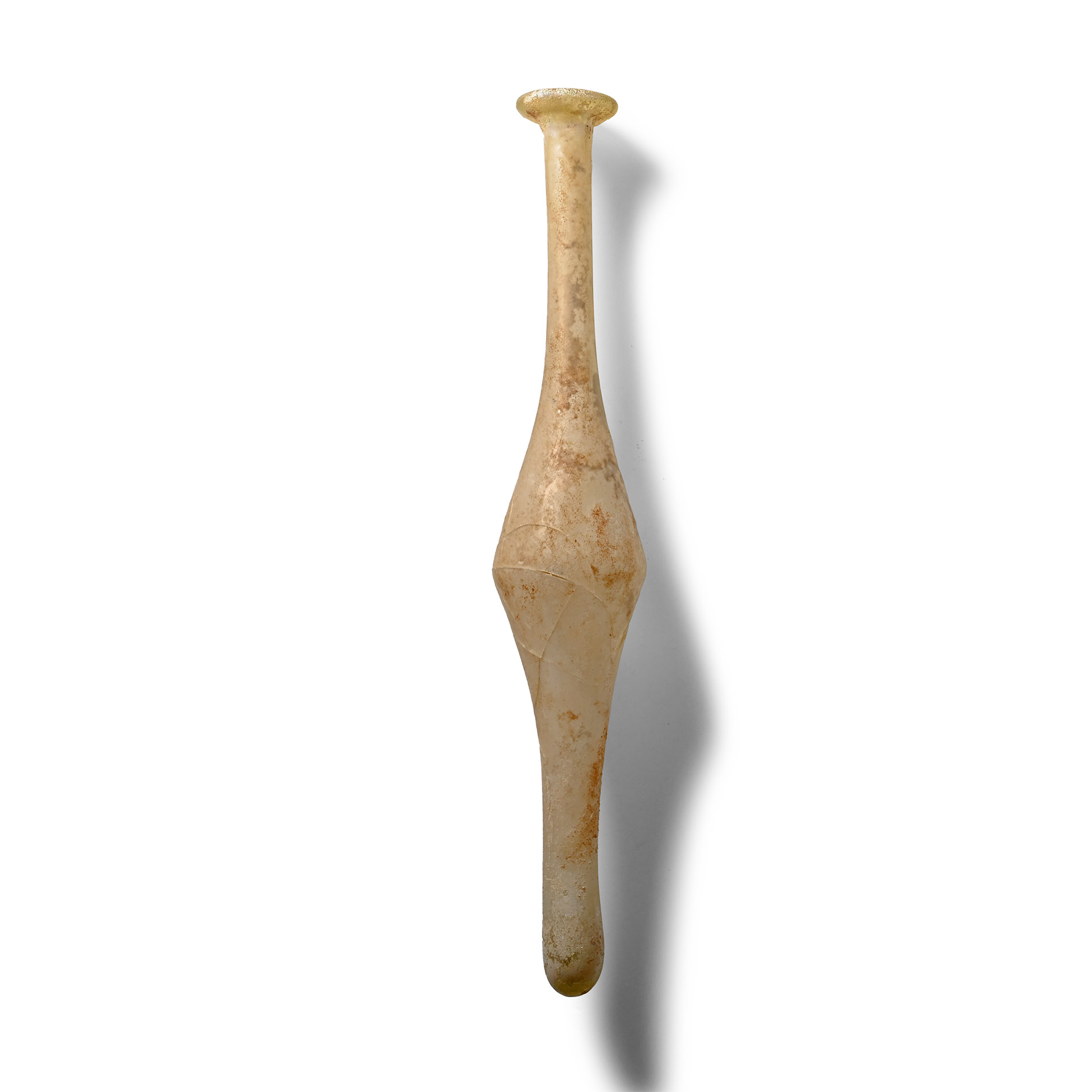
Large Roman Translucent Glass Flask
1ST-4TH CENTURY A.D.
9 7/8 in. (43 grams, 25.2 cm).
Of fusiform type with a rolled lip and thick rounded bottom; repaired. [No Reserve]
ProvenanceFrom the collection of a late East Anglian teacher and antiquarian who retired to the Isle of Wight in Hampshire, UK.
He amassed a large collection of objects between the 1960s-1980s.
Cf. The Metropolitan Museum, New York, accession numbers 81.10.52 and 81.10.53, for similar examples.
CONDITIONTimeLine Auctions follows a vetting process to ensure the authenticity and legality of all items, reinforcing our commitment to integrity and responsible trading. Each antiquity, antique, and coin lot undergoes thorough examination by a vetting committee of at least ten external specialists, professional trade association members, scientists, and archaeologists: Our Vetting Process
AUCTIONS:
TimeLine is a leading auction house specialising in antiquities, ancient art, collectables, natural history, coins, medals, and books. Our auctions offer museums, collectors, historians, and enthusiasts the opportunity to acquire unique and historically significant pieces.
-
.jpg)
Roman Deep Blue Glass and Other Bead Necklace String
1st century A.D. and laterSold for (Inc. bp): £156
Restrung to a Y-shape with mainly blue glass beads. 13.8 grams, 56 cm long
UK gallery, early 2000s. -
Roman Glass Bead Necklace String
1st-4th century A.D. and laterSold for (Inc. bp): £39
Restrung group of graduated tubular beads. 8.76 grams, 46.5 cm
Acquired 1980-2015. Ex Abelita family collection. -
Roman Bronze Penannular Brooch
2nd-4th century A.D.Sold for (Inc. bp): £416
With round-section body and curved terminals, free-running pin. 29.8 grams, 57 mm
Ex German art market, 2000s. Acquired from an EU collector living in London. From the collection of Surrey, UK, gentleman.
