
Loading, please wait...
LOT 0792
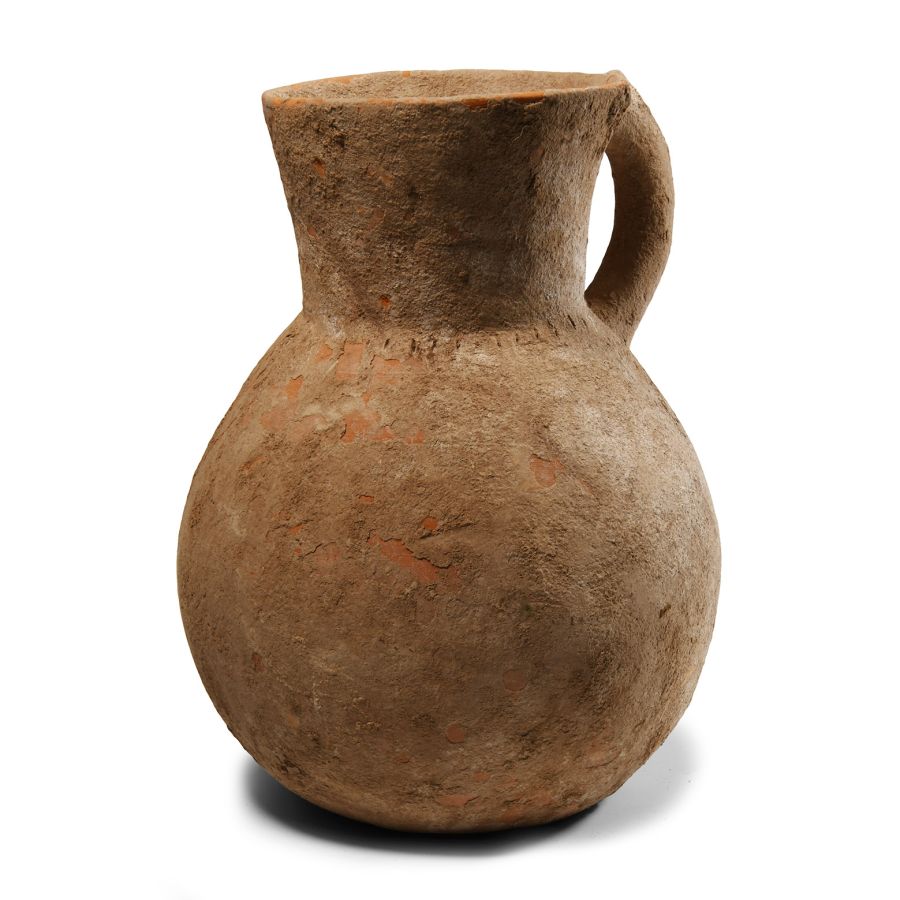
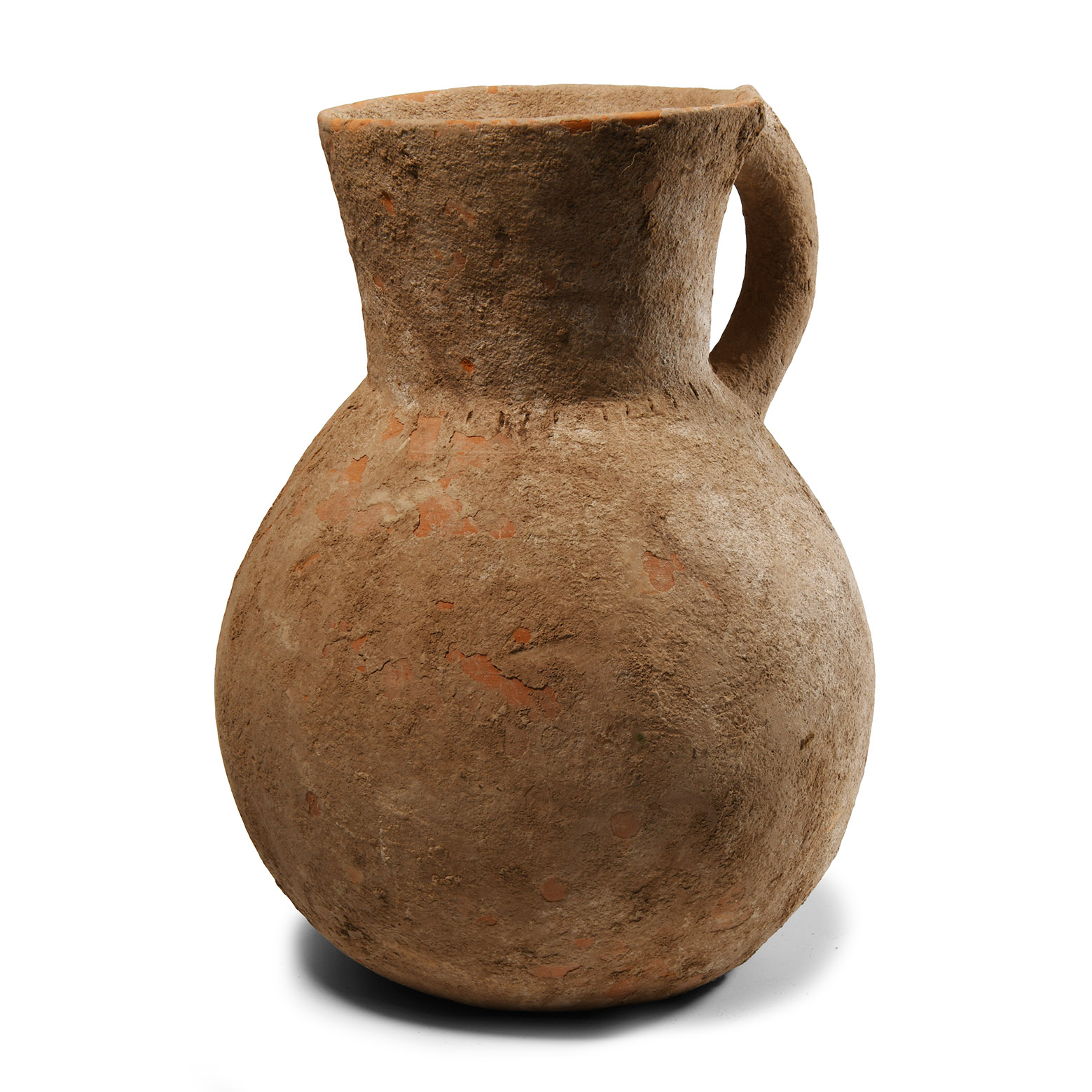
Large Roman Terracotta Jug
1ST-4TH CENTURY A.D.
9 5/8 in. (1.4 kg, 24.5 cm high).
With broad mouth, flared rim and loop handle to the shoulder. [No Reserve]
ProvenanceAcquired 1980-2015.
Ex Abelita family collection.
TimeLine Auctions follows a vetting process to ensure the authenticity and legality of all items, reinforcing our commitment to integrity and responsible trading. Each antiquity, antique, and coin lot undergoes thorough examination by a vetting committee of at least ten external specialists, professional trade association members, scientists, and archaeologists: Our Vetting Process
AUCTIONS:
TimeLine is a leading auction house specialising in antiquities, ancient art, collectables, natural history, coins, medals, and books. Our auctions offer museums, collectors, historians, and enthusiasts the opportunity to acquire unique and historically significant pieces.
-
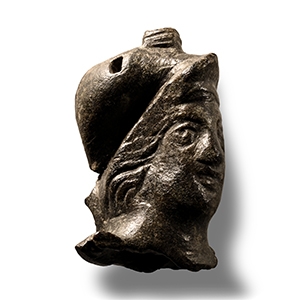
Roman Bronze Head of Minerva
1st century B.C.-1st century A.D.Sold for (Inc. bp): £72
Modelled in the round wearing a crested helmet, with detailing to hair and face; hollow interior. 44.4 grams, 44 mm
European art market before 2000. Acquired on the UK art market. Ex collection of a Surrey, UK, gentleman. -
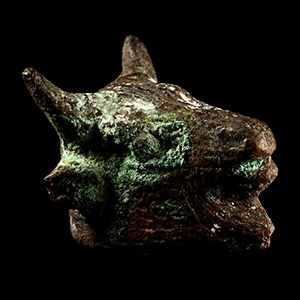
Eastern Roman Bronze Head of a Bull
1st-3rd century A.D.Sold for (Inc. bp): £52
With pecked fur texture to the neck, cheeks and dewlap; slightly indented reverse. 13.7 grams, 21 mm
Private collection of Mr S.A., Switzerland, 1990s, thence by descent. -
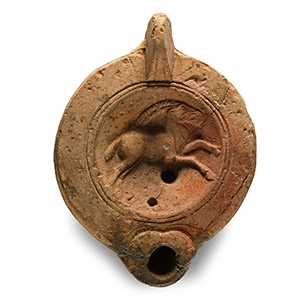
Roman Terracotta Oil Lamp with Leaping Ibex
2nd century A.D.Sold for (Inc. bp): £247
With a lug handle to the rear, discus with a leaping long-horned ibex within a concentric circle border; concentric circles to base; repaired. 110 grams, 10.5 cm
Acquired on the European art market, 1980s. English private collection.
This lamp belongs to the group of provincial African lamps with a plain shoulder and a heart-shaped nozzle. The shoulder form of the lamps (irrespective of African, Italic, or eastern place of manufacture or origin) varies widely. Some of them had undecorated shoulders, like our example. Discus decors include mythology, amphitheatre, daily life, animals (our example), geometric patterns and plain discus.
