
Loading, please wait...
LOT 1413
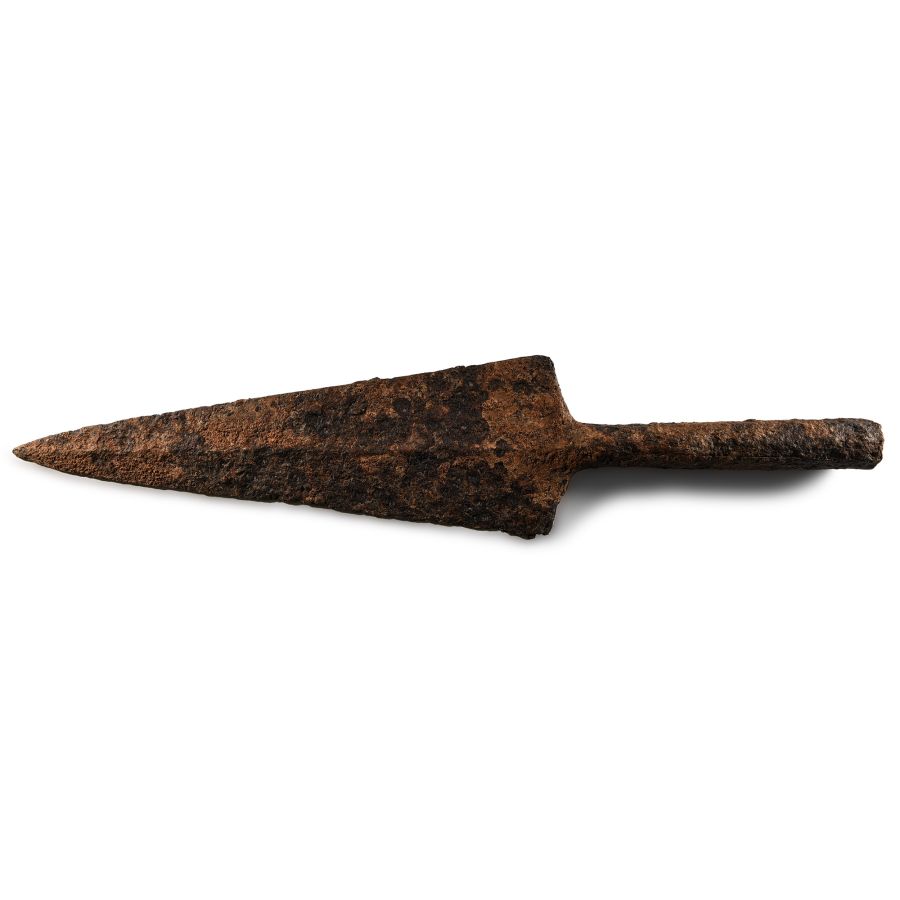
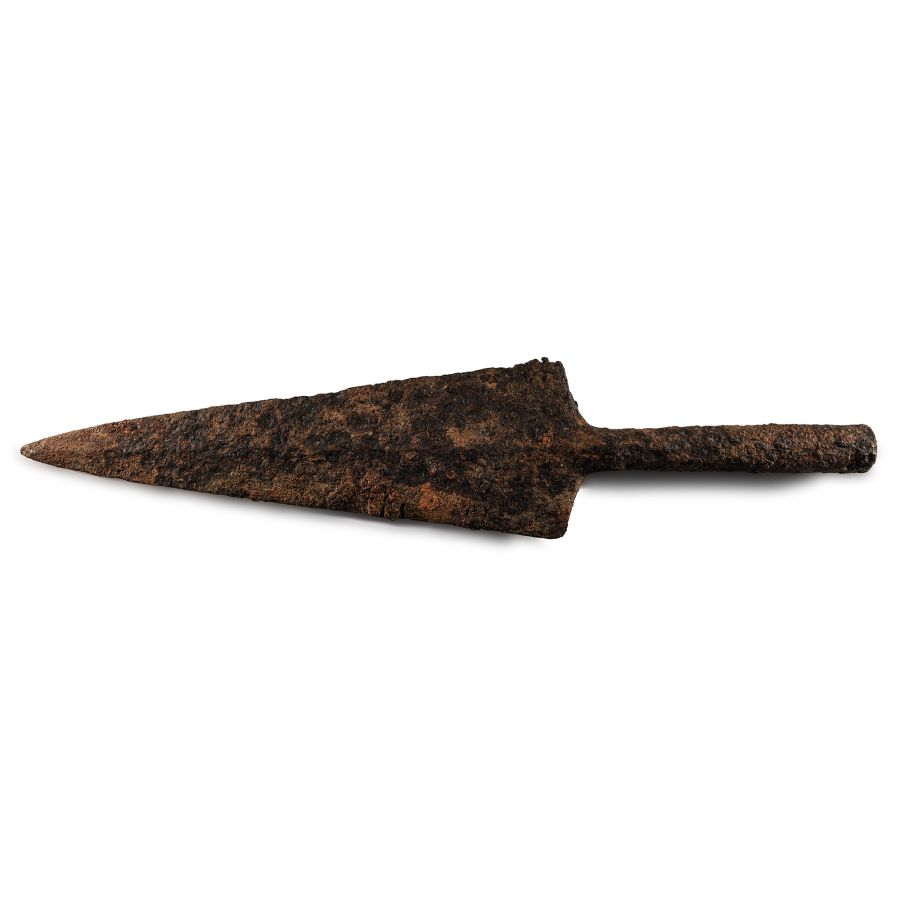
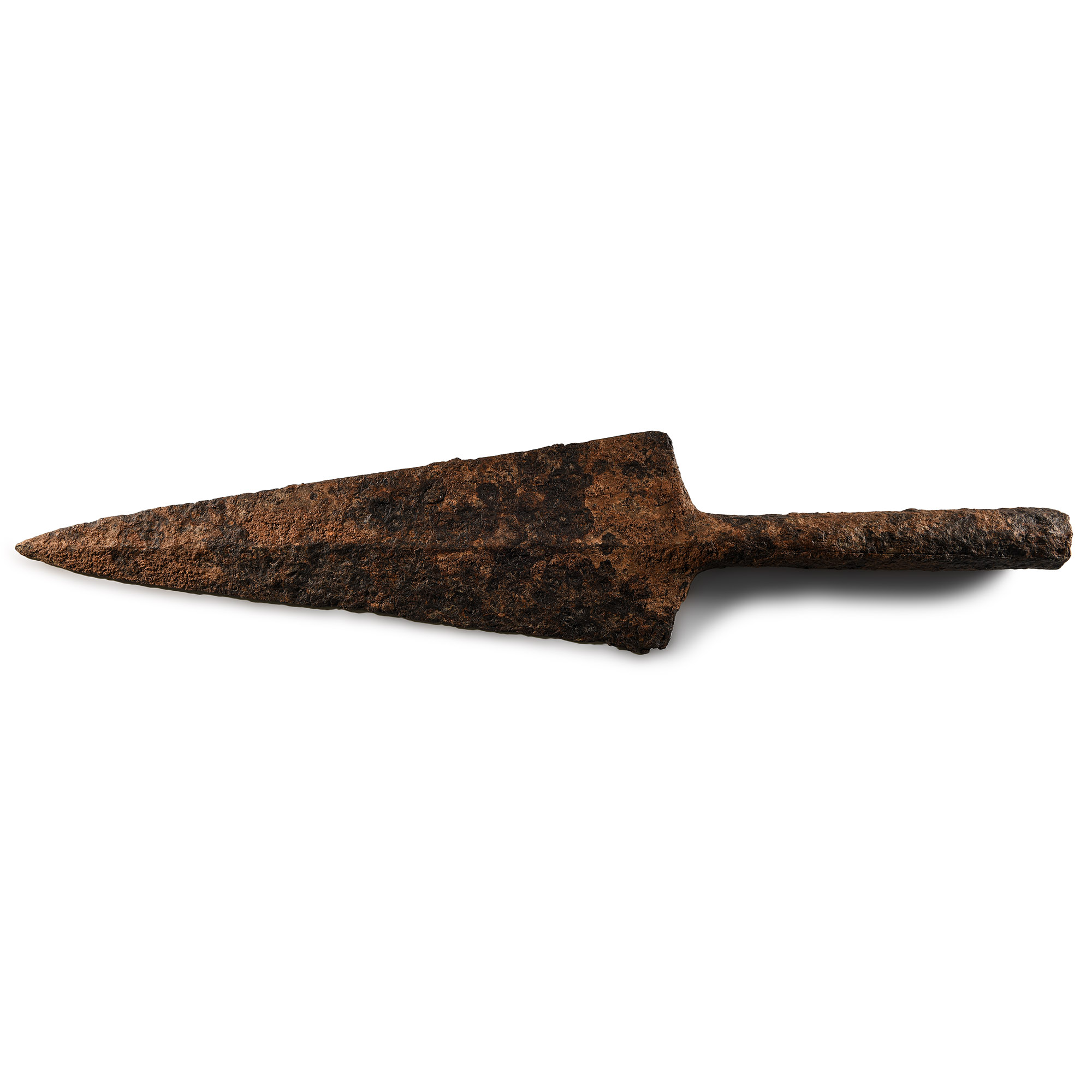
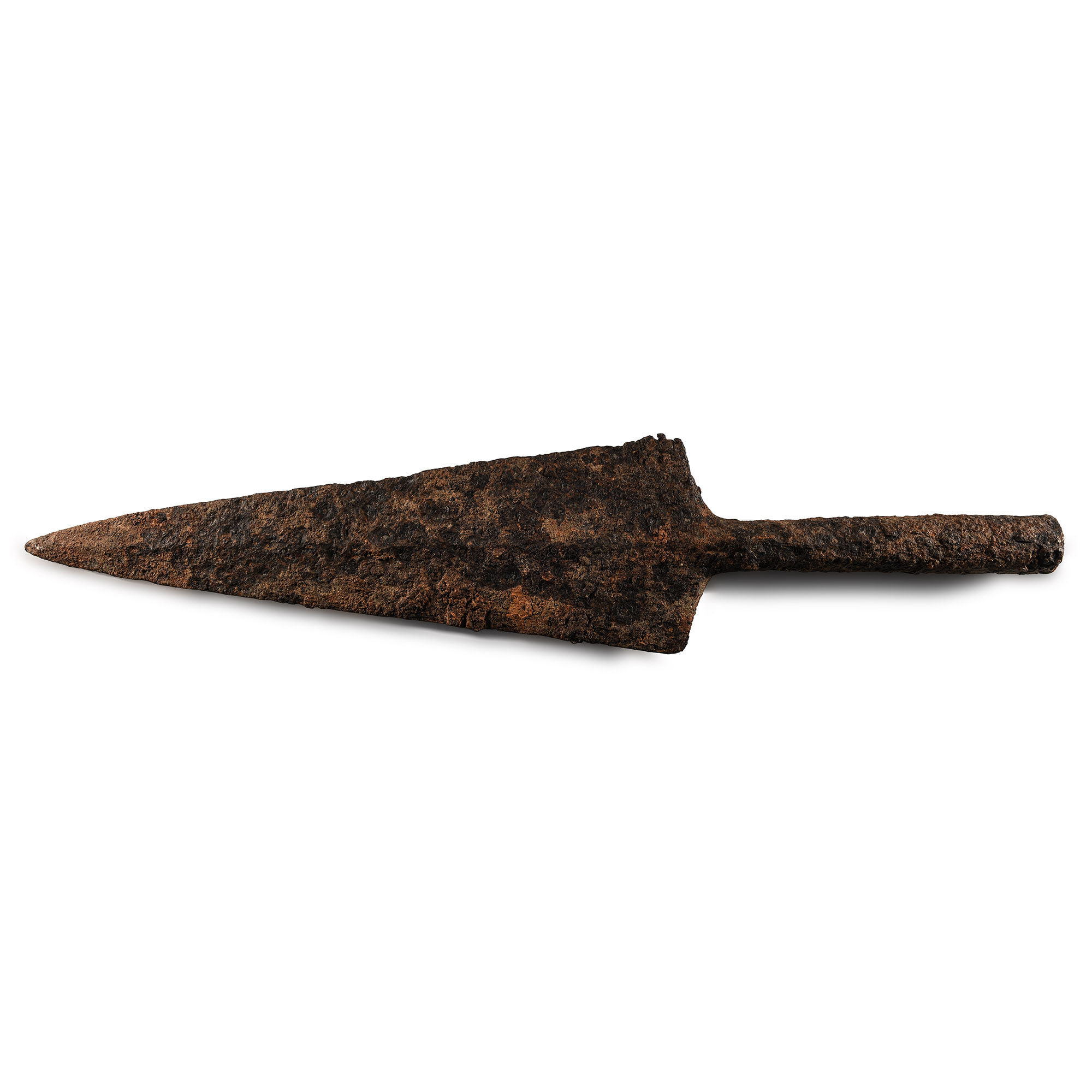
Large Roman Socketted Iron Spearhead
3RD-5TH CENTURY A.D.
18 1/4 in. (834 grams, 46.5 cm).
With a large triangular blade, fitted with a central shallow groove, squared shoulders and a socketted shaft. [No Reserve]
ProvenanceFrom a collection acquired on the UK art market from various auction houses and collections mostly before 2000.
From an important Cambridgeshire estate; thence by descent.
Cf. for similar Glad, D., L’armement dans la région balkanique á l’époque romaine tardive et proto-byzantine (284-641). Heritage, adaptation et innovation, Brepols, 2015, p.270 lett. Ie, for similar.
FootnotesThis spear was probably part of the armament of the Imperial Guards of the late Roman Empire. Similar spears are visible on the recently found reliefs of Nicomedia, in the hands of a protector divini lateris (guard of the Divine Flanks) of the Emperor Diocletian (Agturk, 2021, p.115) and other Imperial infantrymen. The same kind of spear is visible on a recently discovered sarcophagus of a protector of Diocletian, Tziampo, from the same locality.
CONDITIONTimeLine Auctions follows a vetting process to ensure the authenticity and legality of all items, reinforcing our commitment to integrity and responsible trading. Each antiquity, antique, and coin lot undergoes thorough examination by a vetting committee of at least ten external specialists, professional trade association members, scientists, and archaeologists: Our Vetting Process
AUCTIONS:
TimeLine is a leading auction house specialising in antiquities, ancient art, collectables, natural history, coins, medals, and books. Our auctions offer museums, collectors, historians, and enthusiasts the opportunity to acquire unique and historically significant pieces.
-
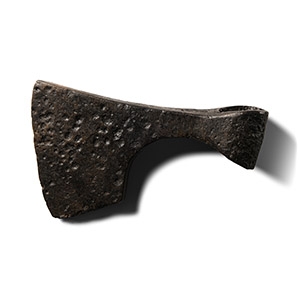
Viking Age Iron Bearded Axehead
Circa 9th-11th century A.D.Sold for (Inc. bp): £208
With triangular-section narrow blade widening to a broad bevelled edge and square chin, flared socket. 221 grams, 11.1 cm
From the collection of a Californian, USA, gentleman, dating back to the late 1960s.
The more commonly used weapons of the Finno-Ugrian people were axes, commonly found in all Finnic areas, as well as spears. Iron axeheads of this typology show a sub-trapezoidal asymmetrical blade, often perforated through the centre. -
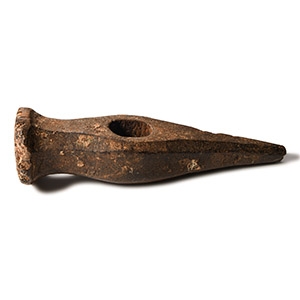
'The Customs House' Tudor Inscribed Iron Hammer-Head
16th century A.D.Sold for (Inc. bp): £156
Octagonal in section with one tapering end and one flat, circular end; square punch marks to one face in a pattern: '10B'. 2.82 kg, 24.2 cm
Found Thames foreshore, Customs House, London, UK, on Thursday 9th November 2006. Accompanied by a copy of the British Museum's Portable Antiquities Scheme (PAS) report no.LON-D6B085. -
.jpg)
Belgian Rimfire Pistol
Late 19th century A.D.Sold for (Inc. bp): £195
An antique Belgian manufactured single-shot rimfire pocket pistol, the action with separately hinged loading gate and single action hammer with spur trigger; Liege proof marks. 127 grams, 12.5 cm
Fine condition, mechanism does not hold cock.
Acquired on UK art market; previously in a Nottinghamshire, UK, collection. Ex property of a Nottinghamshire gentleman.
These small calibre, cheap and often quite crudely made pocket pistols (sometimes known as 'Saturday Night Specials') were popular in the later 19th century as weapons for personal defence; large numbers were made in Europe. Sold as an exempt item under Section 58 (2) of the Firearms Act, 1968, to be held as a curiosity or ornament. No license required but buyer must be over 18 years of age.
