
Loading, please wait...
_900x900.jpg "Large Roman Marble Bull's Head Sculpture")
_200x200.jpg "Large Roman Marble Bull's Head Sculpture")
_900x900.jpg "Large Roman Marble Bull's Head Sculpture")
_200x200.jpg "Large Roman Marble Bull's Head Sculpture")
.jpg "Large Roman Marble Bull's Head Sculpture")
.jpg "Large Roman Marble Bull's Head Sculpture")
LOT 0145
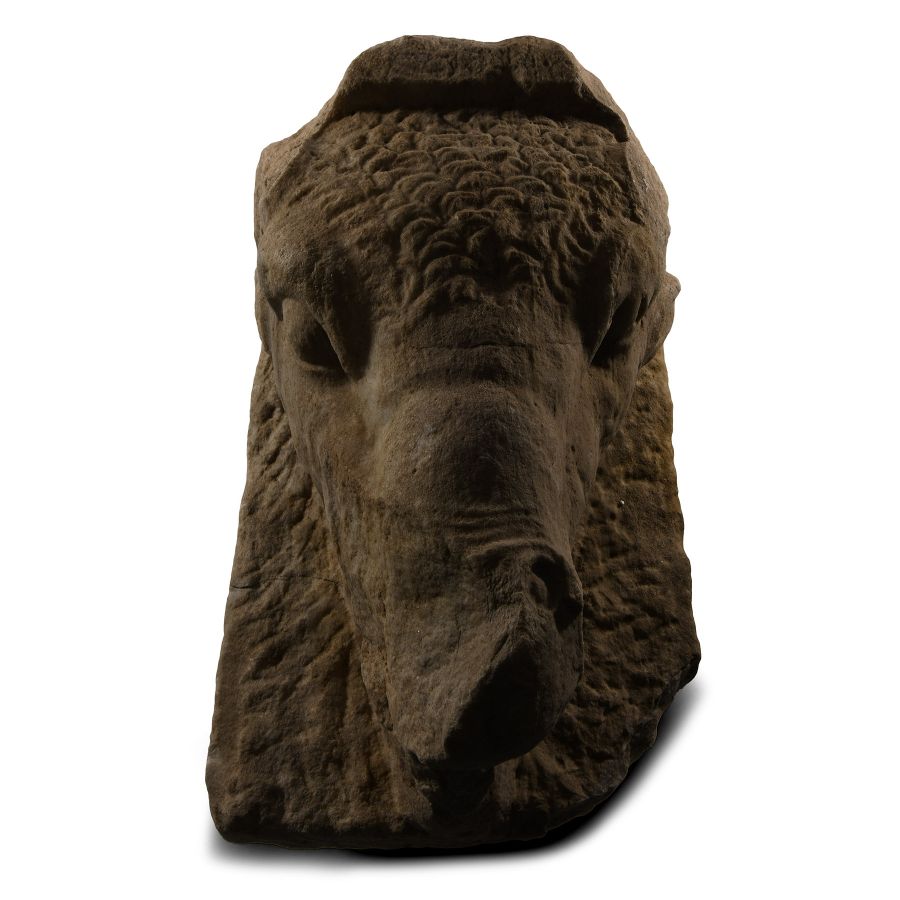
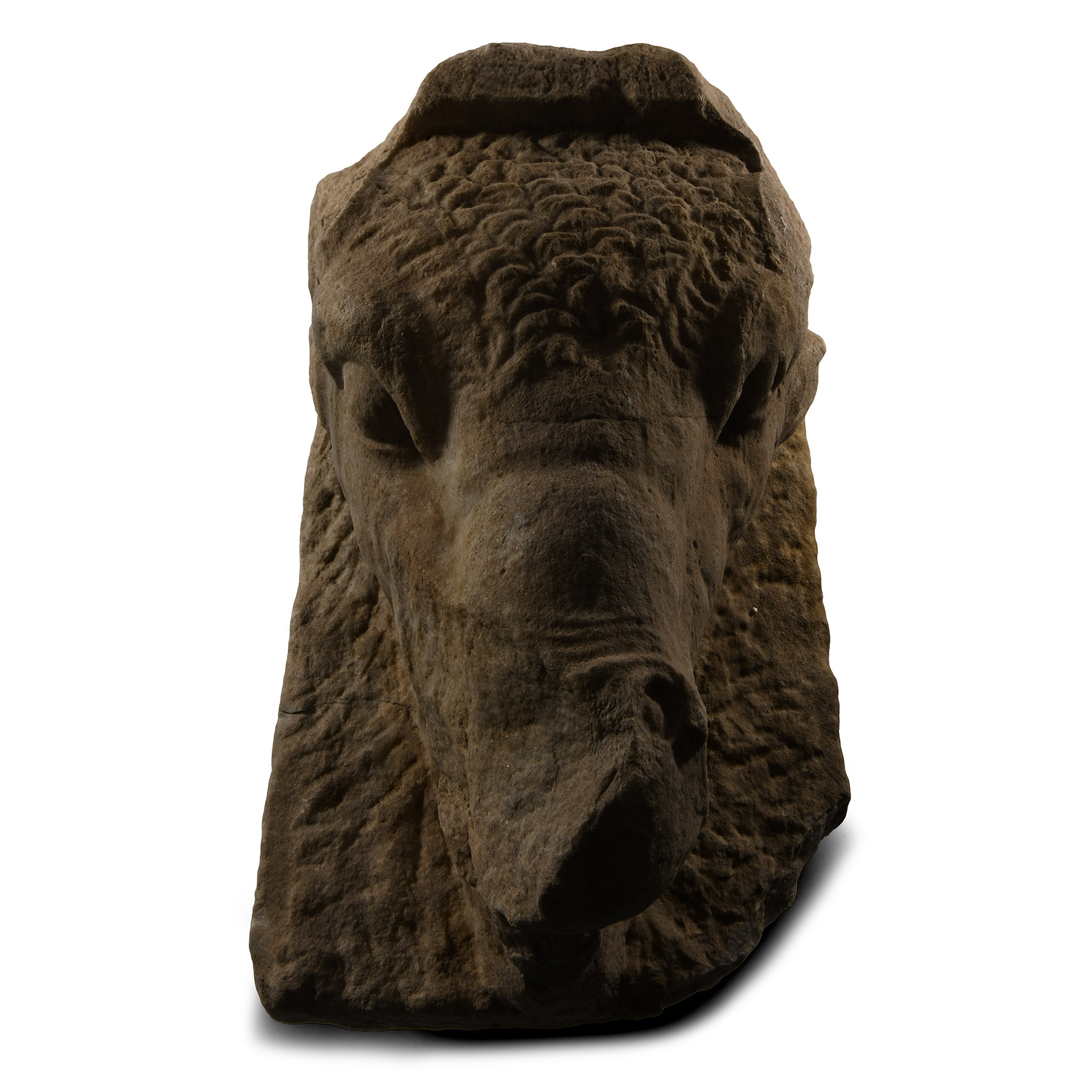
Large Roman Marble Bull's Head Sculpture
CIRCA 2ND CENTURY B.C.- 2ND CENTURY A.D.
20 in. (98 kg, 51 cm).
Life-size bull's head (bucranium) on a rectangular field with flattened upper face and small ledge overhang; modelled in the half-round with detailed eyes, muzzle and dewlap, plain background; tooled texture to the forehead and dewlap; Eastern Empire. [No Reserve]
ProvenanceFrom a collection acquired on the UK art market from various auction houses and collections mostly before 2000.
From an important Cambridgeshire estate; thence by descent.
Accompanied by an academic report by Dr Raffaele D’Amato.
This lot has been checked against the Interpol Database of stolen works of art and is accompanied by search certificate number no.12081-213373.
Cf. similar item in the collection of the Metropolitan Museum of Art, New York, under accession no.99.17; for various similar examples s. Mendel, G., Catalogue des sculptures grecques, romaines et byzantines, Constantinople, 1914, nos.1151 (381), 1164-1166 (300,1152,1139), 1282-1283 (2015-2016), vol.III, pp.493-494.
FootnotesThe bucranium was used as a prominent motif on the exterior of Graeco-Roman temples where it replaced the use of genuine severed heads from the sacrificial rites. Garlands were draped over the heads on feast-days and occasions of special religious observance. The flattened upper face suggests an architectural use, perhaps as a corbel.
CONDITIONTimeLine Auctions follows a vetting process to ensure the authenticity and legality of all items, reinforcing our commitment to integrity and responsible trading. Each antiquity, antique, and coin lot undergoes thorough examination by a vetting committee of at least ten external specialists, professional trade association members, scientists, and archaeologists: Our Vetting Process
AUCTIONS:
TimeLine is a leading auction house specialising in antiquities, ancient art, collectables, natural history, coins, medals, and books. Our auctions offer museums, collectors, historians, and enthusiasts the opportunity to acquire unique and historically significant pieces.
-
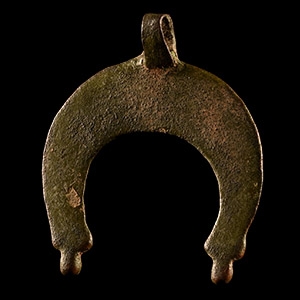
Roman Bronze Lunar Pendant
Circa 2nd-3rd century A.D.Sold for (Inc. bp): £78
Comprising a crescentic pendant with applied suspension loop. 9.1 grams, 49 mm
Found Worcestershire, UK. -
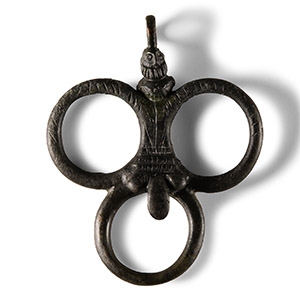
Roman Bronze Looped Figural Pendant with Phallus
Circa 1st century A.D.Sold for (Inc. bp): £286
Composed of three concentric circles surmounted by a bearded figure to which is attached a suspension ring, the body of the figure engraved and ending with phallic attributes. 53 grams, 83 mm
Acquired before 2000. From the collection of a European gentleman living in the UK.
Roman military harness included pendants of various typology, ranging from lunules to other decorative elements, often phallic, with the possible intention of protecting the animal. This particular pendant could be connected to the bearded image of the god Priapus. -
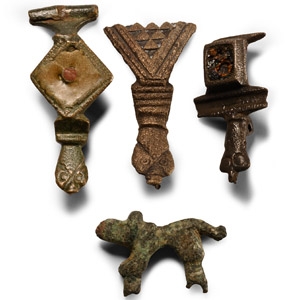
Roman Bronze Brooch Group
Circa 2nd-3rd century A.D.Sold for (Inc. bp): £65
Including equal-arm, bow brooch fragments, and a Romano-British lion bow brooch similar to the one found at Corbridge (lot 891). 21.1 grams total, 28-42 mm
Property of the vendor's grandfather, thence by family descent, circa 1985. From the private collection of a New York, USA gentleman.
