
Loading, please wait...
LOT 0152
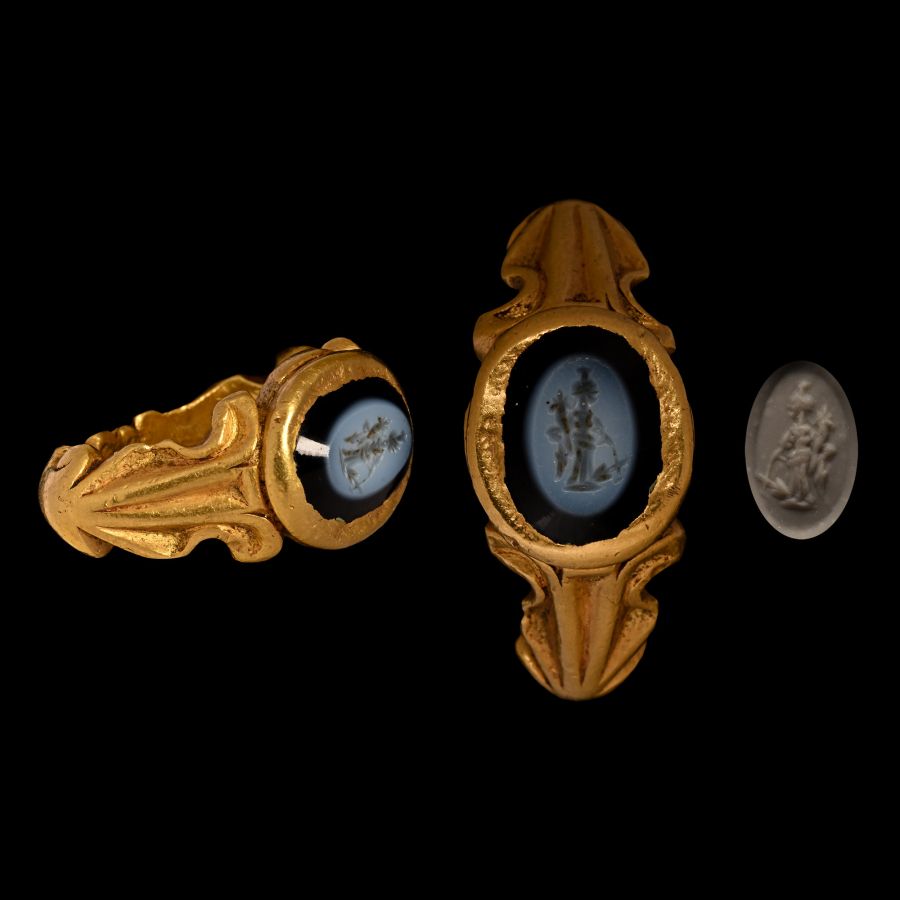
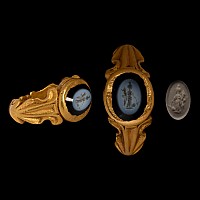
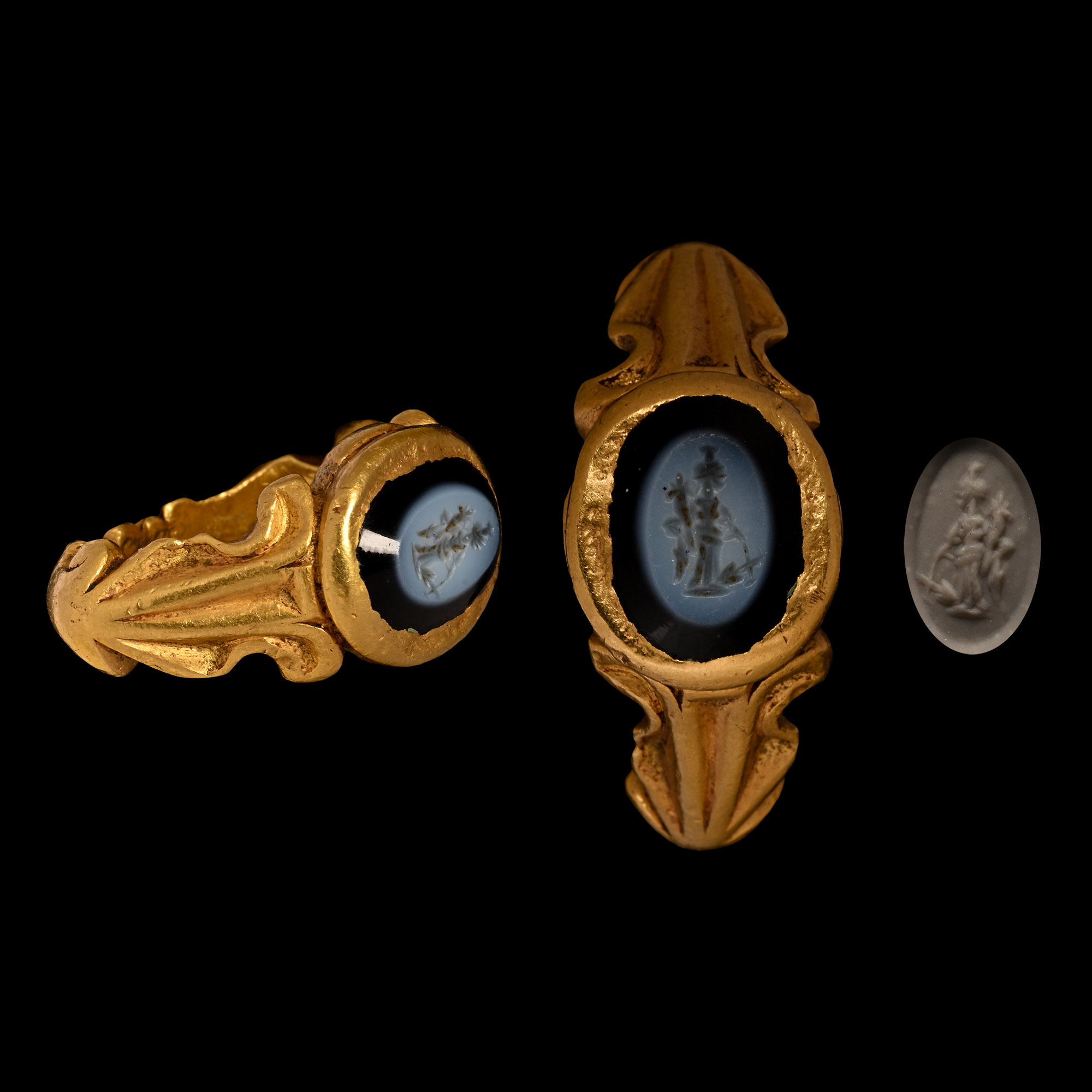
Large Roman Gold Ring with Tyche Gemstone
MID-LATE 3RD CENTURY A.D. AND LATER
1 1/4 in. (27.45 grams, 31.67 mm overall, 22.21 x 16.71 mm internal diameter (approximate size British O, USA 7, Europe 14.98, Japan 14)).
A substantial D-shaped ring with floral decoration, set with a later nicolo intaglio engraved with the figure of Tyche, holding a cornucopia and rudder, wearing a kalathos on her head; supplied with a museum-quality impression.
ProvenanceMarcus Hollersberger, Solothurn, 1982.
Ex Galerie Schönbrunn, Vienna, 1987.
with Christie's, London, 7 December 2022, no.80.
Accompanied by a copy of the relevant Christie's catalogue listing.
This lot has been checked against the Interpol Database of stolen works of art and is accompanied by a search certificate number no.12105-217766.
TimeLine Auctions follows a vetting process to ensure the authenticity and legality of all items, reinforcing our commitment to integrity and responsible trading. Each antiquity, antique, and coin lot undergoes thorough examination by a vetting committee of at least ten external specialists, professional trade association members, scientists, and archaeologists: Our Vetting Process
AUCTIONS:
TimeLine is a leading auction house specialising in antiquities, ancient art, collectables, natural history, coins, medals, and books. Our auctions offer museums, collectors, historians, and enthusiasts the opportunity to acquire unique and historically significant pieces.
LOT 0152
Large Roman Gold Ring with Tyche Gemstone
Estimate £7,000 - 9,000€8,120 - 10,440 (for guidance only)$9,450 - 12,150 (for guidance only)
-
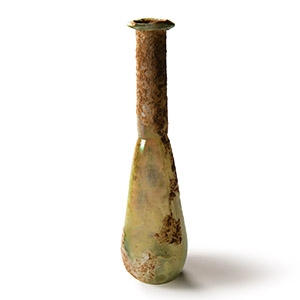
Roman Pale Blue Glass Unguentarium
1st-2nd century A.D.Estimate: £100 - 140 (+bp*)
Opening Bid: £50
With piriform lower body, extended cylindrical neck and flange rim; iridescent surfaces. 25.4 grams, 12 cm
Acquired 1980-2015. Ex Abelita family collection. -
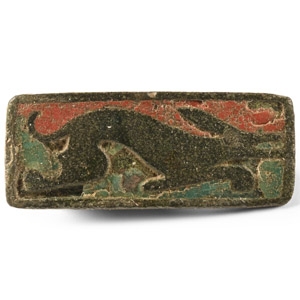
Roman Enamelled Bronze Hound Plate Brooch
Circa 2nd century A.D.Sold for (Inc. bp): £416
Rectangular plate with reserved running hound in a two-cell panel, spring and catch to reverse; complete with pin. 4.6 grams, 27 mm
Found Wiltshire, UK, before 1974. -
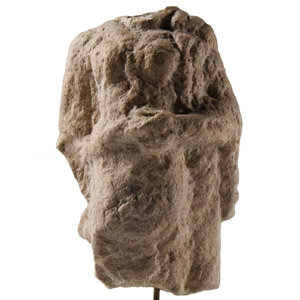
Roman Limestone Torso of a Goddess
Circa 3rd-4th century A.D.Sold for (Inc. bp): £104
Modelled in the round with hands clasped across the midriff, draped folds of the palla to the shoulders; mounted on a custom-made stand. 300 grams total, 13.7 cm including stand
From a collection acquired on the UK art market from various auction houses and collections mostly before 2000. From an important Cambridgeshire estate; thence by descent.
