
Loading, please wait...
LOT 0139
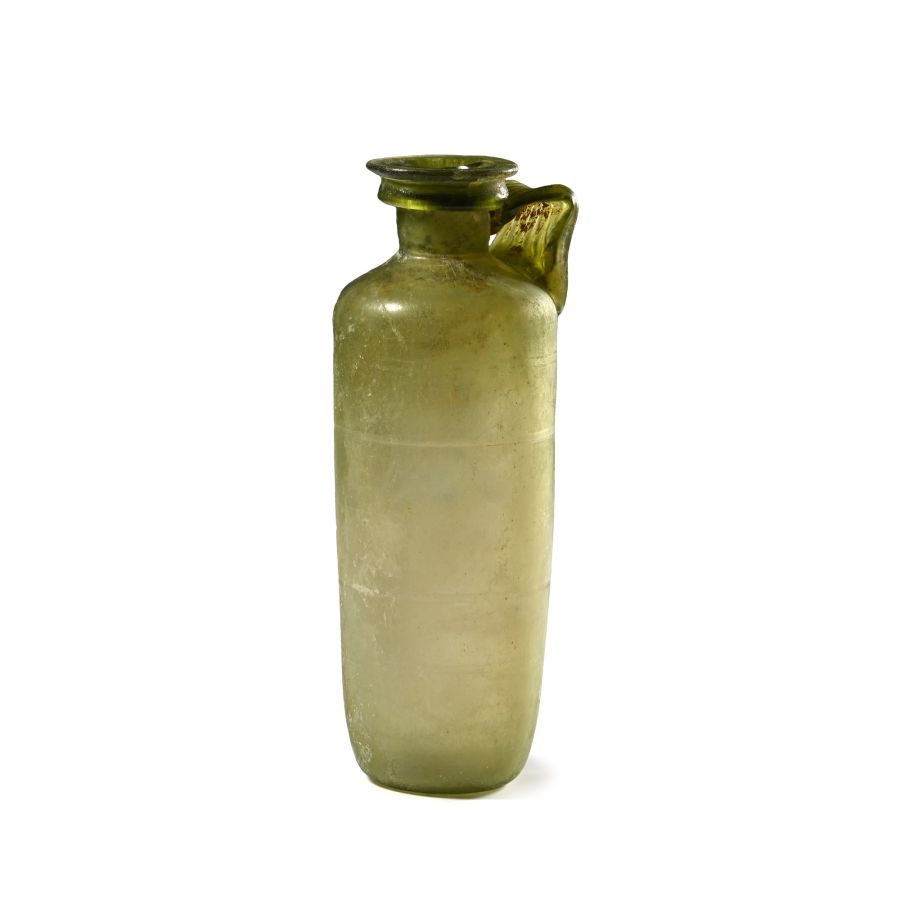
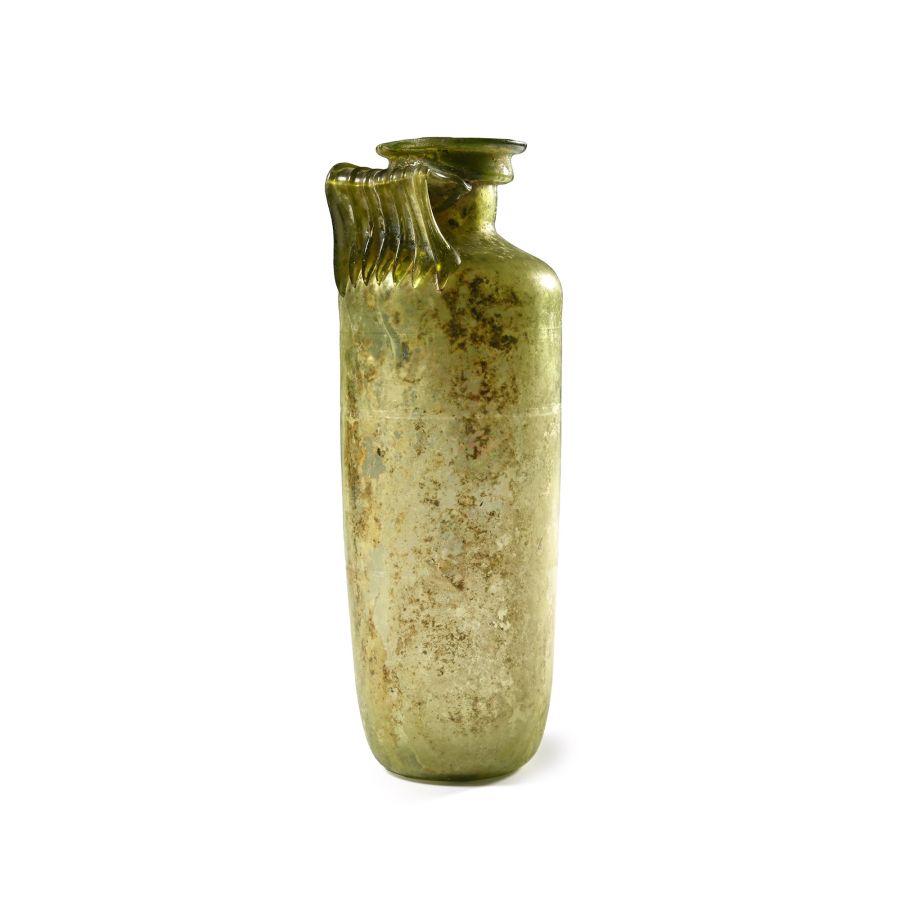
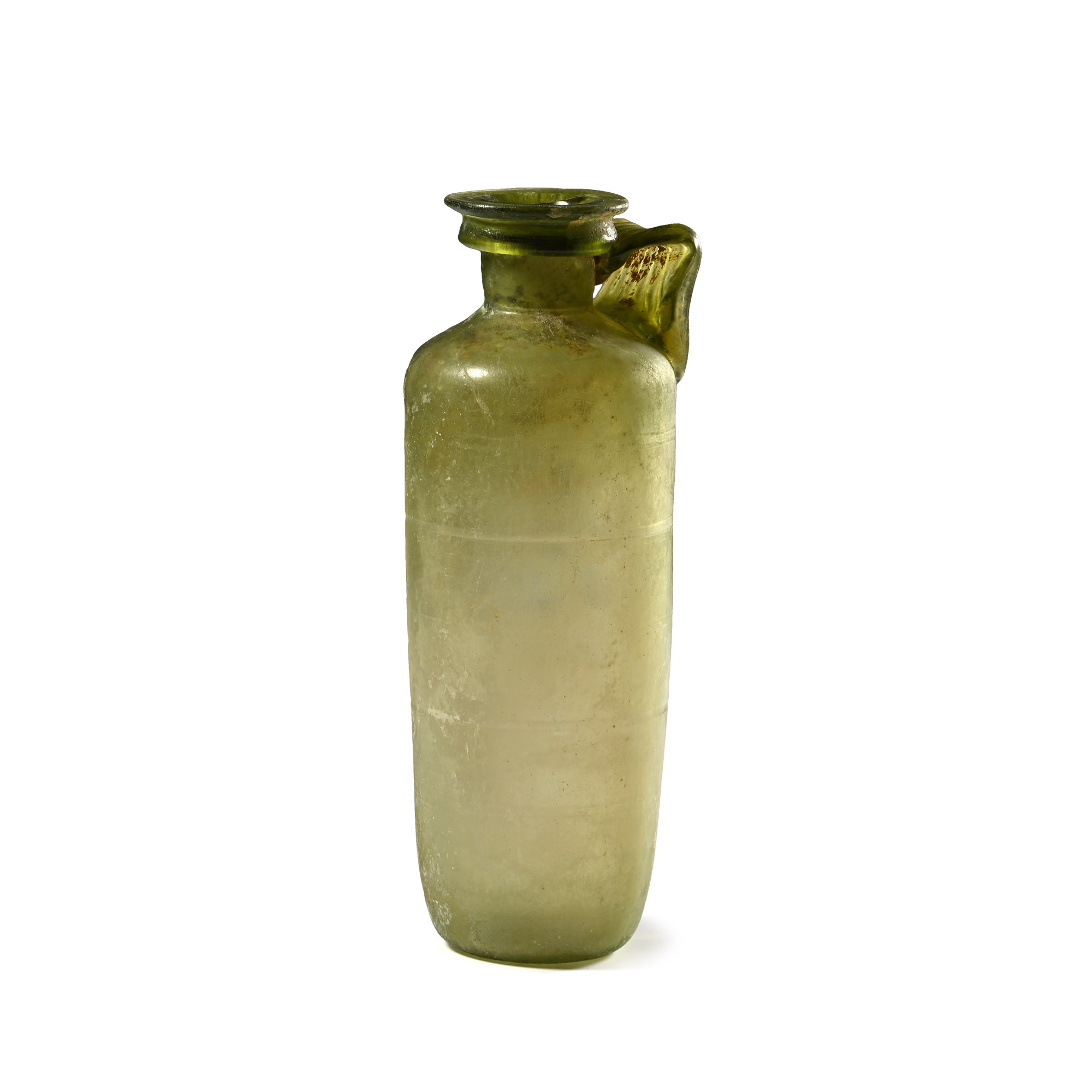
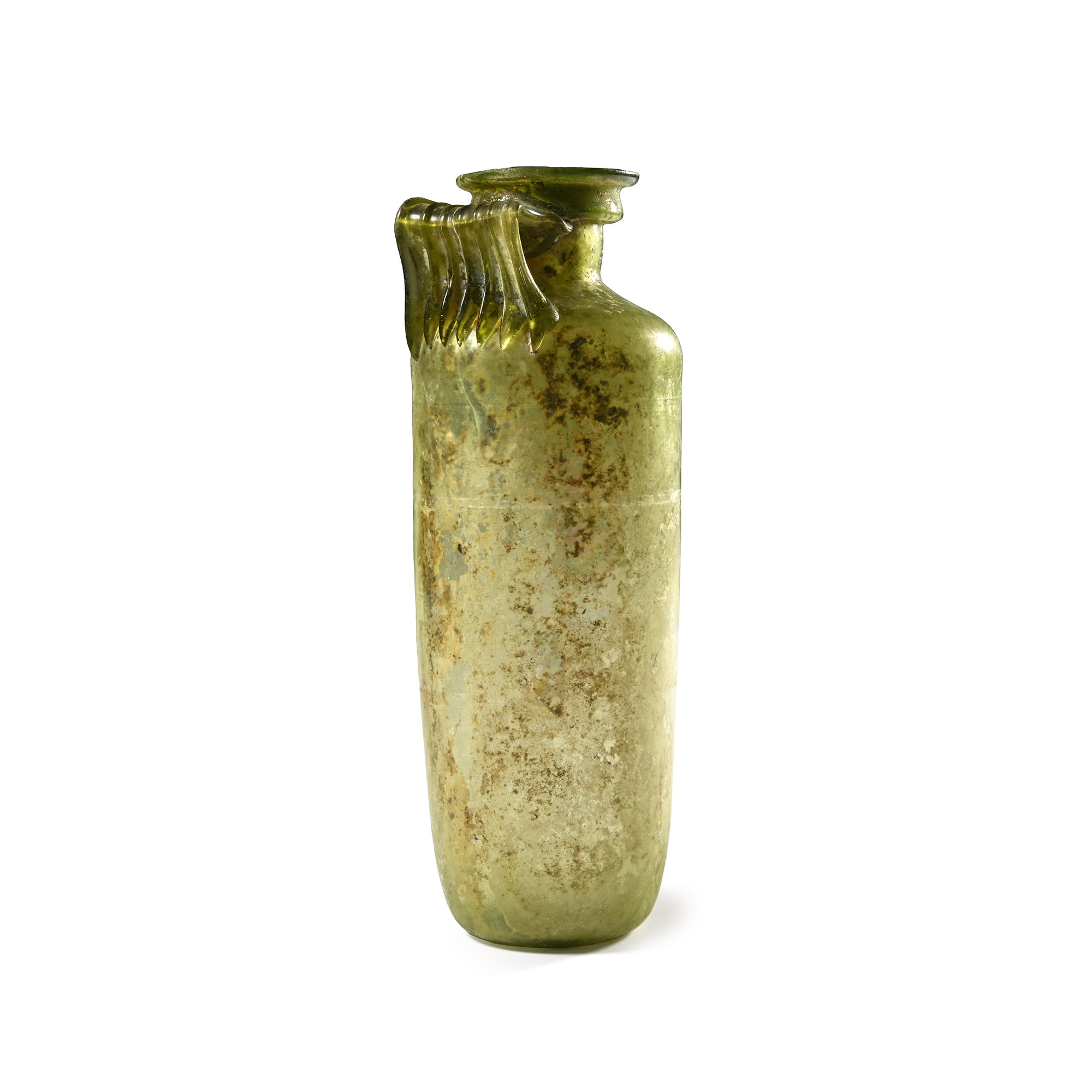
Large Roman Glass Bottle with Wheel-Cut Lines
1ST CENTURY A.D.
7 7/8 in. (204 grams, 20 cm).
With dimple base, gently flared body, sloping shoulder and folded rim, ribbed and angled handle; five circumferential bands of wheel-cut line detailing.
ProvenanceFrom a private Scottish collection pre 1980, by descent.
This lot is accompanied by an illustrated lot declaration signed by the Head of the Antiquities Department, Dr Raffaele D'Amato.
TimeLine Auctions follows a vetting process to ensure the authenticity and legality of all items, reinforcing our commitment to integrity and responsible trading. Each antiquity, antique, and coin lot undergoes thorough examination by a vetting committee of at least ten external specialists, professional trade association members, scientists, and archaeologists: Our Vetting Process
AUCTIONS:
TimeLine is a leading auction house specialising in antiquities, ancient art, collectables, natural history, coins, medals, and books. Our auctions offer museums, collectors, historians, and enthusiasts the opportunity to acquire unique and historically significant pieces.
-

Late Roman Bronze Bracelet
1st-4th century A.D.Sold for (Inc. bp): £39
Round-section penannular body with clubbed terminals. 15.4 grams, 64 mm
Ex German art market, 2000s. Acquired from an EU collector living in London. From the collection of a Surrey, UK, gentleman. This lot is accompanied by an illustrated lot declaration signed by the Head of the Antiquities Department, Dr Raffaele D'Amato. -
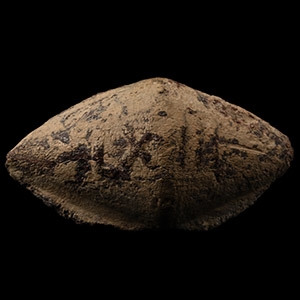
Roman Legion XIII 'Battle of Munda' Lead Slingshot
1st century B.C.Sold for (Inc. bp): £715
Fusiform with reserved legend 'LXIII' (for LEGIO XIII = 13th Legion). 55.9 grams, 41 mm
Acquired on the UK art market. Property of a gentleman collector. This lot is accompanied by an illustrated lot declaration signed by the Head of the Antiquities Department, Dr Raffaele D'Amato.
The shot (Völling type 1C) is marked with the abbreviated name of Legion XIII, and was probably used at the Battle of Munda (or Monda) against Julius Caesar, 17th March 45 B.C., or against the sons of Pompey, because both the generals (Pompey sons and Caesar) had in their army a Legio with the numeral XIII on that day. Interestingly, other glandes of the same typology from the same battlefield bear the name of Pompey, so that it is much possible that the glans belongs to the Legio XIII of Pompey, who was destroyed during the battle and whose survivors were massacred among the 22,000 defenders of Cordoba by the troops of Caesar (D'Amato, 2021, pp.421 and 424). The projectiles were made of different materials: lead (glandes) or in pottery or stone (lapides missiles). -
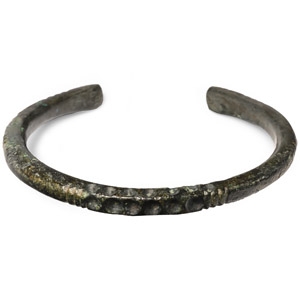
Late Roman Decorated Bronze Military Bracelet
4th-5th century A.D.Sold for (Inc. bp): £91
Rectangular-section penannular body with flattened terminals, punched pellet decoration on the sides and the upper face, the finials with transverse ribbing and a single pellet. 24 grams, 63 mm
Ex German art market, 2000s. Acquired from an EU collector living in London. From the collection of a Surrey, UK, gentleman. This lot is accompanied by an illustrated lot declaration signed by the Head of the Antiquities Department, Dr Raffaele D'Amato.
